Toblerone Logo History: Meaning, Symbolism & Swiss Brand Heritage
Toblerone is more than just a chocolate bar. It is one of the most recognizable confectionery brands in the world, built on a unique combination of product design, Swiss heritage, and visual identity. Founded in Bern in 1908, the brand quickly distinguished itself not only through its distinctive triangular shape but also through a strong symbolic connection to Switzerland. Much like explored in Nestlé Logo History and Lindt Logo History, Toblerone reflects how heritage and storytelling can shape a lasting brand identity. Within the broader landscape of food logos, it stands out as one of the most iconic examples of symbolism embedded directly into design.
The Toblerone logo history is closely tied to its origin. It is not simply a graphic mark, but a visual expression of place, tradition, and craftsmanship — all condensed into a single image that has remained remarkably consistent over time.
Toblerone Logo Meaning and History: From Swiss Origins to Global Recognition
The origin of Toblerone dates back to Theodor Tobler and his cousin Emil Baumann, who created a new type of chocolate by combining milk chocolate with honey and almond nougat. This innovation led to a product that was not only unique in taste but also in form.
The triangular shape of the chocolate bar became a defining feature, often associated with the Swiss Alps. This connection was later reinforced through the brand’s visual identity, particularly its iconic mountain emblem.
The Toblerone logo meaning is rooted in this dual identity. On one level, it represents the Matterhorn, one of the most famous peaks in the Swiss Alps. On another, it reflects the structure of the chocolate itself.
At the same time, the brand name carries its own story. It is a blend of “Tobler” and “torrone,” the Italian word for nougat, linking the product directly to its ingredients and heritage.
Over the years, as the company expanded globally and eventually became part of Mondelēz International, the core identity remained intact. This consistency is central to Toblerone logo heritage, where origin and symbolism continue to define the brand.
Toblerone Logo Symbolism: The Matterhorn, the Hidden Bear, and Swiss Identity
The Toblerone logo symbolism is layered, combining geographic, cultural, and visual elements into a single composition.
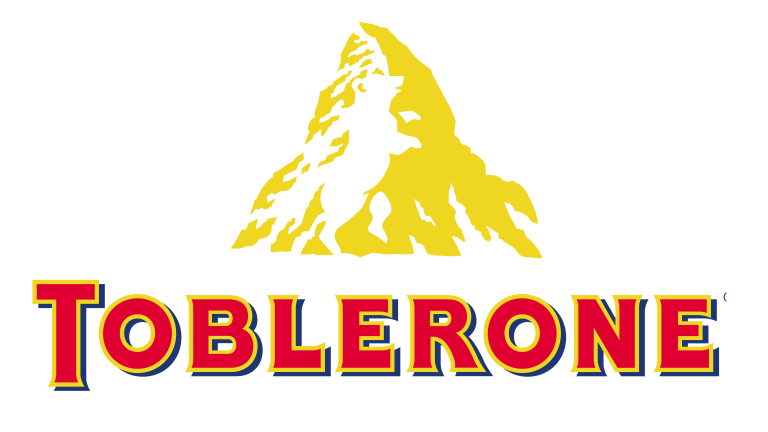
The mountain depicted in the logo is widely recognized as the Matterhorn. Its sharp, triangular form mirrors the shape of the chocolate bar, creating a direct connection between product and identity.
However, the most distinctive feature is not immediately visible. Hidden within the mountain is the silhouette of a bear. This subtle detail refers to Bern, the Swiss capital where Toblerone was created, often known as the “City of Bears.”
This hidden element adds depth to the design. It transforms the logo from a simple illustration into a narrative, rewarding those who take a closer look.
The combination of the mountain and the bear creates a powerful representation of Swiss identity, reinforcing the brand’s authenticity and origin.
Toblerone Logo History Timeline: Evolution of an Iconic Swiss Brand Identity
1999–2022: Classic Matterhorn Logo and Bold Premium Wordmark
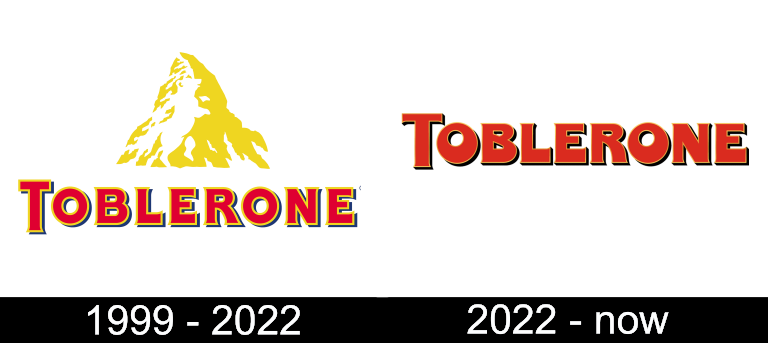
The version introduced at the end of the 1990s became the most recognizable Toblerone logo worldwide. It combined two strong visual elements: a bold red wordmark and the iconic Matterhorn mountain emblem.
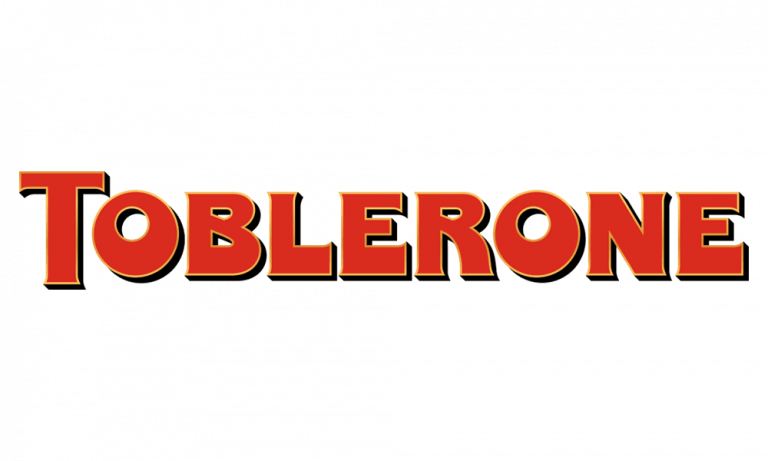
The lettering was set in uppercase, using a custom geometric serif style. The first letter was slightly enlarged, creating a visual hierarchy and improving brand recognition. The red color, combined with a gold outline and subtle shadow, gave the wordmark depth and a premium feel.
Above the lettering, the yellow Matterhorn reinforced the brand’s Swiss identity. This composition clearly linked the product to its origin, while also echoing the triangular shape of the chocolate itself.
This period represents the peak of Toblerone logo heritage, where symbolism, color, and typography worked together seamlessly.
2022–Present: Modern Adaptation and Regulatory-Driven Design Changes
In 2022, Toblerone introduced updates to its logo, influenced in part by changes in production and Swissness regulations.
The most noticeable adjustment was the redesign of the mountain emblem. While it retained its general structure, the depiction became more generic, moving away from a direct representation of the Matterhorn.
Despite this change, the overall identity remained consistent. The wordmark continues to use bold, uppercase lettering, preserving the brand’s strong visual presence.
These updates reflect a modern adaptation rather than a reinvention. The Toblerone logo history in this phase shows how a brand can respond to external factors while maintaining its core identity.
Toblerone Logo Typography and Color: Warmth, Luxury, and Recognition
Typography plays a key role in the Toblerone logo design. The uppercase lettering is bold and structured, creating a strong visual presence.
The geometric form of the letters ensures clarity, while subtle variations in size and spacing add character. The enlarged initial letter reinforces brand recognition and gives the wordmark a distinctive rhythm.
Color is equally important in the logo description. The combination of red, gold, white, and blue creates a rich and recognizable palette.
Red conveys energy and passion, while gold introduces a sense of quality and indulgence. White provides contrast and clarity, and blue adds a subtle touch of stability.
Together, these colors create a visual identity that feels both premium and approachable.
Toblerone Logo Heritage: A Symbol of Swiss Craftsmanship and Brand Identity
The Toblerone logo history demonstrates how a brand can build lasting recognition through consistency and meaning. By maintaining a strong connection to its origin, Toblerone has created a visual identity that resonates across generations.
Its logo heritage is not just about design. It is about storytelling. Every element, from the mountain to the hidden bear, reinforces the brand’s roots in Switzerland.
In a global market where many brands lose their identity over time, Toblerone remains anchored in its origin. Its logo continues to represent quality, tradition, and innovation — all in a single, unmistakable form.
Toblerone Logo History FAQ: Meaning, Symbolism, and Evolution
What does the Toblerone logo represent?
It represents the Matterhorn mountain and reflects the brand’s Swiss origin.
What is the hidden symbol in the Toblerone logo?
A bear hidden within the mountain, symbolizing the city of Bern.
Why is Toblerone shaped like a triangle?
The shape is inspired by the Swiss Alps and reflected in the logo design.
Has the Toblerone logo changed over time?
Yes, but the core elements and symbolism have remained consistent.
What do the colors in the Toblerone logo mean?
They represent quality, warmth, and Swiss heritage.