Tangled Logo History: Meaning, Symbolism & Disney Brand Heritage
Tangled is one of the most recognizable modern Disney franchises, built around the timeless story of Rapunzel. Introduced in 2010, the film quickly became a global success, blending classic fairytale elements with contemporary animation and storytelling. Over time, the brand expanded into books, television series, and merchandise, becoming a strong presence in Disney’s portfolio. Much like explored in Frozen Logo History and Disney Princess Logo History, Tangled reflects how visual identity plays a key role in shaping emotional connection. Within the broader category of entertainment and movie logos, it stands out for its elegant, character-driven design.
The Tangled logo history is not about multiple redesigns or drastic evolution. Instead, it is defined by consistency — a carefully crafted visual identity that reflects the tone, audience, and narrative of the franchise from the very beginning.
Tangled Logo Meaning and History: A Fairytale Identity Rooted in Disney Tradition
The origin of the Tangled brand lies in the adaptation of the Brothers Grimm fairytale, reimagined by Disney with a modern approach to character development and storytelling.
At its core, the story is about Rapunzel — a princess with magical hair, symbolizing growth, freedom, and self-discovery. These themes are subtly reflected in the visual identity.
The Tangled logo meaning is closely tied to this narrative. The elegant lettering, flowing shapes, and decorative elements evoke femininity, magic, and classic fairytale aesthetics.
Unlike logos built around symbols or icons, Tangled relies primarily on typography. This approach aligns with Disney’s tradition of creating distinctive wordmarks that capture the essence of each story.
From its debut, the logo was designed to appeal to a younger audience while maintaining a sense of sophistication, reinforcing Tangled logo heritage as part of the Disney legacy.
Tangled Logo Symbolism: Flowing Forms, Elegance, and Character Identity
The Tangled logo symbolism is embedded in its typography. Every curve and extension reflects the personality of the story.
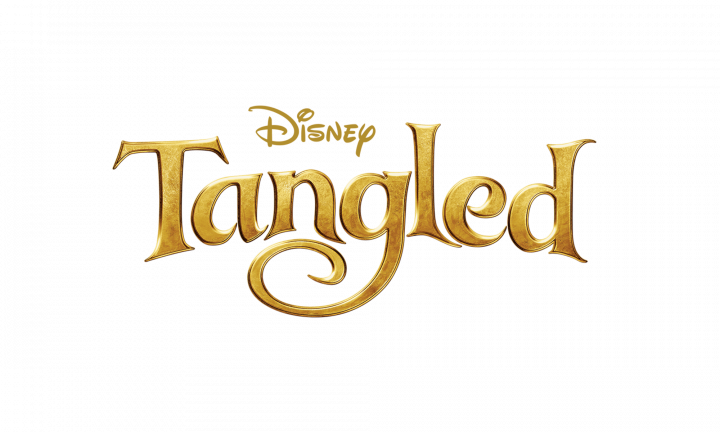
The most distinctive feature is the stylized lettering, particularly the elongated tail of the “G.” This flowing element visually echoes Rapunzel’s long hair, one of the central motifs of the narrative.
This subtle connection transforms the logo into more than just a title. It becomes a visual extension of the character herself.
The use of gold adds another layer of meaning. It represents royalty, magic, and value, reinforcing the fairytale atmosphere. At the same time, it connects the brand to Disney’s tradition of premium storytelling.
In alternate versions, the purple and white palette introduces a softer and more playful tone, making the logo adaptable across different contexts while preserving its identity.
Tangled Logo History Timeline: Consistency of a Modern Disney Identity
2010–Present: Original Logo Design and Established Brand Identity
The Tangled logo was introduced in 2010 alongside the release of the film, and it has remained largely unchanged since then.
From the beginning, the design featured a combination of the Disney signature logo placed above the main wordmark. This connection reinforces the brand’s place within the Disney universe.
The primary version uses a gradient gold finish, giving the lettering a three-dimensional, metallic appearance. This effect enhances the sense of luxury and fantasy.
The typography is set in a custom serif style, with elongated strokes and decorative details that create a refined and elegant look. The composition is balanced, with the wordmark serving as the central focus.
Alternative versions, such as the flat purple and white design, were introduced for flexibility across media, but the core structure remains unchanged.
This stability defines Tangled logo history, where consistency plays a more important role than evolution.
Tangled Logo Typography and Color: Elegance, Fantasy, and Visual Appeal
Typography is the defining element of the Tangled logo design. The custom serif typeface features thin, sharp serifs combined with flowing curves, creating a sense of movement and grace.
The extended lines, particularly in letters like “G” and “N,” introduce rhythm and visual interest, making the wordmark feel dynamic rather than static.
Color is central to the logo description. The primary gold palette conveys luxury, magic, and high quality, aligning with the fairytale theme.
The gradient effect adds depth, making the logo appear polished and dimensional. In contrast, the purple variation introduces softness and accessibility, appealing to a younger audience.
Together, typography and color create a cohesive identity that reflects both the narrative and the brand positioning.
Tangled Logo Heritage: A Modern Fairytale Preserved Through Design
The Tangled logo history is a strong example of how consistency can build recognition. Instead of frequent redesigns, the brand has maintained its original identity, allowing it to become familiar and trusted.
Its logo heritage is rooted in storytelling. Every design element, from the flowing typography to the gold color palette, supports the narrative of Rapunzel and her journey.
Within the Disney ecosystem, where each franchise has its own visual language, Tangled stands out through its elegance and subtle symbolism.
The result is a logo that feels timeless, even as the brand continues to expand across new platforms and audiences.
Tangled Logo History FAQ: Meaning, Symbolism, and Design
What does the Tangled logo represent?
It represents the fairytale world of Rapunzel, emphasizing elegance and magic.
Why is the Tangled logo gold?
Gold symbolizes royalty, fantasy, and premium storytelling.
What is special about the Tangled lettering?
Its flowing curves reflect Rapunzel’s long hair and the story’s themes.
Has the Tangled logo changed over time?
No, it has remained largely consistent since its introduction in 2010.
Why does the Tangled logo include the Disney name?
To connect the franchise to the broader Disney brand.