Disney Logo History: Is the Castle Really Cinderella’s?
Disney’s castle logo is usually described as Cinderella’s Castle, but the castle that actually appears in the 1985 logo is a different building: Disneyland’s Sleeping Beauty Castle, the original 1955 California park’s centerpiece, not the taller Magic Kingdom castle in Florida that opened in 1971. The two landmarks get mixed up constantly, including on Disney’s own marketing at times, but the logo’s silhouette traces back to the older, smaller California castle.
How did the Walt Disney Company actually start?
Walt Disney’s first studio wasn’t the one that still bears his name. In 1921, he and animator Ub Iwerks founded Laugh-O-Gram Studio in Kansas City, which produced short animated films before going bankrupt in 1923. Disney then moved to Los Angeles and, on 16 October 1923, founded Disney Brothers Cartoon Studio with his brother Roy O. Disney, initially to produce the “Alice Comedies” series for distributor Margaret J. Winkler. The studio was renamed Walt Disney Studio in 1926 and then Walt Disney Productions in 1929.
Mickey Mouse exists because of a contract dispute, not a clean-slate idea. Disney’s earlier character, Oswald the Lucky Rabbit, was taken over by his distributor in a rights disagreement, and Mickey was created as a replacement. Steamboat Willie, released in 1928, was one of the first cartoons with synchronized sound and made Mickey into Disney’s mascot. The business side moved just as fast: by 1930 the company had reorganized with dedicated merchandising divisions, and by Walt Disney’s own account, Mickey Mouse merchandise was earning the company more money in 1934 than the films themselves.
Why does the company’s signature-style wordmark exist?
The “Disney” script used across the brand is based on a stylized version of Walt Disney’s own autograph. Before 1985, Disney’s films didn’t use a dedicated production logo at the start of a movie at all; opening credits instead used a plain title card reading “Walt Disney Presents” and later “Walt Disney Productions Presents.” Versions of the signature-style wordmark circulated on studio materials and packaging for decades before that, evolving through several redrawn, more or less decorative forms, but Disney has not published a detailed official account of every intermediate version, so exact per-decade redesign dates beyond 1985 are harder to confirm than brand retrospectives often suggest.
When did the castle logo first appear, and why does it play that song?
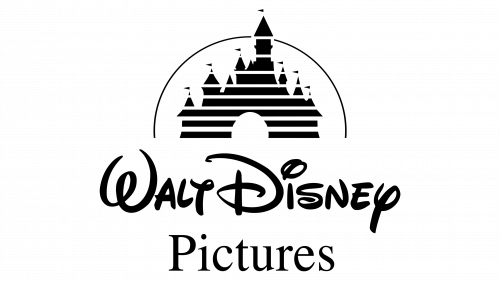
Walt Disney Pictures introduced its fantasy castle logo in 1985, debuting (without music) with Return to Oz before the fully scored version premiered with The Black Cauldron later that year. That original logo showed a white silhouette of Disneyland’s Sleeping Beauty Castle against a blue background, underscored by an arrangement of “When You Wish Upon a Star,” the theme from Pinocchio, composed for the logo by John Debney.
Why did the castle logo change in 2006?
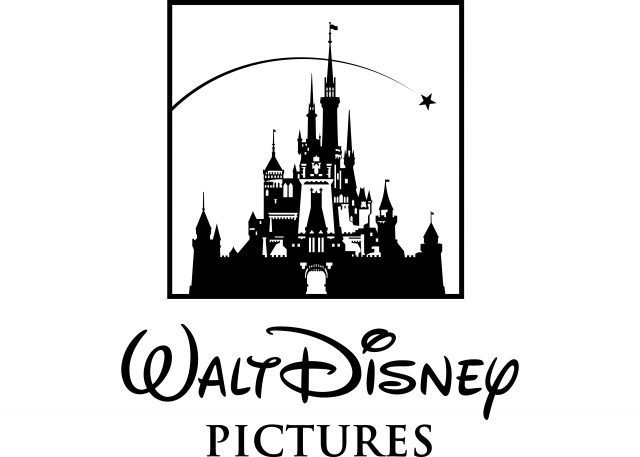
Disney modernized the castle logo in 2006 for Pirates of the Caribbean: Dead Man’s Chest, under animation director Mike Gabriel and producer Baker Bloodworth, with the new computer-animated version produced by Weta FX and yU+co. That redesign is the point where the castle actually started blending two real landmarks: it incorporates elements of both Disneyland’s Sleeping Beauty Castle and Florida’s Cinderella Castle, along with fireworks and a nod to the Disney family crest. Composer Mark Mancina wrote a new arrangement of “When You Wish Upon a Star” for this version. Between 2000 and the mid-2000s, Disney also used an alternate orange-toned castle variant for darker or more live-action-oriented films.
Why did “Pictures” disappear from the logo in 2011?
Starting with The Muppets in 2011, Disney shortened its onscreen branding, truncating “Walt Disney Pictures” down to simply “Disney” beneath the castle. Dropping “Walt” and “Pictures” made the mark easier to reuse consistently across theme parks, merchandising, and the streaming service that would become Disney+, rather than tying it to a single business line. The company returned to the castle logo once more for its 100th anniversary in 2022, unveiling an updated version at the D23 Expo built by Disney Studios Content and Industrial Light & Magic, with a new score by Christophe Beck.
Quick facts
| Company founded | 16 October 1923, Los Angeles, as Disney Brothers Cartoon Studio (Walt and Roy O. Disney) |
| Earlier studio | Laugh-O-Gram Studio, Kansas City (1921), went bankrupt in 1923 |
| Renamed | Walt Disney Studio (1926), then Walt Disney Productions (1929) |
| Mickey Mouse debut | Steamboat Willie, 1928, created after the Oswald the Lucky Rabbit rights dispute |
| Castle logo introduced | 1985 (Return to Oz; scored version with The Black Cauldron) |
| Castle in the original logo | Disneyland’s Sleeping Beauty Castle, not Cinderella Castle |
| Major redesign | 2006, blending Sleeping Beauty Castle and Cinderella Castle (Weta FX/yU+co) |
| “Pictures” dropped | 2011, starting with The Muppets |
Related reading: Pixar logo history, Marvel logo history, ABC logo history, 20th Century Fox logo history, and Hulu logo history.
Further reading
FAQ: Disney Logo and History
Is the castle in the Disney logo Cinderella’s Castle?
Not originally. The 1985 logo used Disneyland’s Sleeping Beauty Castle. The 2006 redesign blended elements of both Sleeping Beauty Castle and Florida’s Cinderella Castle.
When did Disney first use a castle in its logo?
In 1985, debuting silently with Return to Oz before the scored version premiered with The Black Cauldron.
Why did Mickey Mouse get created?
After Disney lost the rights to his earlier character, Oswald the Lucky Rabbit, in a dispute with his distributor, prompting the studio to create Mickey as a replacement in 1928.
Why does “Walt Disney Pictures” just say “Disney” now?
Starting in 2011, the studio truncated its onscreen branding to the single word “Disney,” making the mark easier to use consistently across films, parks, and streaming.
Is the Disney signature really Walt Disney’s own handwriting?
It’s a stylized version of his autograph rather than his everyday handwriting, adapted for consistent use as a logo.