Tour de France Logo History: Meaning, Symbolism & Brand Heritage

The Tour de France is more than a cycling race. It is one of the most enduring sporting events in the world, built on tradition, endurance, and national identity. Since its creation in the early 20th century, the race has grown into a global spectacle, followed by millions each summer. Much like explored in Olympic Rings Logo History and FIFA Logo History, its visual identity plays a crucial role in shaping how the event is perceived. Within the broader context of sports event logos, the Tour de France stands out for combining motion, symbolism, and storytelling into a single emblem.
The Tour de France logo history reflects the evolution of the race itself. From structured and traditional designs to dynamic and expressive compositions, the logo has gradually transformed into a visual representation of movement, competition, and prestige.
Tour de France Logo Meaning and History: Origin of a Sporting Icon
The origin of the Tour de France dates back to a bold idea conceived as a promotional strategy for a French newspaper. What began as a marketing initiative quickly evolved into the most prestigious cycling race in the world.
Over time, the event developed its own identity, shaped by its structure, traditions, and symbols. Among the most iconic elements are the leader jerseys, especially the yellow jersey, which represents the overall leader of the race.
This concept plays a central role in the Tour de France logo meaning. The use of yellow in the visual identity is not random — it directly references the maillot jaune, one of the most recognizable symbols in sports.
As the race expanded internationally, its branding adapted to reflect both its heritage and its global reach. The result is a logo that feels both distinctly French and universally recognizable.
Tour de France Logo Symbolism: Motion, Competition, and Visual Storytelling
The Tour de France logo symbolism is built around movement. Unlike static emblems, the logo is designed to feel dynamic, almost as if it is in motion.
One of the most distinctive features is the integration of cycling elements directly into the lettering. In modern versions, the letters form a subtle image of a cyclist, with circular shapes representing wheels.
The yellow circle, often positioned alongside the wordmark, symbolizes both the sun and the iconic yellow jersey. It reinforces the idea of leadership, energy, and endurance.
Black adds contrast and authority, while white provides balance and clarity. Together, these elements create a composition that feels alive, reflecting the intensity of the race.
This layered symbolism makes the Tour de France logo one of the most expressive identities in sports branding.
Tour de France Logo History Timeline: Evolution of a Dynamic Sporting Identity
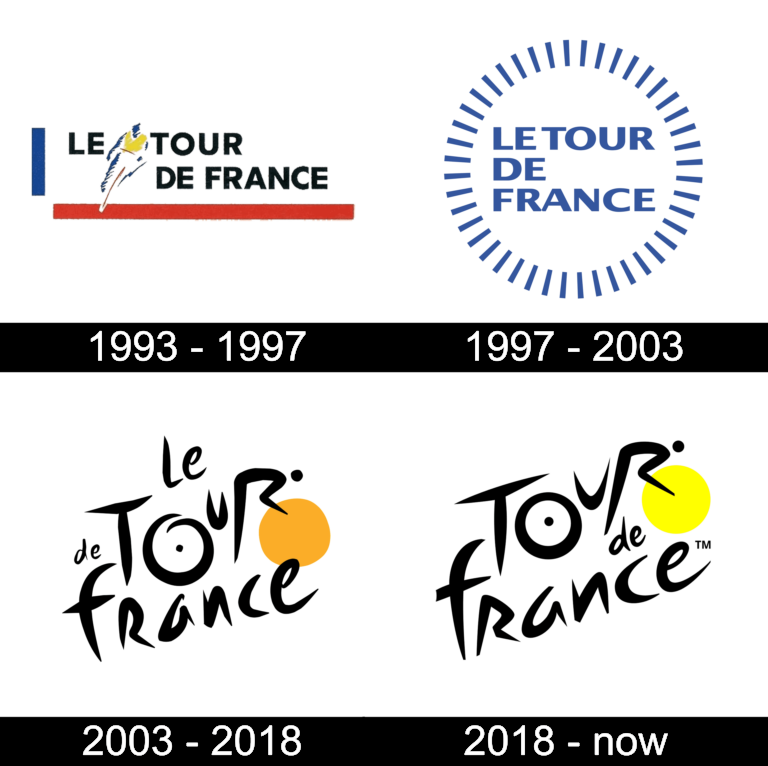
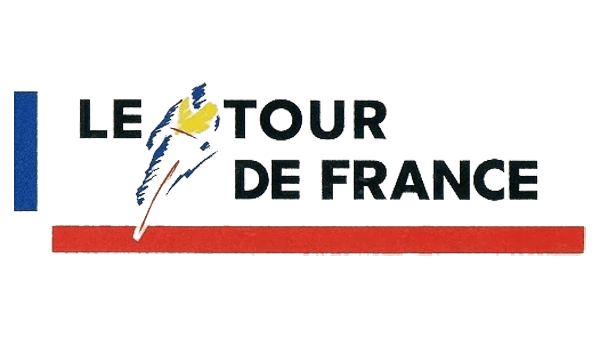
1993–1997: Early Modern Logo with National Colors and Athletic Symbolism
The logo used in the early 1990s incorporated elements of the French national identity. The color palette included blue, white, and red, reflecting the national flag.
The composition featured bold uppercase lettering in black, accompanied by a yellow emblem representing a cyclist wearing the leader’s jersey. This abstract figure introduced motion into the design, linking the logo directly to the race.
The structure was relatively formal, combining traditional layout with symbolic elements.
1997–2003: Minimalist Circular Composition and Clean Typography
In 1997, the Tour de France logo was redesigned with a lighter and more minimal approach. The color palette shifted toward blue and white, creating a cleaner and more modern appearance.
The wordmark was arranged across multiple lines, set in a bold sans-serif typeface. Surrounding the text was a circular frame made of thin, radiating lines.
This version emphasized structure and clarity, moving away from heavy symbolism toward a more graphic and balanced composition.

2003–2018: Introduction of the Iconic Cyclist-Inspired Wordmark
The 2003 redesign marked a turning point in Tour de France logo history. This is when the brand introduced the now-iconic custom lettering that integrates the image of a cyclist.
The black wordmark was set in a fluid, handwritten-style typeface, adding personality and movement. Within the lettering, the “O” and an adjacent yellow circle formed the wheels of a bicycle, while the rest of the letters suggested the rider’s body.
This clever integration transformed the logo into a visual narrative, making it instantly recognizable and deeply connected to the sport.

2018–Present: Refined Identity and Stronger Yellow Emphasis
The most recent redesign builds on the 2003 concept while introducing refinements for modern use.
The black lettering is now placed on a yellow background, strengthening the connection to the leader’s jersey. The yellow tone has been slightly adjusted to appear brighter and more vibrant.
The circular elements have been refined, with the “O” becoming a more perfect geometric shape. The second wheel, previously yellow, is now white, improving contrast and clarity.
This version represents the maturity of Tour de France logo heritage, preserving the core idea while enhancing readability and visual impact.
Tour de France Logo Typography and Color: Energy, Identity, and Recognition
Typography is one of the most distinctive aspects of the Tour de France logo design. The custom lettering is fluid and expressive, resembling handwriting while maintaining structure.
This style introduces a human element, reflecting the effort and individuality of the riders.
Color plays a central role in the logo description. Yellow dominates the palette, symbolizing leadership, achievement, and visibility. It directly references the yellow jersey, the ultimate prize of the race.
Black provides contrast and authority, grounding the composition. White adds clarity, ensuring the design remains legible across different contexts.
Together, these elements create a visual identity that feels both energetic and iconic.
Tour de France Logo Heritage: A Visual Representation of Endurance and Prestige
The Tour de France logo history demonstrates how a brand can evolve while staying true to its core identity. Each redesign has brought refinement, not reinvention.
Its logo heritage is built on motion, symbolism, and consistency. The integration of cycling elements into the design ensures that the logo always reflects the essence of the race.
In the world of sports branding, where many identities rely on static emblems, the Tour de France stands out by creating a logo that feels alive.
It is not just a mark — it is a representation of endurance, competition, and the spirit of one of the greatest races in history.
Tour de France Logo History FAQ: Meaning, Symbolism, and Evolution
What does the Tour de France logo symbolize?
It represents a cyclist in motion, incorporating wheels and rider elements into the lettering.
Why is yellow used in the Tour de France logo?
It symbolizes the yellow leader jersey, awarded to the race leader.
When was the modern Tour de France logo introduced?
The foundation of the current design was introduced in 2003.
What makes the Tour de France logo unique?
Its integration of a cyclist directly into the typography.
Has the Tour de France logo changed significantly over time?
It has evolved through refinements while preserving its core concept.