Talbot Logo History: Meaning, Symbolism & Brand Heritage
Talbot is one of those automotive names that carries layers of history across countries, owners, and eras. Founded in 1903 as Clement-Talbot, the brand moved through partnerships, racing success, and multiple revivals before disappearing in the 1990s. In the wider context of Peugeot Logo History and Sunbeam Logo Meaning, Talbot represents a transitional European automotive identity—one shaped by mergers, engineering ambition, and changing industrial ownership.
Within Automotive Logos, the Talbot logo history stands out for its constant reinvention. Unlike brands that kept one emblem for decades, Talbot experimented repeatedly with heraldic crests, racing symbolism, and modernist geometry. Yet across these changes, its logo meaning remained tied to prestige, performance, and mechanical strength.
Talbot Logo Meaning and History: From Clement-Talbot to a Racing Legacy
Talbot’s origin dates to a joint venture between French industrialist Clément and British aristocrat Charles Chetwynd-Talbot. Early vehicles carried the Clement-Talbot name, reflecting the dual Anglo-French identity of the company.
As the brand evolved, it became associated with performance and engineering experimentation. Through its connection with Sunbeam and later Talbot-Lago, the company gained recognition in motorsport, including endurance racing success. These achievements shaped Talbot’s logo heritage, pushing the brand toward more prestigious and competitive visual symbols.
Ownership changes played a major role in the brand’s trajectory. From STD Motors to Rootes Group and later PSA (Peugeot-Citroën), Talbot’s identity shifted alongside corporate restructuring. Each phase introduced a new logo description, reflecting the priorities of the moment—luxury, racing performance, or mass-market production.
Talbot Logo Symbolism: Lions, Crests, and the Evolution of Automotive Identity
Talbot logo symbolism evolved significantly over time, but several themes remained consistent.
Early heraldic designs featured lions and crowns, drawing from aristocratic and British heritage imagery. These elements symbolized prestige, authority, and tradition—qualities important for early automobile manufacturers trying to establish credibility.
Later designs moved toward mechanical and geometric symbolism. The shift from crests to simplified shapes reflected the broader trend in automotive branding during the mid-20th century, where companies emphasized engineering precision over aristocratic imagery.
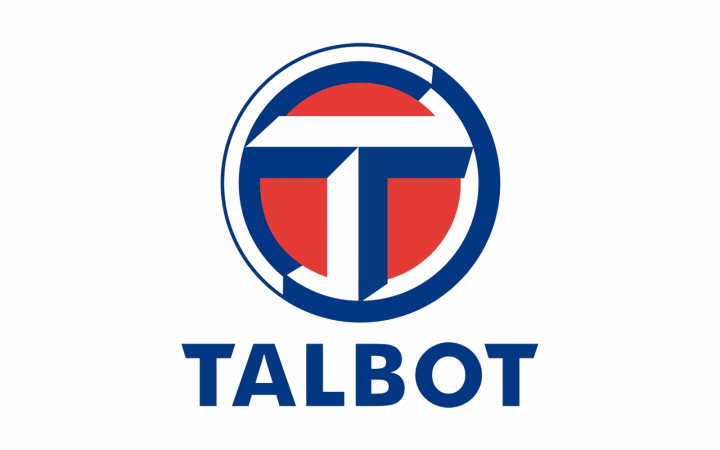
In its final form, the Talbot logo adopted a bold geometric “T” enclosed within a circular frame. This symbol represents structure, strength, and modern automotive identity. The circle reinforces motion and continuity, while the strong letterform creates a clear and memorable brand mark.
Color choices also contributed to the logo meaning. Blue suggested reliability and engineering depth, red added energy and performance, and silver finishes on vehicle badges conveyed refinement and durability.
Talbot Logo History Timeline: A Century of Changing Automotive Identity
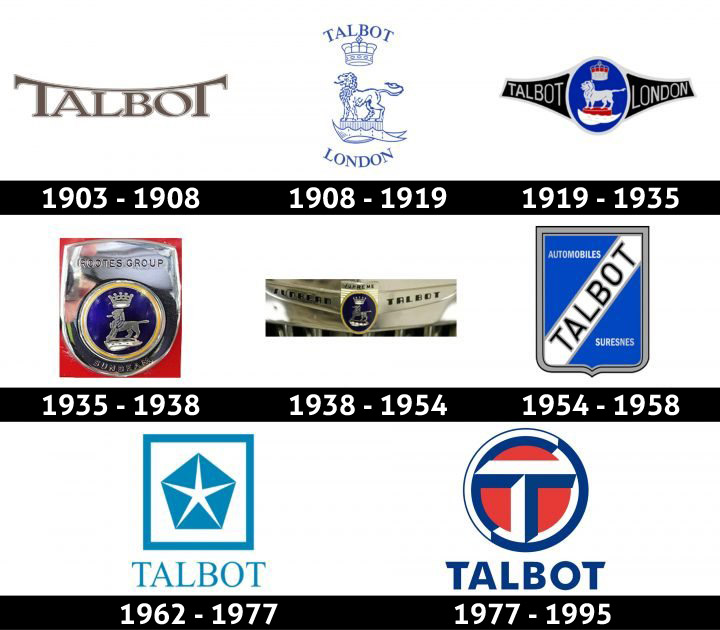
1903–1908: Decorative Wordmark and Early Aristocratic Identity.
The first Talbot logo featured an elegant custom wordmark with extended “T” characters forming a roof-like structure. The design reflected craftsmanship and sophistication, aligning with the brand’s early luxury positioning.
1908–1919: Heraldic Crest with Lion and Crown Symbolism.
The redesign introduced a crest featuring a lion and crown, reinforcing British heritage and prestige. The composition placed the brand name above and “London” below, emphasizing origin and status.
1919–1935: Oval Medallion and Structured Automotive Branding.
The logo shifted to a blue oval with a silver lion and structured typography. This stage marked a move toward a more standardized automotive emblem, balancing tradition with industrial clarity.
1935–1938: Refined Crest and Simplified Composition.
The emblem was streamlined, removing excess elements while keeping the central medallion. The design became cleaner, preparing the brand for broader recognition.
1938–1954: Winged Emblem and Racing Influence.
A wing-like silver structure was introduced, suggesting speed and performance. The bold lettering reinforced Talbot’s association with motorsport and engineering innovation.
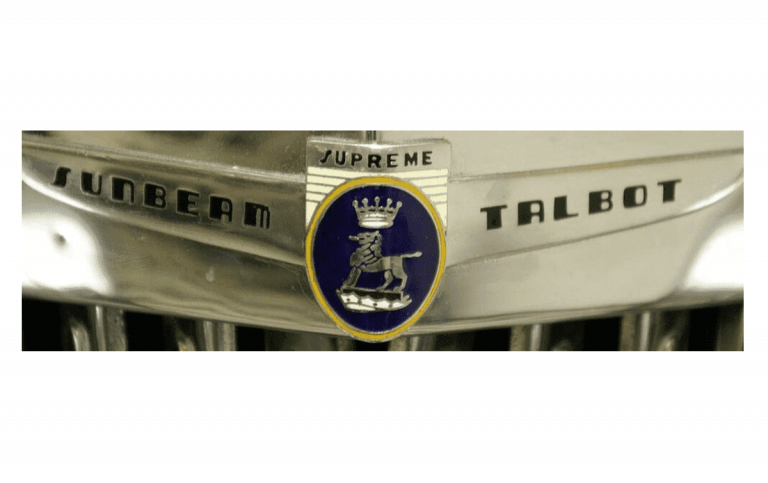
1954–1958: Minimal Crest and Transitional Identity.
The logo became simpler, featuring a blue shield with a diagonal banner. This phase reflected a shift toward practicality during changing ownership and market conditions.
1962–1977: Pentastar Influence and Corporate Styling.
Under new ownership influences, the logo adopted a geometric star-like symbol inside a square frame, moving further toward modern corporate branding.
1977–1995: The Final “T” Emblem and Modern Automotive Identity.
The last Talbot logo introduced a bold geometric “T” inside a circular frame, paired with a clean uppercase wordmark. This design represented the brand’s most modern and recognizable identity, combining simplicity, strength, and clarity. It became the defining symbol of Talbot’s final production years.
Talbot Logo Heritage: A Brand Defined by Reinvention
Talbot’s logo history is unlike that of most automotive brands. Instead of refining a single symbol, the company repeatedly reinvented its identity to match changing ownership, markets, and technological direction.
Despite this variety, a clear pattern emerges. Early designs emphasized heritage and prestige. Mid-century logos reflected engineering and performance. Later versions adopted modern geometric simplicity. Each phase contributed to Talbot’s overall logo heritage, creating a layered identity tied to both tradition and innovation.
Today, the Talbot logo meaning can be understood as a combination of these elements: history, performance, and adaptability. Even though the brand no longer operates, its visual evolution remains a compelling example of how automotive identity can change alongside the industry itself.
Talbot Logo History FAQ: Meaning, Symbolism, and Origin
What does the Talbot logo represent?
The Talbot logo represents automotive heritage, performance, and engineering strength, evolving from heraldic symbols to modern geometric design.
Why did Talbot use a lion and crest in its early logos?
The lion and crest symbolized British heritage, prestige, and authority, reflecting the brand’s early positioning as a high-quality automobile manufacturer.
What is the meaning of the Talbot “T” emblem?
The final “T” emblem represents strength and simplicity, using a bold geometric form within a circle to create a modern automotive identity.
When was Talbot founded?
Talbot was founded in 1903 as Clement-Talbot, an Anglo-French automobile manufacturer.
Why did the Talbot brand disappear?
Talbot was discontinued in the 1990s after declining sales and restructuring under the Peugeot-Citroën group.