What Does MCM Stand For? Logo, Laurel and Visetos Explained

MCM is one of the few luxury logos that American hip-hop helped make famous. The three letters inside a laurel wreath, printed over and over on cognac-coloured leather, were born in disco-era Munich in 1976, went quiet in the late 1990s, and came back as a Korean-owned global brand whose studded backpacks are still a common sight in U.S. malls and airports. In 2026 MCM is marking its 50th anniversary.

What does MCM stand for?
The letters first stood for Michael Cromer München, after the brand’s founder, Michael Cromer, and the city where he started it. Today the company says MCM stands for “Modern Creation München.” The German spelling of Munich is part of the name on purpose: the brand presents itself as a Bavarian house.
What is the meaning of the MCM logo?
The logo combines the letters MCM in a sharp, pointed serif with a laurel wreath arching over them. According to MCM, the laurel was originally drawn by hand as a tribute to the brand’s Bavarian roots and stands for victory, valour and honour, the same meaning it had for ancient Greek and Roman winners. The company even specifies the leaf count: nine leaves on the left side of the wreath and eight on the right.
The letters are usually shown in black outline on white, or gold on black, and they appear on a brass plate fixed to the brand’s heritage bags. Each plate carries its own number, a detail collectors use when checking authenticity.
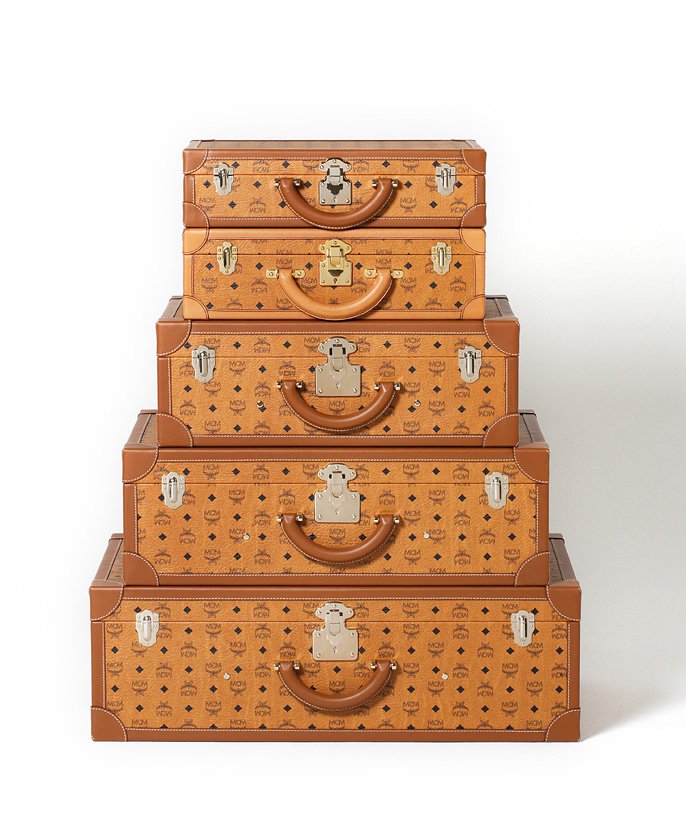
What is the MCM Visetos pattern?
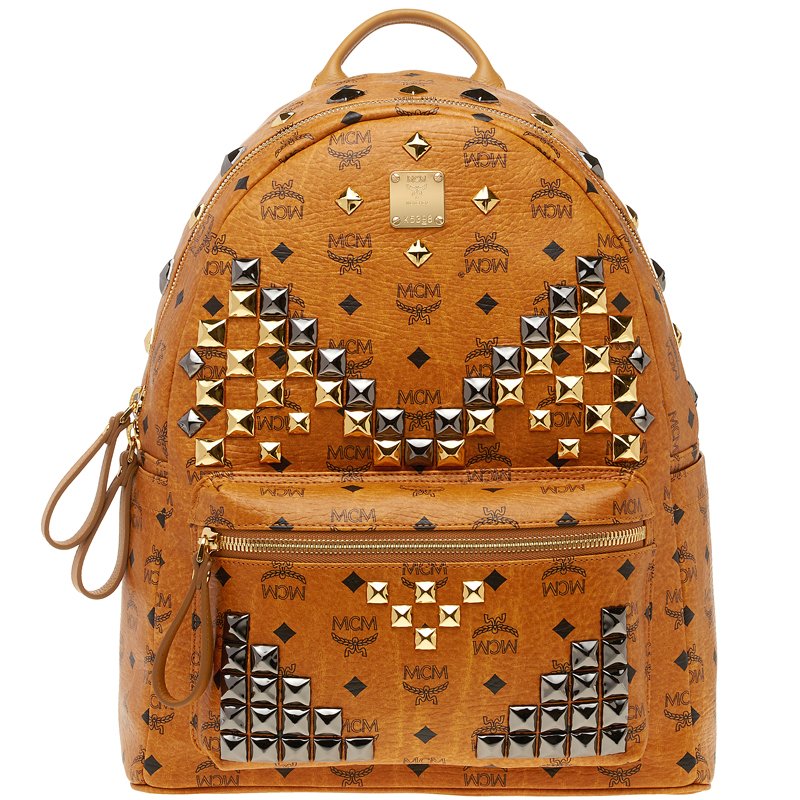
Visetos is MCM’s monogram print, created in the late 1970s. It repeats the MCM letters, the laurel and small diamond shapes taken from the blue-and-white lozenges of the Bavarian flag. The classic version prints the pattern in black and brown on a warm cognac base, and the first carryalls in Munich were hand-painted. Like the Louis Vuitton monogram or the Gucci double G, it turns the whole surface of the bag into a logo.
The print became a status symbol in the 1980s luxury travel boom and then in 1990s hip-hop culture, where stylists such as Misa Hylton used it in custom pieces. In 2018 an MCM bodysuit worn by Beyoncé in the “APES**T” video brought it back in front of a new audience.
What happened to MCM in the 1990s?
MCM grew fast in the 1980s and early 1990s, reaching around 250 shops worldwide and about $250 million in sales in 1993. Its image was loud and flashy, which suited the times. In the mid-1990s the company ran into financial trouble, investors lost confidence, and in 1997 its stores and trademark rights were split up and sold off in different countries.
Who owns MCM today?
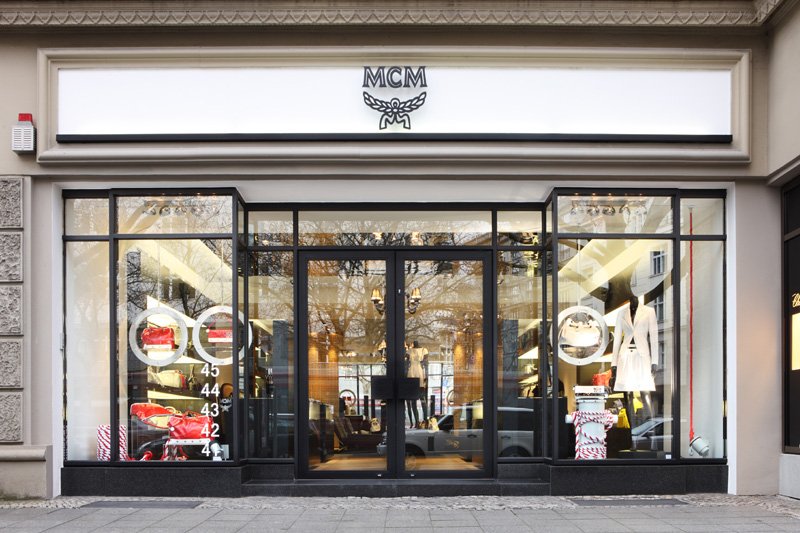
In 2005 the Korean businesswoman Sung-Joo Kim, through her Sungjoo Group, bought the worldwide rights to MCM. She relaunched the brand in 2006 with a store in Berlin, followed by new shops in New York, London, Paris, Tokyo and across Asia. The brand now makes most of its sales in Asia, while it keeps design studios in Milan, Berlin and Seoul. Its studded Stark backpack in Visetos became the label’s signature product of the 2010s, and collaborations with Puma, BAPE and Crocs kept it close to streetwear.
For its 50th anniversary in 2026, MCM unveiled a special anniversary logo and planned a year of events ending in Munich.
Which other luxury brands are known for a monogram?
MCM belongs to the small group of luxury houses whose pattern is as famous as their name. Louis Vuitton, Gucci, Fendi and Goyard all made monogram canvas part of their identity, and Dior revived its Oblique print. Labels such as Maison Margiela went the other way, hiding the brand behind a plain numbered tag. MCM’s twist is the laurel and the Bavarian diamonds, which give it a sportier, more trophy-like feel. In the United States its closest fans overlap with streetwear brands like Supreme and Off-White, which also rely on bold, repeatable logos.
Quick facts
| Founded | 1976, Munich, Germany |
| Founder | Michael Cromer |
| Name | Originally Michael Cromer München; now “Modern Creation München” |
| Logo | MCM in pointed serif letters under a laurel wreath (9 leaves left, 8 right) |
| Monogram | Visetos (late 1970s), cognac base with Bavarian-flag diamonds |
| Owner | Sungjoo Group, led by Sung-Joo Kim (since 2005) |
| Anniversary | 50 years in 2026 |