
Mastercard Logo History: Meaning, Symbolism & Brand Heritage
The Mastercard logo is one of the most recognizable financial symbols on the planet—so iconic that even without the name attached, the overlapping red and orange circles immediately signal trust, payment security, and global acceptance. But this modern minimalist badge is the result of a long visual evolution, shaped by decades of innovation in banking and electronic payments.
From the early Interbank era to today’s stripped-down geometric identity, Mastercard’s logo story is a perfect example of how design evolves while preserving the essence of a brand. Its circles have symbolized partnership and interconnection for more than half a century, and each redesign reflects a new chapter in the company’s technological and cultural growth.
Below is the complete heritage of the Mastercard logo, its meaning, symbolism, and the shifts that shaped one of the most enduring marks in financial branding.
Meaning and Origins of the Mastercard Symbol
At its core, the Mastercard symbol is built around two overlapping circles—a visual representation of connection, partnership, and interoperability. Red expresses passion, energy, and movement, while orange carries warmth, optimism, and innovation. Together, they form a universal visual shorthand for seamless global payments.
Although the modern badge is ultra-minimalist, its basic geometry has been in place since 1966, proving that strong branding can transcend time.
Logo Evolution Through the Years

1966 – 1979: MasterCharge and the Interbank Era
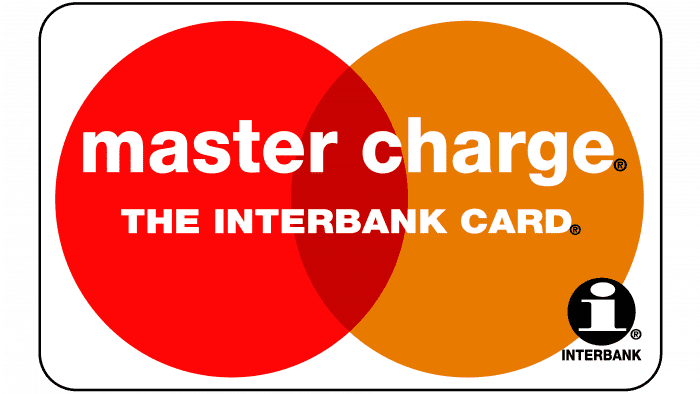
Before Mastercard existed under its current name, Interbank launched MasterCharge, the predecessor to today’s product. The first symbol featured a bold lowercase “i” inside a black circle, paired with a clean “Interbank” wordmark beneath it.
In 1968, the familiar overlapping circles appeared for the first time—red and orange merging at the center, with white “MasterCharge: The Interbank Card” lettering across them. The imagery signaled collaboration among American banks and a move toward unified payment standards.
1979 – 1990: Introducing the Mastercard Name
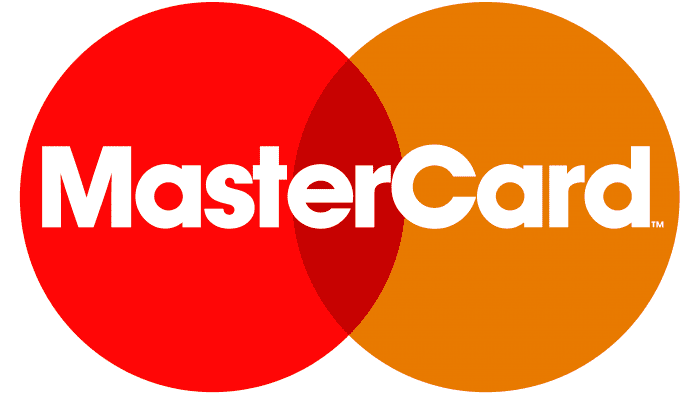
The brand adopted the name “MasterCard” in 1979, prompting a sleek update to the logo. The overlapping two-circle layout stayed intact, but the lettering shifted to reflect the company’s new identity. It was still white, bold, and placed across the emblem, maintaining continuity with earlier designs.
1990 – 1996: Brighter Colors and Modern Energy
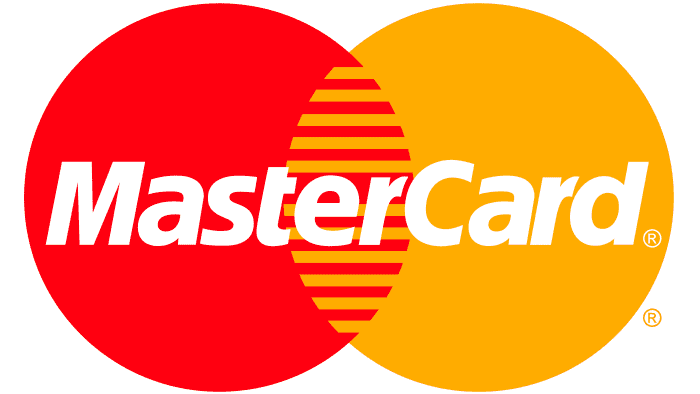
Mastercard refreshed its palette with a move from deep orange to bright yellow. The intersecting segment now featured horizontal color bars—an aesthetic that emphasized motion and modern financial technology. The italicized wordmark reinforced speed and progress.
1996 – 2016: A Stronger Mark for a Growing Global Brand
The yellow circle deepened, the stripes in the center were reduced, and a subtle black shadow was added behind the text. This era, spanning nearly two decades, marked Mastercard’s global expansion alongside the rise of digital payments.
A corporate version introduced in 2006 included an additional transparent circle and the phrase “MasterCard Worldwide,” reflecting the company’s growing international footprint.
2016 – 2020: A Return to Simplicity
In 2016, Mastercard dropped the capital “C” and adopted the modern lowercase “mastercard”. The circles returned to a flat, line-free design—an homage to the original 1968 emblem but executed with modern precision. The typography became clean and geometric, aligning with contemporary design trends across fintech.
2019 – Today: The Icon Alone
One of the boldest branding decisions came in 2019, when Mastercard unveiled a version of its identity without any text at all. The two overlapping circles stand alone, instantly recognized across apps, payment terminals, bank cards, and global retail.
Stripped to its essence, the mark signals a mature brand with absolute visual recognition—the hallmark of a true global icon.
Font and Color
The Mastercard wordmark uses a custom adaptation of the FF Mark type family: geometric, modern, and highly legible. Its simplicity mirrors the clarity and minimalism of the emblem.
Red and orange are the defining colors of Mastercard’s visual heritage. Originally deeper and more muted, the shades evolved into bright, energetic tones in the 1990s and remain a central part of the brand’s identity today. The palette communicates confidence, dynamism, movement, and global connectivity.
A Symbol That Transcends Language
The Mastercard logo is a masterclass in timeless branding. From its origin as a banking partnership symbol to its modern form as two simple geometric shapes, it has always represented trust and connection. Whether paired with text or standing alone, the overlapping circles tell a story of unity, innovation, and global reach—perfectly aligned with the role Mastercard plays in the world of payments.
Few logos achieve this level of universal recognition, and even fewer do it through subtle refinement rather than radical transformation. Mastercard’s visual heritage continues to set the benchmark for iconic, minimalist, and meaningful design.
FAQ Mastercard Logo
What does the Mastercard logo represent?
The overlapping circles symbolize partnership, global connection, and seamless payment experiences.
Why are the Mastercard circles red and orange?
Red represents energy and movement, while orange conveys warmth and innovation—together signaling bold, modern financial services.
When did Mastercard remove the text from its logo?
In 2019, Mastercard launched a text-free version of the logo, relying solely on the iconic circles for recognition.
What font does Mastercard use?
Mastercard uses a custom adaptation of the FF Mark typeface—clean, geometric, and highly legible.
What was Mastercard originally called?
It began as MasterCharge, created by Interbank in the 1960s before being renamed Mastercard in 1979.