Chuck Taylor All Star Logo: The Ankle Patch
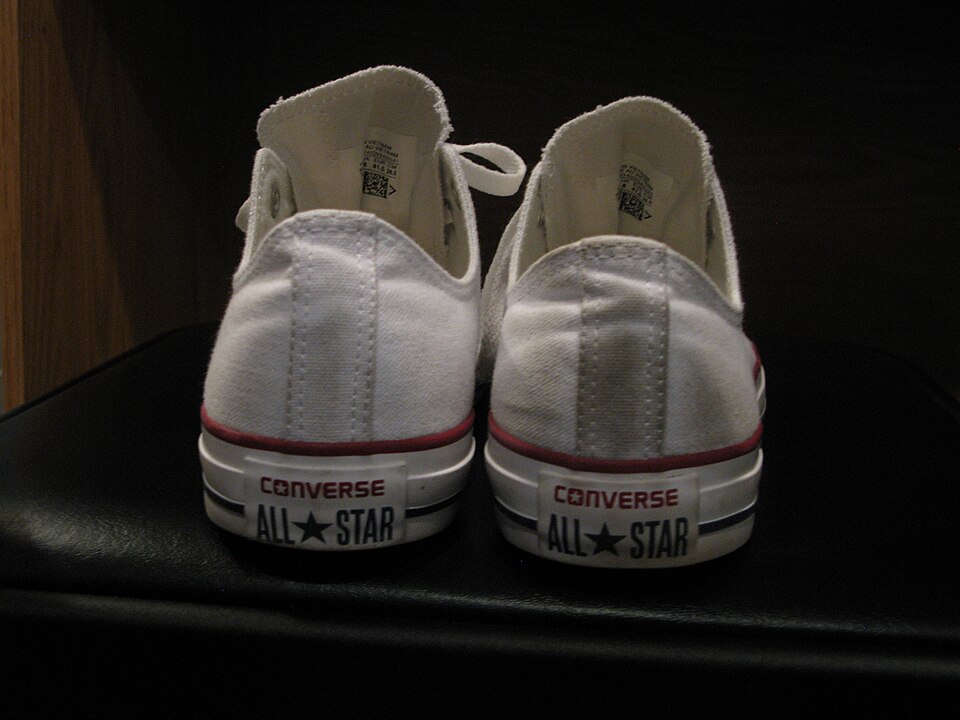
Marquis Mills Converse opened the Converse Rubber Shoe Company in Malden, Massachusetts, in 1908. Its canvas basketball shoe came out in 1917, but it only became the Chuck Taylor All Star after a basketball player named Chuck Taylor joined the sales team in 1921 and put his name on the round patch at the ankle. That patch, with its five-pointed star, has been on the high-top version ever since.
What does the Chuck Taylor All Star ankle patch look like?
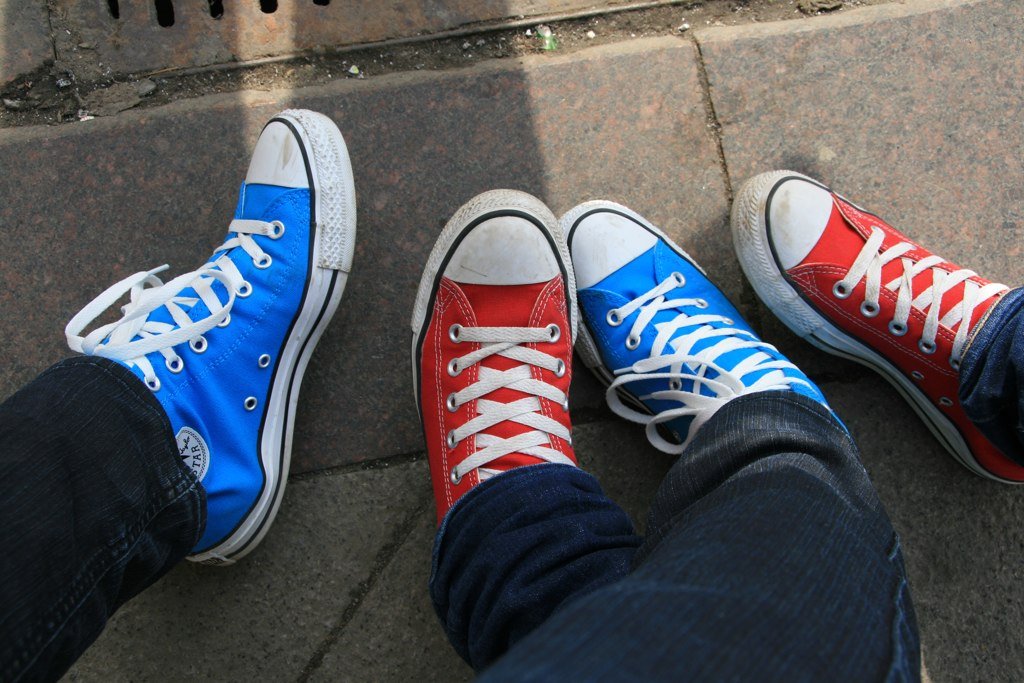
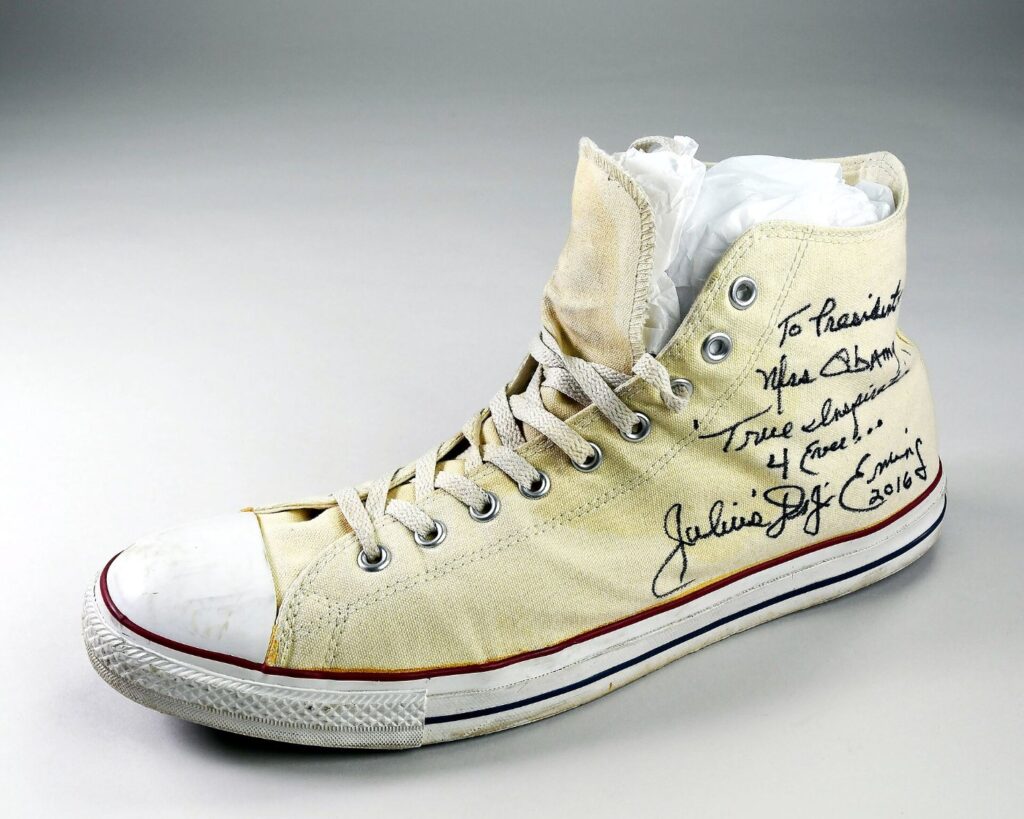
The first version of the shoe, sold from 1917 as the Non-Skid, had no star and no patch. By about 1923 the design had settled into the form people know: a round patch on the inner ankle with a star in the middle, the words Converse All Star around it, and Chuck Taylor’s signature across the center.
On today’s patch the star is blue, the Converse All Star lettering is red capitals, and the signature is a loose blue script based on Taylor’s own handwriting, all inside a white circle with a stitched-look border. Only the high-tops get the ankle patch. Low-cut pairs carry the logo on a small rubber label at the heel instead.
Who was Chuck Taylor, and why is his name on the shoe?
Taylor played semi-professional basketball before Converse hired him as a salesman in 1921. He suggested changes to the shoe, including better support around the ankle, and spent years driving around the country running basketball clinics and selling shoes to coaches. Adding his signature to the patch made the All Star one of the first sneakers named after a player.
The shoe did very well on court. It was the official Olympic basketball shoe from 1936 to 1968, American soldiers trained in it during World War II, and by the 1960s Converse had an estimated 70 to 80 percent of the basketball shoe market.
Who owns Converse today, and how is the brand doing?
Converse lost its grip on basketball in the 1970s as players moved to leather shoes from Nike, Adidas and others, and the company went through several rounds of financial trouble, including bankruptcy in 2001. Nike bought it in 2003 for about $305 million, and production moved from the United States to factories in Asia.
The Chuck Taylor then became mostly a fashion shoe, and sold strongly for years, but recent results have been weak. Converse revenue fell 27, 30 and 35 percent year over year in the first three quarters of Nike’s 2026 financial year, to $264 million in the quarter ending February 2026. Industry reports in spring 2026 said Authentic Brands Group, which owns Reebok and Champion, was watching Converse as a possible purchase, though no formal talks were reported, and Nike has said it remains committed to the brand.
Quick facts
| Introduced | 1917 as the Non-Skid; Taylor’s name added in the early 1920s |
| Namesake | Chuck Taylor, basketball player and Converse salesman |
| Headquarters | Boston, Massachusetts |
| Industry | Footwear |
| Owner | Nike, since 2003 |
| Logo | Circular ankle patch with a blue star and Chuck Taylor’s signature |
| Known for | One of the earliest sneakers named after a player |
The Chuck Taylor All Star’s century of basketball and streetwear history places it alongside other sneaker icons such as Vans, Air Jordan Jumpman, Adidas, New Balance, and streetwear brand Supreme.