Air Jordan Jumpman Logo: The Story Behind the Silhouette
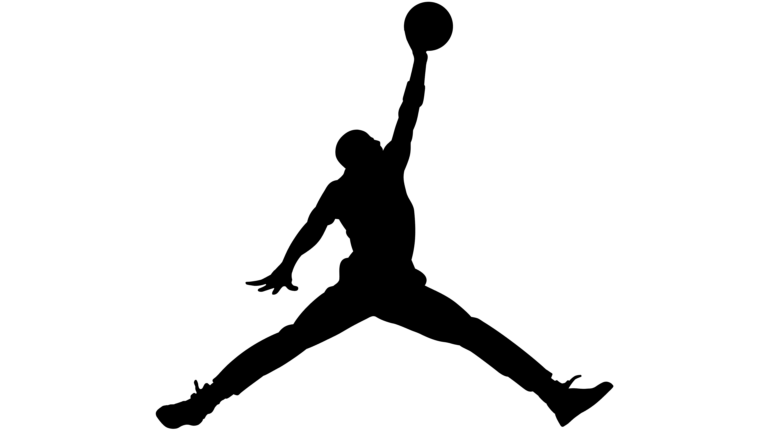
The Jumpman logo, showing Michael Jordan frozen mid-leap, is one of the most recognized silhouettes in sports and fashion branding. Created by Nike as part of the Air Jordan line, it has represented the brand since 1988, replacing an earlier winged-basketball design and becoming a symbol that extends far beyond basketball into streetwear and popular culture.
Meaning and History
The Air Jordan brand launched in 1984, when Nike beat out Adidas and Converse to sign Michael Jordan and create his own signature shoe line, working with designer Peter Moore. The gamble paid off dramatically: first-year sales reached roughly 126 million dollars against an original three-year projection of just 3 million, even as the shoes drew fines from the NBA over their color scheme violating uniform rules.
The now-famous Jumpman silhouette followed in 1988, introduced with the Air Jordan III under design direction from Tinker Hatfield. It was inspired by a 1984 Life magazine photograph of Jordan leaping through the air. For the logo, Moore staged a new photo shoot in Chicago, having Jordan recreate the pose in his Chicago Bulls uniform and Nike shoes rather than the Olympic jumpsuit and New Balance sneakers seen in the original image. The resulting silhouette became the Jumpman, and Nike has continued to refine it in small ways over the following decades while keeping its core pose intact.
The logo’s underlying photograph was also the subject of a long-running legal dispute: photographer Jacob Rentmeester, who took the original 1984 image, sued Nike over the Jumpman’s resemblance to his photo. The case was not resolved until 2019, when courts ultimately ruled in Nike’s favor.
Logo Symbolism Analysis
The Jumpman captures Jordan mid-air in a pose reminiscent of a ballet grand jeté, legs split wide and arm extended upward with a basketball. That physical extension is read as a symbol of freedom and power, conveying strength, confidence, and an almost superhuman sense of elevation. Rendered as a solid black silhouette, the logo strips away all detail except the pose itself, letting the shape alone carry the brand’s athletic identity.
Logo History Timeline
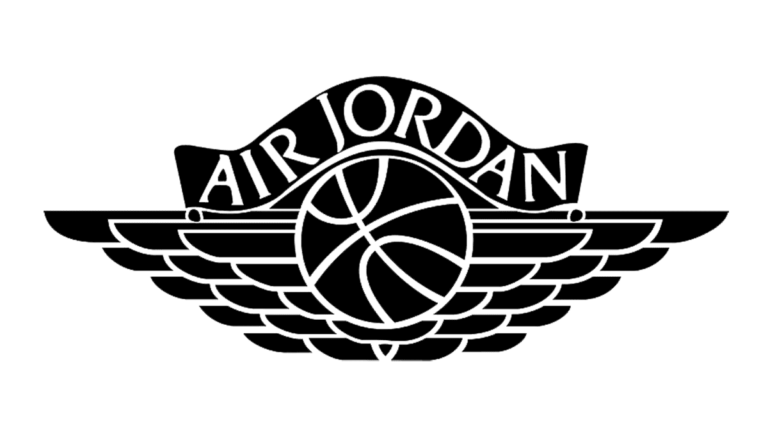
1984 to 1987: The original Air Jordan logo featured a basketball with wings in the background, paired with “Air Jordan” lettering. The design was more generic than what followed, with the wings meant to suggest speed.
1988 to present: Nike introduced the Jumpman silhouette with the Air Jordan III, based on the staged recreation of Jordan’s 1984 leap. It has remained the brand’s defining mark ever since, undergoing only minor refinements while keeping its instantly recognizable form.
Typography and Visual Construction
The original Air Jordan wordmark used small serifs, blending curved and pointed letterforms to suggest athleticism. As the brand matured, the typography was simplified, dropping the serifs for a cleaner, sportier look better suited to standing alongside the increasingly minimal Jumpman silhouette.
Heritage and Brand Positioning
Ownership of the Jumpman logo rests with Nike rather than with Michael Jordan himself, a detail that underscores how thoroughly the mark became a corporate asset even as it immortalizes an individual athlete’s image. Decades after its introduction, the Jumpman remains one of the most valuable and widely recognized logos in sports and fashion, having grown from a basketball shoe line into a full streetwear and lifestyle brand built entirely around a single silhouette.
Frequently Asked Questions
When was the Jumpman logo created?
The Jumpman logo debuted in 1988 with the Air Jordan III, replacing the original 1984 winged-basketball design.
Who is depicted in the Jumpman logo?
The silhouette shows Michael Jordan leaping through the air, recreated specifically for the logo in a Chicago photo shoot organized by designer Peter Moore.
Does Michael Jordan own the Jumpman logo?
No, the Jumpman logo is owned by Nike, even though it depicts Michael Jordan.
What does the Jumpman logo symbolize?
The leaping silhouette symbolizes freedom, power, and athletic confidence, capturing a single dramatic moment of elevation.