
Black Panther Logo History: Meaning, Symbolism & Marvel Heritage
Black Panther is one of the most influential superheroes in Marvel history, a character whose visual identity became just as powerful as the stories themselves. First introduced in 1966 by Marvel Comics, Black Panther quickly stood apart from other superheroes through its regal symbolism, futuristic themes, and strong cultural identity. Much like explored in Spider-Man Logo History and Batman Logo History, the evolution of the logo reflects the evolution of the character itself. Within the broader landscape of Marvel superhero logos, Black Panther remains one of the boldest and most stylistically unique identities ever created.
The Black Panther logo history is deeply connected to Wakanda, technology, royalty, and power. Across comics and films, the visual identity evolved from aggressive comic-book lettering into a sleek cinematic emblem recognized worldwide.
Black Panther Logo Meaning and History: The Origin of a Marvel Icon
The origin of Black Panther dates back to 1966, when Stan Lee and Jack Kirby introduced the character in Fantastic Four #52. Unlike many superheroes of the era, Black Panther was presented not only as a fighter, but as a king, strategist, and technological visionary.
This distinction shaped the Black Panther logo meaning from the very beginning. The identity needed to communicate power, mystery, and sophistication at the same time.
Early comic logos focused heavily on dramatic typography, using sharp edges and aggressive forms to reflect strength and action. As the franchise expanded into film and mainstream culture, the visual identity became more refined and cinematic.
This transformation defines Black Panther logo heritage, where each redesign reflects a different era of Marvel storytelling.
Black Panther Logo Symbolism: Royalty, Strength, and Futuristic Identity
The Black Panther logo symbolism is built around contrast. It combines tribal inspiration with futuristic aesthetics, creating a visual language that feels both ancient and modern.
The sharp, elongated typography evokes claws, weapons, and movement. Several versions of the logo use pointed letter endings to resemble the panther’s physical traits, including claws and fangs.
Dark tones reinforce mystery and authority, while metallic gold accents symbolize royalty and Wakandan wealth.
In cinematic versions, the typography became more geometric and technologically inspired, reflecting Wakanda’s advanced civilization.
Together, these elements create a logo description centered around power, elegance, and evolution.
Black Panther Logo History Timeline: Evolution of a Marvel Superhero Identity
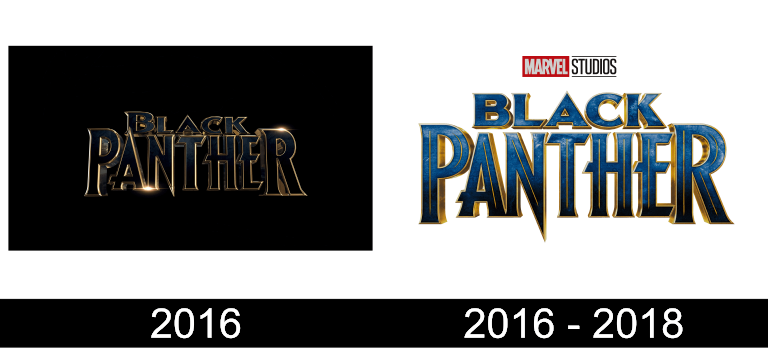
1966–Present: Comic Book Origins and Marvel Identity
The Black Panther character first appeared in Marvel Comics in 1966, introducing one of the company’s most visually distinct superheroes.
From the beginning, the branding surrounding the character emphasized bold lettering and strong contrast, aligning with Marvel’s dramatic comic-book style of the era.
As the character evolved through different comic series and storylines, the typography became sharper and more stylized, reinforcing the aggressive and regal tone associated with Wakanda’s protector.
This period established the foundation of Black Panther logo history.
2016: Graffiti-Inspired Comic Logo and Aggressive Typography
One of the most recognizable comic-era Black Panther logos appeared in 2016.
Designed by Comicraft, the wordmark featured layered typography with strong three-dimensional effects. The word “BLACK” was positioned above “PANTHER,” creating a compact and visually heavy structure.
The lettering incorporated sharp angles and claw-like extensions, especially visible in the letter “N,” whose pointed edge referenced the panther’s claws and necklace.
This version introduced an urban, graffiti-inspired energy, reflecting the comic’s modern tone.
2016–2018: Refined Comic Identity and Cinematic Transition
As Marvel prepared for the cinematic adaptation, the Black Panther logo evolved toward a more polished and cinematic appearance.
The typography combined influences from comic-book aesthetics, Art Deco styling, and futuristic design. The letters became taller, cleaner, and more structured while preserving their sharp forms.
This version bridged the gap between traditional comics and blockbuster branding, helping establish a recognizable identity before the release of the film.
2018–Present: Movie Logo and Futuristic Minimalism
The release of Black Panther in 2018 introduced a completely new visual identity for mainstream audiences.
The cinematic logo adopted a futuristic sans-serif typeface inspired by Wakandan technology and architecture. The composition became cleaner and more geometric, abandoning heavy comic-book textures in favor of sleek modern forms.
The metallic effects and dark palette reinforced the themes of royalty, innovation, and power.
This redesign marked the most globally recognized stage of Black Panther logo heritage, transforming the logo into a worldwide cinematic symbol.

Black Panther Logo Typography and Color: Power Through Contrast
Typography is the defining feature of the Black Panther logo design. Across different versions, the lettering consistently emphasizes sharp edges, elongated proportions, and aggressive structure.
Comic-era logos leaned heavily into dramatic outlines and three-dimensional effects, while movie versions favored futuristic minimalism.
Color also plays a crucial role in the visual identity. Black represents mystery, authority, and strength. Gold symbolizes royalty, tradition, and Wakanda’s immense resources.
Blue and metallic tones are often used to suggest advanced technology and futuristic themes.
Together, these colors create a visual identity that feels powerful, modern, and cinematic.
Black Panther Logo Heritage: From Comics to Cultural Symbol
The Black Panther logo history reflects more than just the evolution of a superhero franchise. It represents the transformation of a comic-book character into a global cultural icon.
Across decades, the visual identity adapted to new audiences and media formats while preserving its core themes of strength, royalty, and innovation.
Its logo heritage stands out within Marvel branding because it successfully merges traditional symbolism with futuristic aesthetics.
Whether in comics, merchandise, or cinema, the Black Panther logo continues to represent one of the most distinctive identities in superhero history.
Black Panther Logo History FAQ: Meaning, Symbolism, and Evolution
What does the Black Panther logo symbolize?
It symbolizes strength, royalty, mystery, and Wakandan heritage.
When was the first Black Panther logo introduced?
The character and its early branding first appeared in Marvel Comics in 1966.
Why does the Black Panther logo use sharp typography?
To reflect claws, power, and aggressive movement.
What colors are associated with the Black Panther logo?
Primarily black and gold, often combined with metallic or dark blue accents.
Did the Black Panther logo change for the movies?
Yes, the cinematic version introduced a cleaner and more futuristic design.