Blue’s Clues Logo History: Meaning, Symbolism & Nickelodeon Heritage
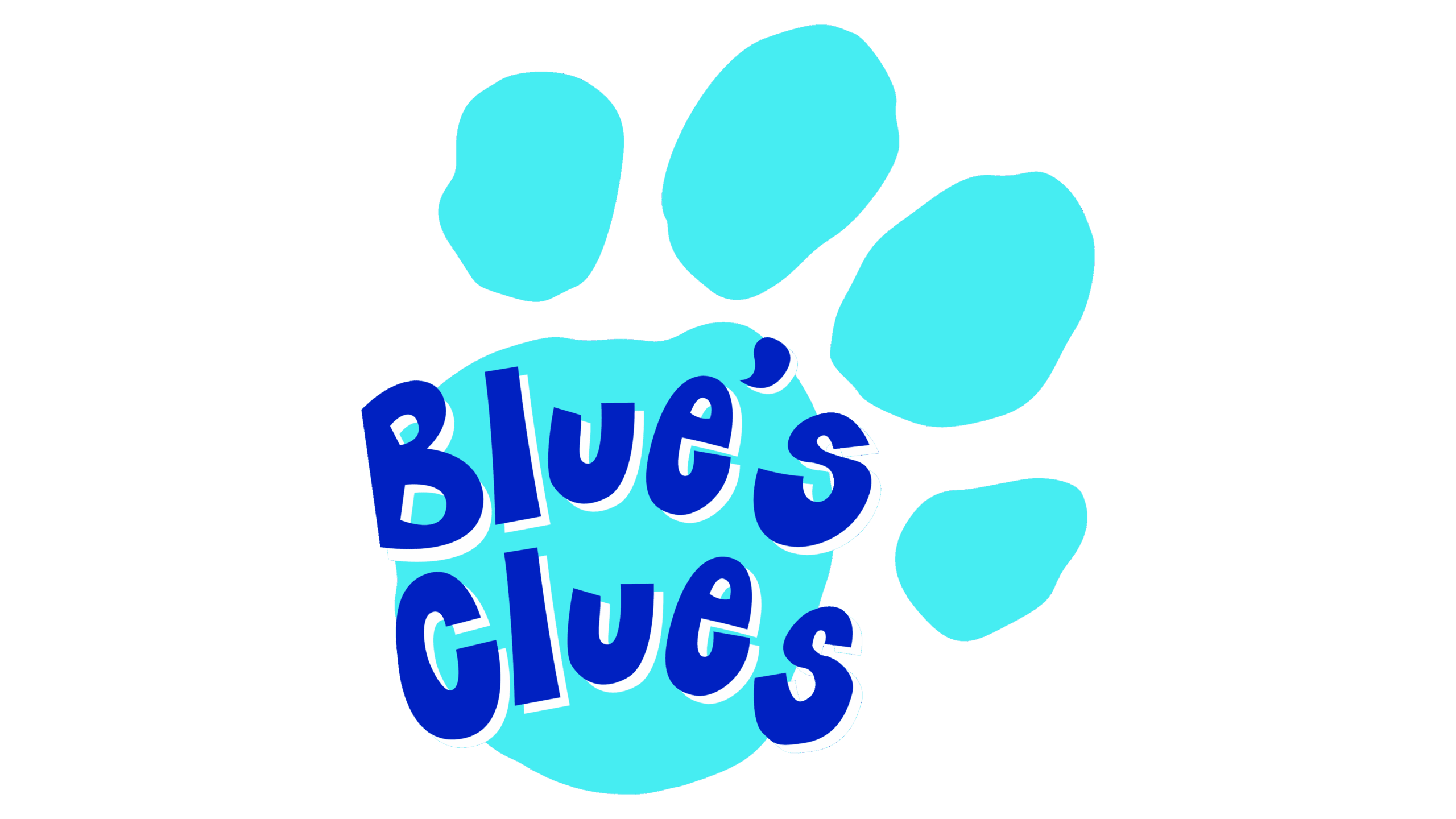
Blue’s Clues became one of the most beloved educational television series of the late 1990s and early 2000s, combining playful storytelling with early childhood learning techniques. Created for preschool audiences and launched by Nickelodeon, the show introduced children to problem-solving through interactive clues left behind by a blue-spotted dog named Blue. Much like explored in Nickelodeon Logo History and Disney Channel Logo History, the visual identity of the series played a major role in its popularity. Within the broader category of children’s television logos, Blue’s Clues stands out for its playful typography, bright colors, and instantly recognizable paw print.
The Blue’s Clues logo history reflects the educational philosophy behind the show itself — simple, memorable, approachable, and visually engaging for young audiences.
Blue’s Clues Logo Meaning and History: The Origin of an Educational Identity
The origin of Blue’s Clues dates back to the mid-1990s, when Nickelodeon assembled a creative team focused on developing an educational series for preschool children.
The project emphasized emotional development, problem-solving, and audience participation. This philosophy directly influenced the visual identity.
The Blue’s Clues logo meaning revolves around curiosity and discovery. The paw print symbolizes clues left by Blue, while the playful typography reflects creativity and childlike imagination.
Originally, the show carried the temporary title “Blue Prints,” a reference to both the character’s name and the idea of clues or plans. After testing with children, the name evolved into “Blue’s Clues,” which became the official title.
This evolution became the foundation of Blue’s Clues logo heritage, connecting the branding directly to the learning experience of the show.
Blue’s Clues Logo Symbolism: Playfulness, Discovery, and Learning
The Blue’s Clues logo symbolism is intentionally simple and approachable.
The oversized paw print represents Blue herself and the trail of clues she leaves behind throughout each episode. It immediately communicates interaction and exploration.
The hand-drawn typography reinforces the educational and child-friendly atmosphere. The letters resemble a child’s writing or drawing style, making the logo feel accessible and familiar to young viewers.
Different shades of blue create contrast and energy while maintaining visual consistency with the character design.
Even within its playful structure, the logo maintains balance. Repeating letter shapes and aligned positioning create rhythm and recognition, helping children easily remember the title.
Blue’s Clues Logo History Timeline: Evolution of a Preschool TV Identity
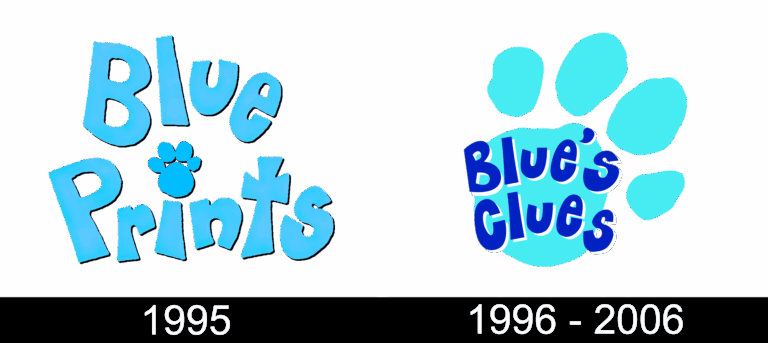
1995–1995: “Blue Prints” Pilot Logo and Original Concept
Before the official launch of the series, the project was known as “Blue Prints.”
The original logo featured the words “Blue Prints” written in a playful, hand-drawn style that resembled a child’s artwork. The lettering was casual and uneven, reinforcing the educational concept of creativity and exploration.
One of the most distinctive details was the replacement of the dot above the “i” with a paw print in a different shade of blue.
This early design established the visual language that would later define Blue’s Clues logo history.
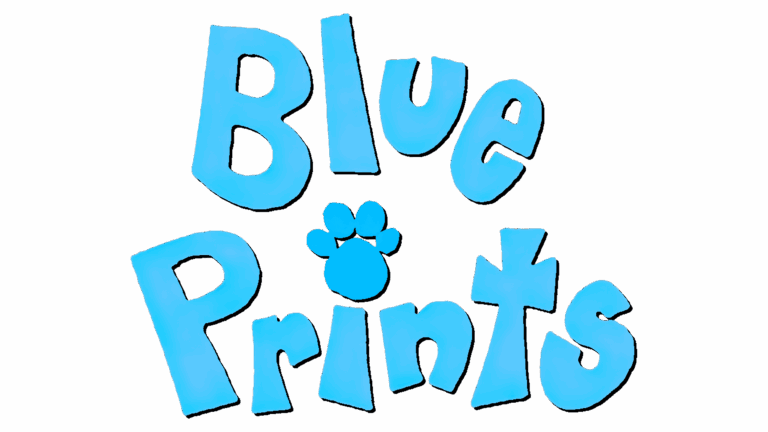
1996–2006: Official Blue’s Clues Logo and Iconic Paw Print Identity
With the official release of the series in 1996, the logo underwent a major redesign while preserving its playful personality.
The paw print became the dominant visual element, enlarged significantly and placed behind the lettering. This strengthened the connection between the logo and the character Blue.
The typography remained childlike and informal, but the composition became cleaner and more structured.
The contrast between the blue tones increased to improve readability, especially because the lettering was now layered directly over the paw print.
This version became one of the most recognizable logos in children’s television history.
Blue’s Clues Logo Typography and Color: Designed for Young Audiences
Typography plays a central role in the Blue’s Clues logo design.
The letters are intentionally uneven and playful, mimicking the look of handwriting or children’s drawings. This creates an immediate emotional connection with preschool viewers.
At the same time, the repeated structure of certain letters introduces visual consistency, making the logo easier to recognize and remember.
Color is equally important. Bright blue tones dominate the palette, directly referencing Blue herself while also creating a cheerful and energetic mood.
The layered blue shades provide depth and contrast without making the design visually overwhelming.
Together, these elements create a logo that feels educational, friendly, and instantly recognizable.
Blue’s Clues Logo Heritage: Educational Branding That Became Iconic
The Blue’s Clues logo history demonstrates how thoughtful design can become deeply connected to childhood memory and emotional recognition.
Unlike logos built around complexity or sophistication, Blue’s Clues succeeded through simplicity and clarity.
Its logo heritage is rooted in educational psychology. Every visual choice — from the oversized paw print to the playful lettering — was designed to engage preschool audiences in a comfortable and encouraging way.
Decades after its debut, the logo remains strongly associated with learning, creativity, and one of Nickelodeon’s most influential preschool series.
Blue’s Clues Logo History FAQ: Meaning, Symbolism, and Evolution
What does the Blue’s Clues logo symbolize?
It symbolizes discovery, learning, and the clues left behind by Blue.
Why is the paw print so important in the logo?
Because it represents Blue and the trail of clues central to the show.
What was the original name of Blue’s Clues?
The original pilot title was “Blue Prints.”
When was the Blue’s Clues logo introduced?
The official version debuted in 1996 alongside the television series.
Why does the logo look hand-drawn?
To create a child-friendly and approachable visual identity.