
Singapore Airlines Logo History: Meaning, Symbolism & Brand Heritage
Within global aviation logo history, Singapore Airlines occupies a rare position defined by restraint, refinement, and exceptional consistency. Founded in the early 1970s during Singapore’s rapid transformation into a global aviation hub, the airline developed a visual identity that mirrored the country’s broader philosophy: disciplined growth, long-term thinking, and uncompromising standards.
The Singapore Airlines logo history aligns closely with the minimalist heritage explored in Turkish Airlines logo and the typographic authority seen in Emirates logo history, yet it stands apart through its cultural symbolism and measured evolution. Rather than frequent redesigns, Singapore Airlines refined a single emblem over time, allowing meaning, recognition, and trust to accumulate organically.
Meaning and History: The Origin of the Singapore Airlines Logo
Singapore Airlines was established in 1972 as the national carrier of the newly independent city-state. From the outset, the airline was conceived not merely as a transportation provider but as a global ambassador for Singapore. This ambition directly influenced the logo meaning, which was designed to communicate elegance, motion, and cultural identity without overt nationalism.
The airline’s visual identity centers on a stylized bird derived from traditional Southeast Asian motifs, often associated with grace, balance, and aspiration. This choice aligned the brand with cultural heritage while remaining abstract enough to resonate internationally. From its first iteration, the logo avoided excessive ornamentation, prioritizing clarity and symbolic depth.
Singapore Airlines Logo History Timeline
1972–1987: Geometric Motion and Foundational Identity
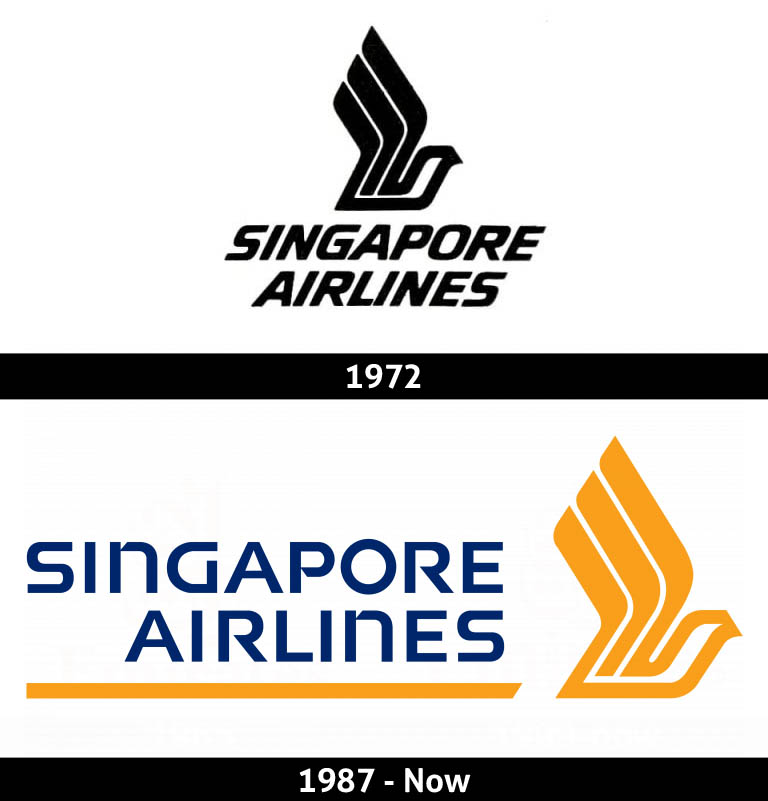
The original Singapore Airlines logo, introduced in 1972, featured a stylized bird rendered in bold black geometric lines. Only the upper half of the bird was depicted, with wings raised in a dynamic upward gesture. Thin diagonal white lines at the base of the wings added a sense of motion and balance.
Beneath the emblem appeared the “Singapore Airlines” wordmark in an italicized, heavy sans-serif typeface. The angle of the lettering precisely matched the diagonal accents in the bird symbol, creating a cohesive rhythm between symbol and text. This early logo description emphasized movement, stability, and modernity, qualities essential for a young airline positioning itself on the global stage.
1987–Today: Refinement, Color, and Cultural Maturity
The 1987 redesign preserved the original structure almost entirely, marking one of the most conservative evolutions among major airlines. The bird emblem retained its shape and orientation, but the color palette shifted dramatically. Black was replaced with gold or calm yellow for the bird, while the wordmark adopted a deep, authoritative blue.
Typography was refined into a custom mixed-case typeface. All letters remained capitalized except for the two “N”s, creating a distinctive rhythm that enhanced recognition without compromising legibility. This refinement elevated the logo’s elegance, aligning it with Singapore Airlines’ growing reputation for premium service and operational excellence.
Logo Symbolism: The Bird as Cultural Abstraction
The symbolism of the Singapore Airlines logo lies in its abstract bird figure, often associated with the kris bird motif found in regional art. Rather than depicting a literal bird, the emblem suggests flight through geometry and posture, allowing it to transcend cultural boundaries.
The upward-raised wings symbolize aspiration and continuous improvement, while the partial depiction avoids heaviness and visual clutter. This abstraction makes the logo timeless, adaptable, and resistant to stylistic aging, a key factor in its longevity.
Typography and Color Philosophy
Typography plays a crucial role in reinforcing the brand’s authority and elegance. The custom stencil-influenced typeface combines smooth curves with precise angles, reflecting a balance between warmth and discipline. Its unique construction distinguishes the brand without relying on decorative excess.
Color reinforces symbolism. Gold represents excellence, quality, and prestige, while blue conveys trust, stability, and reliability. Together, they echo natural elements—the sun and the sky—while reinforcing Singapore Airlines’ positioning as a calm, dependable, and aspirational global carrier.
Singapore Airlines Logo History and Timeless Discipline
The Singapore Airlines logo history is a masterclass in restraint and long-term brand stewardship. By refining rather than reinventing its visual identity, the airline allowed symbolism, trust, and recognition to deepen over time.
Today, the Singapore Airlines logo stands as one of the most enduring examples of logo heritage in aviation. It demonstrates that true brand strength often lies not in frequent change, but in the disciplined evolution of a well-conceived idea.
FAQ: Singapore Airlines Logo Meaning and History
What does the Singapore Airlines logo represent?
The logo represents elegance, aspiration, and cultural heritage through an abstract bird symbol.
Why has the Singapore Airlines logo changed so little?
The original design was strong and timeless, requiring only refinement rather than redesign.
What does the bird in the Singapore Airlines logo symbolize?
The bird symbolizes flight, progress, and balance, inspired by Southeast Asian artistic motifs.
What do the colors in the Singapore Airlines logo mean?
Gold represents excellence and prestige, while blue conveys trust, reliability, and calm authority.