United Airlines Logo History: Meaning, Symbolism & Brand Heritage

Within American aviation logo history, the visual identity of United Airlines stands as one of the most frequently refined and strategically reworked. Since the early 1930s, the airline’s logo evolution has closely followed shifts in commercial aviation, corporate mergers, and changing expectations around trust, safety, and global connectivity. Unlike carriers that relied heavily on mascots or aircraft symbolism, United Airlines consistently centered its visual identity on typography, national references, and abstract emblems tied to scale and reach.
Much like the long-term refinement seen in American Airlines logo history or the symbolism-driven evolution explored in Delta Air Lines logo heritage, United Airlines demonstrates how repetition, reduction, and refinement can strengthen brand authority over time. Positioned within the broader aviation logo history landscape, the United Airlines logo reflects nearly a century of adaptation without abandoning recognizability.
Meaning and History: The Origin of the United Airlines Logo
United Airlines traces its roots to the early days of commercial aviation in the United States. Established in the late 1920s through the consolidation of several regional carriers, the company emerged during a period when air travel was still experimental, technical, and closely tied to national infrastructure. From its earliest visual expressions, the airline emphasized its name above all else, reinforcing the idea of unity, geographic coverage, and national reach.
The logo meaning of United Airlines has always been tied to scale and cohesion. Even as graphic styles changed, the brand avoided excessive illustration in favor of strong wordmarks and symbols referencing the United States itself. This approach aligned with the airline’s ambition to operate coast to coast, and later, globally. As aviation matured into a mass transportation industry, the logo heritage of United Airlines evolved from patriotic imagery into minimalist abstraction, reflecting confidence rather than explanation.
United Airlines Logo History Timeline
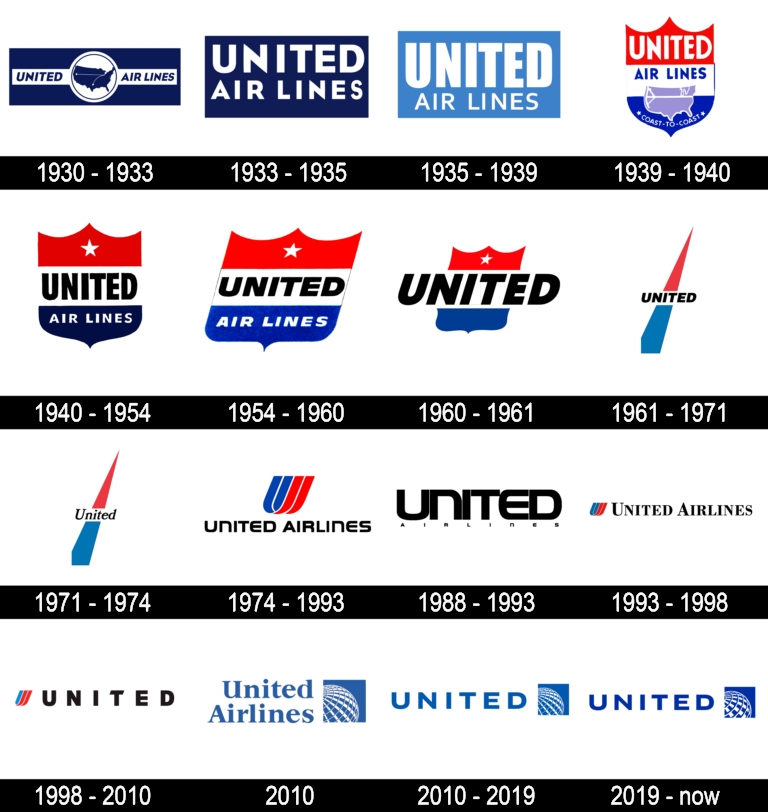
1930–1933: National Identity and Early Aviation Symbolism
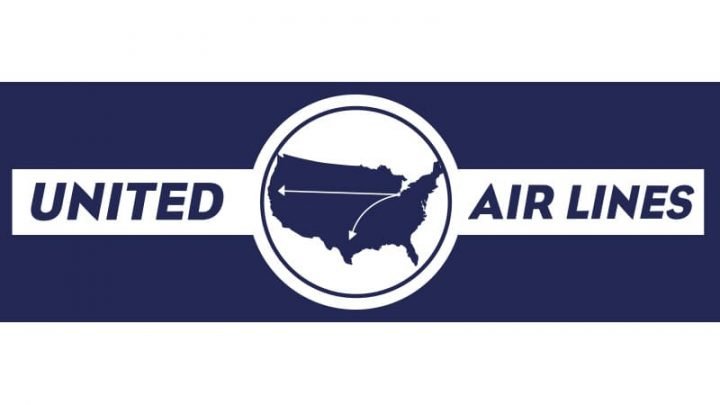
The first official United Airlines logo introduced in 1930 reflected the experimental yet ambitious spirit of early commercial aviation. A dark blue rectangular badge framed a white circular field containing a simplified silhouette of the United States. Two directional arrows across the map reinforced the idea of coast-to-coast service, while extended white banners carried the “United Air Lines” wordmark.
The italicized sans-serif typography projected motion and progress, aligning with the excitement surrounding flight at the time. This early logo description emphasized geography and speed, positioning United as a unifying force in American air travel.
1933–1935: Typography-Centered Minimalism
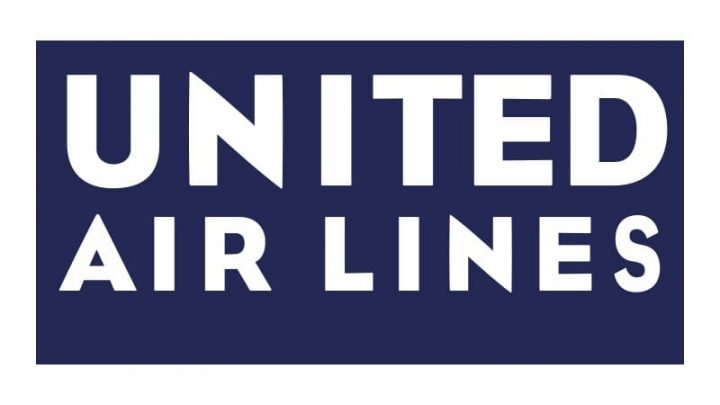
In 1933, United Airlines shifted toward a far more restrained visual identity. The emblematic elements were removed entirely, leaving only bold white lettering on a dark blue background. The wordmark appeared in two lines, maintaining the sans-serif structure but abandoning italics.
This redesign marked an early embrace of typographic authority, signaling maturity and reliability during a period of economic uncertainty. The logo meaning here leaned toward stability rather than spectacle.
1935–1939: Refinement Through Color and Proportion
By 1935, the airline introduced a lighter palette of sky blue and white, softening the brand’s visual tone. The typography became thinner and more refined, with rounded contours and increased spacing, particularly in the “Air Lines” line.
This period reflected growing confidence in commercial aviation and an effort to appear elegant and approachable. The logo symbolism shifted from industrial strength to passenger comfort and refinement.
1939–1940: Heraldic Structure and National Pride
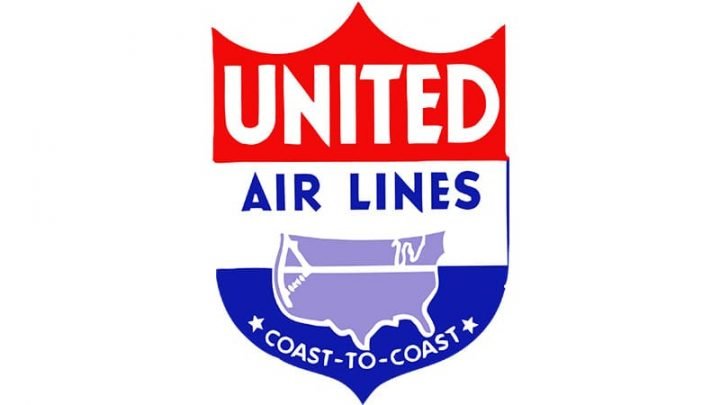
The 1939 redesign introduced a tricolor crest that reintroduced symbolism while maintaining typographic clarity. Red, white, and blue dominated the composition, reinforcing national identity. A silhouette of the United States returned, accompanied by the “Coast to Coast” tagline.
This logo reflected the airline’s expanding domestic network and reinforced United’s role as a national carrier at a time when aviation was becoming strategically important.
1940–1954: Authority and Wartime Solidity
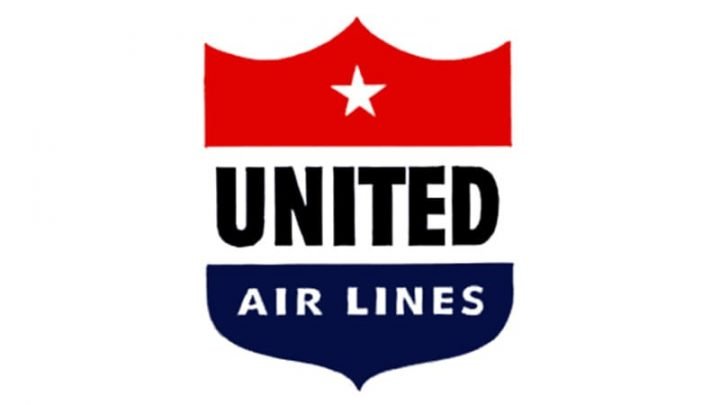
In 1940, the crest was simplified and strengthened. Decorative elements were removed, replaced by a bold five-pointed white star set against red, with strong black and white typography anchoring the design. The colors deepened, creating a sense of authority and seriousness.
This version of the logo heritage aligned with wartime sensibilities and remained in use for over a decade, reinforcing trust and durability.
1954–1960: Motion and Optimism
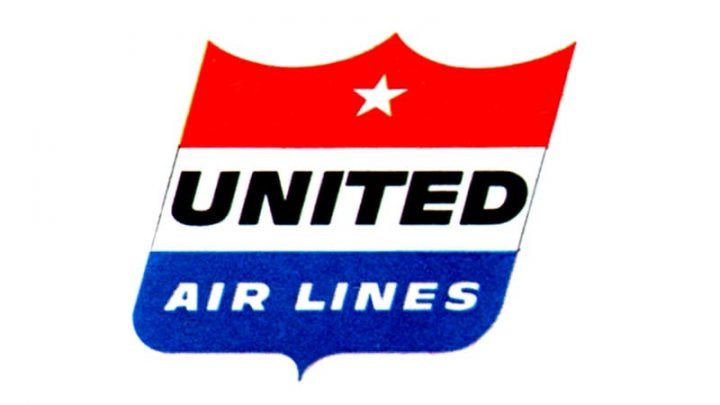
The 1954 update introduced a slight forward tilt to the crest, subtly suggesting motion and optimism. Brighter shades refreshed the palette while maintaining the established structure.
This shift reflected the postwar aviation boom, as air travel transitioned from novelty to necessity.
1960–1961: Focus on the Name
In 1960, United Airlines simplified its identity further by emphasizing the word “United” alone. The enlarged black wordmark sat prominently within a refined crest, signaling brand confidence and recognition.
The omission of “Air Lines” underscored the strength of the name itself, an important step in modern brand positioning.
1961–1971: Abstract Geometry and Trust
The 1961 redesign replaced the crest with an abstract red-and-blue geometric form positioned behind an italicized “United” wordmark. The pointed red upper section suggested ambition and speed, while the broader blue base conveyed reliability.
This era marked United’s move toward abstraction, aligning with modernist design trends of the mid-20th century.
1971–1974: Elegance and Corporate Maturity
In 1971, the logo adopted an elegant italic serif typeface. The refined letterforms conveyed professionalism and sophistication, aligning with the airline’s growing corporate presence and international ambitions.
The logo meaning during this period emphasized service quality and refinement rather than innovation alone.
1974–1993: The Tulip Era Begins
The 1974 redesign by Saul Bass introduced one of the most iconic symbols in aviation logo history: the stylized “U,” later nicknamed the Tulip. Rendered in red and blue, the abstract form suggested both motion and unity.
Paired with a modern sans-serif wordmark, this logo balanced warmth and authority and became deeply embedded in United Airlines’ visual heritage.
1988–1993: Minimalist Typography Experiment
In 1988, United briefly moved toward extreme minimalism. The Tulip was removed, leaving a monochrome typographic composition with a futuristic lowercase “United” and a smaller “Airlines” descriptor.
This experiment reflected late-1980s design trends but lacked the emotional recognition of the Tulip.

1993–1998: Return of the Tulip
The 1993 redesign restored the Tulip icon, placing it beside a bold serif wordmark. Designed by CKS Partners, this version reintroduced heritage while modernizing the typography.
The combination reinforced brand continuity during a period of competitive change.
1998–2010: Pentagram Refinement
Pentagram refreshed the United Airlines logo in 1998, simplifying the typography to “United” and adopting a bold sans-serif with distinctive cuts. The Tulip remained, now brighter and more contemporary.
This version balanced global professionalism with visual familiarity, strengthening United’s international identity.
2010: Merger and Transitional Identity
Following the merger with Continental Airlines, United introduced a new logo in 2010. The design combined a blue square globe emblem with a two-line serif wordmark, reflecting the integration of two legacy brands.
This transitional logo symbolized global reach but was short-lived.
2010–2019: Modern Corporate Clarity
Later in 2010, United refined the logo again, replacing the serif typography with a bold, all-capital sans-serif “United.” The blue deepened, creating a calmer, more authoritative presence.
This version emphasized clarity, consistency, and modern airline professionalism.
2019–Today: Simplified Global Confidence
The 2019 update further refined proportions and intensified the blue tone. The result is a clean, confident identity that reflects United Airlines’ position as a global carrier while maintaining visual continuity.
Logo Symbolism: Unity, Scale, and Reliability
The symbolism of the United Airlines logo centers on unity and reach. Whether through national silhouettes, abstract geometry, or the later globe motif, each design iteration reinforces connection across distance. The absence of literal aircraft imagery reflects confidence; United communicates scale and reliability through abstraction rather than explanation.
Typography plays a crucial role in this symbolism. Bold, extended letterforms convey strength and stability, while consistent spacing reinforces order and professionalism.
United Airlines Logo History and Enduring Brand Identity
The United Airlines logo history reveals a brand that evolved alongside the aviation industry itself. From early national symbolism to minimalist global abstraction, each redesign reflects shifts in technology, consumer trust, and corporate ambition. Rather than relying on novelty, United Airlines built its logo heritage through refinement, consistency, and strategic restraint.
Today, the logo stands as a visual representation of nearly a century of aviation progress, embodying unity, reliability, and global reach within a single, confident mark.
FAQ: United Airlines Logo Meaning and History
What does the United Airlines logo represent?
The logo represents unity, global connectivity, and reliability through strong typography and abstract symbolism.
Why did United Airlines change its logo so often?
Frequent redesigns reflect mergers, industry evolution, and changing expectations around trust and global presence.
What is the significance of the globe in the United Airlines logo?
The globe symbolizes international reach and worldwide connectivity following the merger with Continental Airlines.
Who founded United Airlines?
United Airlines was founded by aviation pioneer Walter Varney, a key figure in early American commercial aviation.