
Philadelphia 76ers Logo History: Meaning, Symbolism & Brand Heritage
The Philadelphia 76ers logo history is one of the most historically grounded narratives in the NBA. Few franchises have embraced national symbolism, civic identity, and historical continuity as deliberately as the Sixers. From their origins as the Syracuse Nationals to their transformation into one of the league’s most recognizable brands, the visual identity of the 76ers has consistently reflected American heritage, constitutional symbolism, and basketball tradition.
What distinguishes the Sixers within NBA logo history is not how often the logo changed, but how clearly every redesign remained anchored to the same ideological core. Patriotism, elegance, and historical reverence define the franchise’s logo heritage, placing Philadelphia alongside teams such as the New York Knicks logo history, the Boston Celtics logo history, and the Washington Wizards logo history, all of which rely heavily on civic symbolism rather than mascots or abstract imagery.
Meaning and History: The Origins of the 76ers Identity
The franchise was founded in 1946 as the Syracuse Nationals, long before professional basketball became a global entertainment product. From the outset, the team’s visual language emphasized dignity and national identity rather than spectacle. This approach carried over seamlessly when the club relocated to Philadelphia in 1963.
The name “76ers” is a direct reference to the year 1776, when the Declaration of Independence was signed in Philadelphia. Unlike many team names that rely on metaphor, this one is explicitly historical. The logo meaning has therefore always extended beyond sport, functioning as a tribute to American independence and civic pride. Over time, the franchise refined this symbolism visually, using stars, patriotic colors, and numerals to reinforce its historical narrative.
This makes the 76ers logo heritage one of the most conceptually disciplined systems in basketball logo history, where meaning is embedded not just in color or form, but in national history itself.
Philadelphia 76ers Logo History Timeline
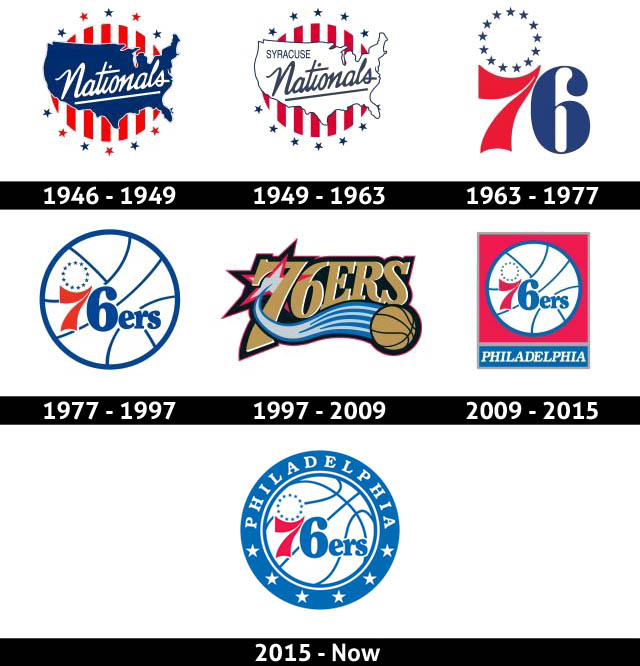
1946–1949: Syracuse Nationals and Early Patriotic Expression
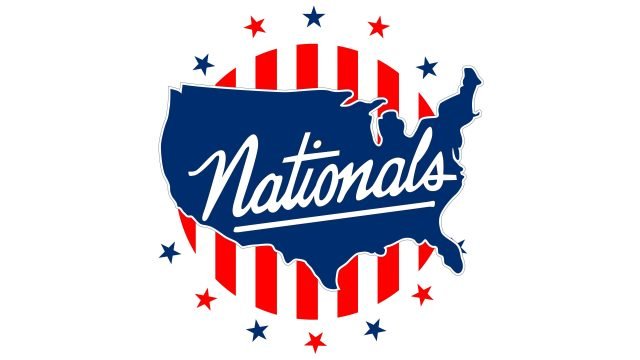
The original logo, introduced in 1946, reflected the franchise’s identity as the Syracuse Nationals. A circular badge featured vertical red and white stripes with a blue silhouette of the United States placed at the center. Surrounding the emblem were numerous five-pointed stars, reinforcing national symbolism. The cursive “Nationals” wordmark added elegance and formality, establishing a tone of professionalism and heritage.
1949–1963: Refined Nationals Identity and Color Enhancement
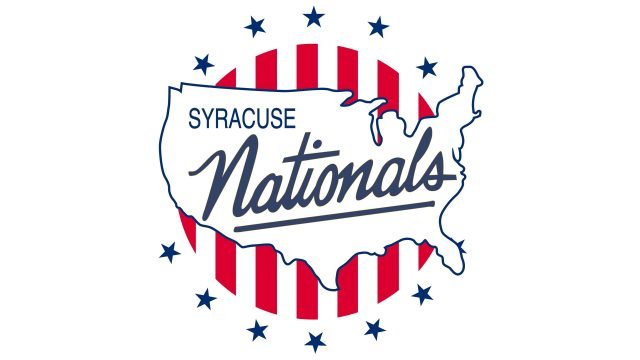
In 1949, the logo’s palette deepened. The blues and reds became richer, while the U.S. silhouette turned white with a thin blue outline. The addition of “Syracuse” above the primary wordmark clarified geographic identity. This refinement preserved the original structure while enhancing visual contrast and authority.
1963–1977: Birth of the 76ers and Iconic Numerical Symbol
The relocation to Philadelphia in 1963 marked a defining moment. Designed by Mel Richman, the new logo introduced the now-iconic “76,” rendered in red and blue. Thirteen stars formed a circular arc above the number, referencing the original colonies. This design stripped away excess detail and focused on symbolism, creating the conceptual foundation for all future Sixers logos.
1977–1997: Basketball Integration and Structural Balance
In 1977, the logo evolved into a more complete basketball emblem. The “76” and stars were placed atop a white basketball outlined in blue, while the “ers” suffix was added in a bold serif typeface. This version fused historical symbolism with the sport itself, strengthening the logo’s functional clarity and long-term adaptability.
1997–2009: Gold Accents and Modern Experimentation
The 1997 redesign introduced a more experimental direction. Gold lettering appeared above a stylized golden basketball, accented by flowing blue motion lines. A single star outlined in red added asymmetry and visual tension. While visually striking, this era represented a brief departure from the franchise’s traditional restraint.
2009–2015: Heritage Revival with Contemporary Framing
In 2009, the Sixers returned to their historical core. The 1977 emblem was revived and placed on a bold red square with a thick gray outline. A blue banner beneath displayed “Philadelphia” in white serif lettering. This version emphasized stability, tradition, and city pride, aligning the logo once again with its historical roots.
2015–Today: Modern Refinement and Patriotic Clarity
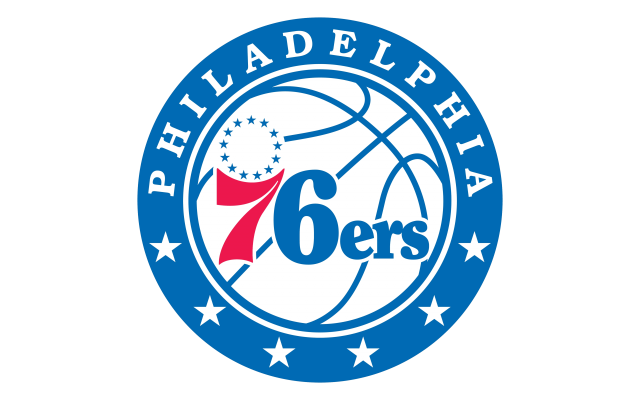
The current logo, introduced in 2015, refined the classic 1977 concept. The palette was lightened, outlines thickened, and “Philadelphia” positioned above the emblem. Six white stars were added at the bottom, reinforcing numerical symbolism. This design balances digital clarity with historical continuity, completing the evolution of the Sixers’ modern identity.
Logo Symbolism: Patriotism, Precision, and Legacy
The Philadelphia 76ers logo symbolism is among the most literal and meaningful in professional sports. The number “76” directly references American independence, while the stars symbolize unity and origin. The basketball anchors the symbolism within the sport, preventing abstraction from overpowering function.
Color reinforces this narrative. Red conveys sacrifice and passion, blue represents stability and authority, and white introduces clarity and balance. Together, these elements form one of the most recognizable patriotic palettes in sports logo history, reinforcing both national and local identity without excess ornamentation.
A Logo Heritage Rooted in American Identity
The Philadelphia 76ers logo history is not simply a sequence of design updates; it is a sustained visual expression of history, place, and purpose. By anchoring every redesign to the same foundational symbols, the franchise has built a logo heritage that feels timeless rather than dated.
Within NBA logo history, the Sixers stand as a benchmark for how historical symbolism can coexist with modern design needs. Their logo meaning remains as relevant today as it was decades ago, proving that when identity is rooted in genuine heritage, evolution becomes refinement—not reinvention.
FAQ: Philadelphia 76ers Logo Meaning and History
What does the Philadelphia 76ers logo represent?
The logo represents American independence, civic pride, and basketball tradition through the number 76, stars, and patriotic colors.
Why is the number 76 central to the logo?
It references the year 1776, when the Declaration of Independence was signed in Philadelphia.
When was the current 76ers logo introduced?
The current logo was introduced in 2015 as a refined version of the classic 1977 design.
How many major logo systems have the 76ers used?
The franchise has used several iterations, but most are refinements of a single core concept introduced in 1963.