Pokémon GO Logo: The Classic Wordmark Plus GO
Pokémon GO is the location-based mobile game from Niantic, made with The Pokémon Company and Nintendo, that launched in Australia, New Zealand and the United States on July 6, 2016. It sent millions of people outside to catch Pokémon on their phones, and within weeks its logo was on news broadcasts around the world.
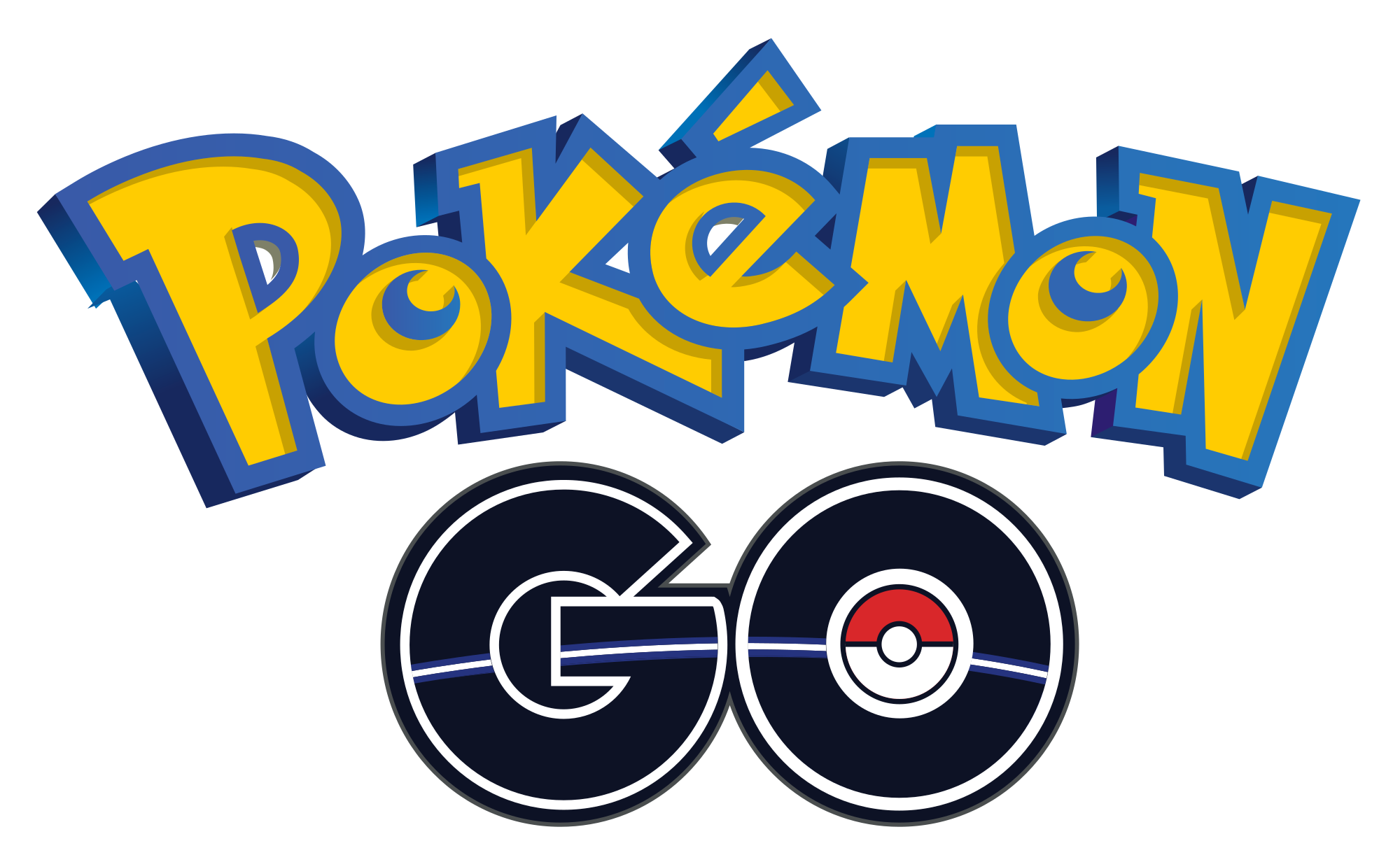
The logo stacks two parts. On top is the standard Pokémon wordmark, the yellow letters with a blue outline that the franchise has used since the 1990s. Underneath sits a large, chunky “GO,” set wider and simpler so it can be read at app-icon size. The design tells you two things at once: this is official Pokémon, and it is about moving.
Where did the idea for Pokémon GO come from?
The game grew out of an April Fools’ Day prank. On April 1, 2014, Google Maps ran a “Pokémon Challenge” that let users find Pokémon hidden on the map, built in part by Tatsuo Nomura, a Google Maps engineer. Pokémon Company chief executive Tsunekazu Ishihara was a fan of Ingress, the earlier location game from Niantic, then a startup inside Google run by John Hanke. The two sides agreed to make a real game. Niantic was spun out of Google as an independent company in 2015, and Pokémon GO was announced that September.
That history explains the look of the game more than the logo itself: the map, the real-world landmarks used as PokéStops and Gyms, and the walking mechanics all came from Ingress.
Why does the logo keep the classic Pokémon wordmark?
The Pokémon wordmark is one of the most recognized pieces of game branding in the world, and The Pokémon Company protects it closely. Spin-off titles almost always use it unchanged, with a subtitle or second word added below. Pokémon GO follows that rule: the top half is the same wordmark you see on the Red and Blue games, the trading cards and the anime.
The “GO” is the part designed for this game. Its letters are heavy and rounded, close to the shapes used on the app icon and loading screens, and they carry the game’s blue and white. Nintendo’s Mario Kart follows the same pattern, adding one word to a familiar name, while Super Smash Bros. went the other way with a crossed-circle emblem of its own. For more on the parent brand, see our page on the Nintendo logo.
How big did Pokémon GO get?
Very big, very fast. It topped app store charts in every market where it launched in summer 2016, and reports at the time credited it with sending Nintendo’s share price sharply higher, even though Nintendo owns only part of The Pokémon Company and did not make the game. Crowds gathering in parks became a news story in their own right, as did complaints about players walking onto private property.
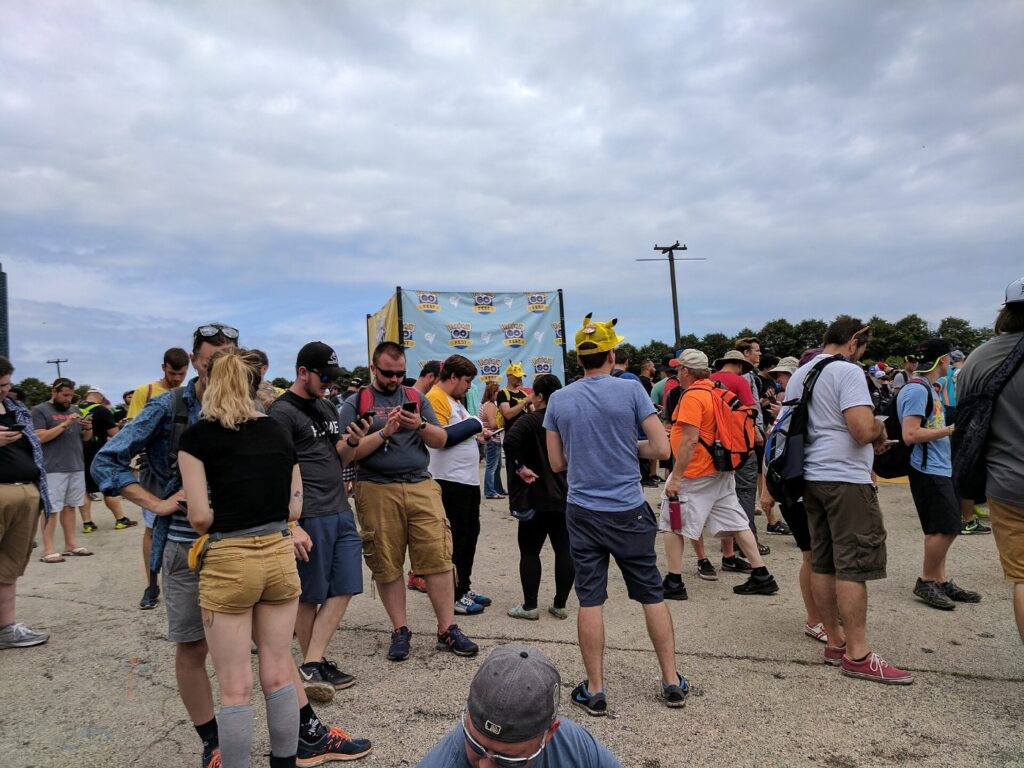
The first Pokémon GO Fest in Chicago’s Grant Park on July 22, 2017, became famous for the wrong reasons: server and connection problems left many attendees unable to play, and Niantic refunded tickets. Later Go Fest events ran more smoothly and became a yearly fixture in several cities. The closest earlier case of a phone game turning into a mass brand is Angry Birds, whose first feature film opened in May 2016, two months before Pokémon GO launched.
Who owns Pokémon GO now?
In March 2025 Niantic agreed to sell its games business, including Pokémon GO, to Scopely, a mobile publisher owned by Saudi Arabia’s Savvy Games Group, in a deal valued at about $3.5 billion. The logo and the Pokémon licensing arrangement stayed the same, and Niantic’s mapping and augmented-reality technology moved to a separate company.

Quick facts
| Developer | Niantic (games business sold to Scopely in 2025) |
| Partners | The Pokémon Company, Nintendo |
| Release | July 6, 2016 (Australia, New Zealand, United States) |
| Origin | Google Maps Pokémon Challenge, April Fools’ Day 2014 |
| Logo | Classic Pokémon wordmark above a large “GO” |
| Colors | Pokémon yellow and blue, with white and blue in the GO |
| First Go Fest | Grant Park, Chicago, July 22, 2017 |