Gymshark Logo: The Shark and the Student Startup
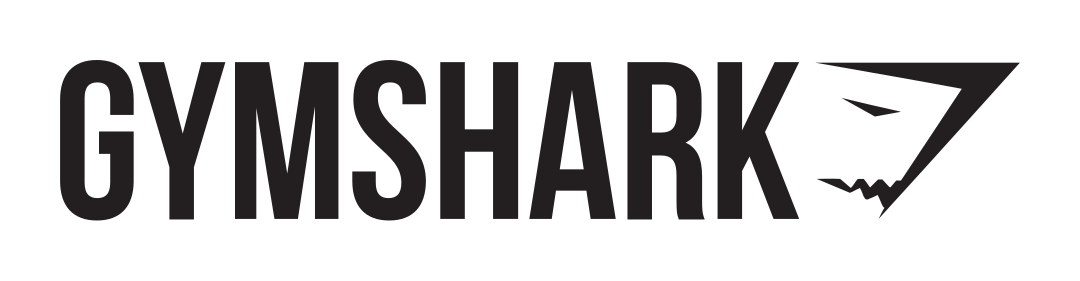
Gymshark was started in 2012 by two university students in the West Midlands, one of whom sewed the first gym tops in his parents’ garage. Thirteen years later it turns over more than £600 million a year, yet its logo is still built on the same simple joke as the name: a shark, drawn as a sharp, angular head, sitting next to a heavy block of capital letters.
What does the Gymshark logo mean?
The full logo pairs the word GYMSHARK, set in bold capitals, with a small geometric shark head. The head is reduced to a few straight cuts: a pointed snout, an open jaw and a single eye, so it works at the size of a chest print or a phone icon. On clothing the shark often appears alone, and many customers know the brand by that mark rather than the name.
The idea behind the name is easy to read. A “gym shark” is someone who trains hard and owns the gym floor, which is exactly the customer the brand set out to dress. Black and white keep the logo plain enough to sit on any colour of leggings, shorts or hoodies, and the condensed lettering echoes the poster type of sports clubs and fight nights.
Has the Gymshark logo changed over time?
Only once in a significant way. The first logo, used around the brand’s launch, was a round badge with a cartoon of a muscular bodybuilder with a shark’s head, framed by stencil-style lettering. It suited a small online shop selling to fellow lifters, but it was busy and hard to reproduce on fabric.
The brand then dropped the cartoon body and kept only a simplified shark head, now drawn with clean angles, beside the plain wordmark. That version has stayed in place through the move from online-only seller to a global label with its own shops. The website header now often shows the wordmark on its own, while the shark head carries the brand on the clothes themselves.
Who founded Gymshark?
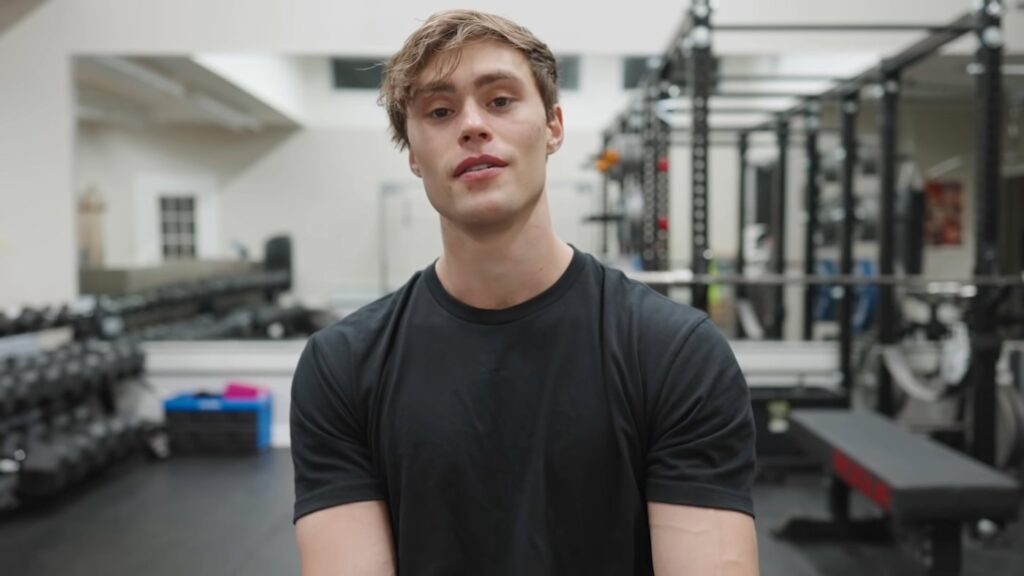
Ben Francis and Lewis Morgan, both aged 20 and studying at university in Birmingham, set the business up in 2012. They began by drop-shipping bodybuilding supplements, then in 2013 started making their own clothing, with Francis using a sewing machine and a screen printer bought with £1,000 of savings. A sell-out stand at the BodyPower trade show in Birmingham in 2013 gave the brand its first big moment, and the founders left university once sales reached about £250,000.
Gymshark grew mostly through fitness influencers on YouTube and Instagram long before it had a single shop. Morgan stepped back in 2016 and sold part of his stake. Francis handed the chief executive role to Steve Hewitt in 2017 and took it back in 2021.
Who owns Gymshark today?
Ben Francis remains the largest shareholder. In August 2020 the US investor General Atlantic bought a 21% stake for £275 million, valuing the company at over £1 billion. In 2026 Francis was reported to be in talks to buy back part of that stake.
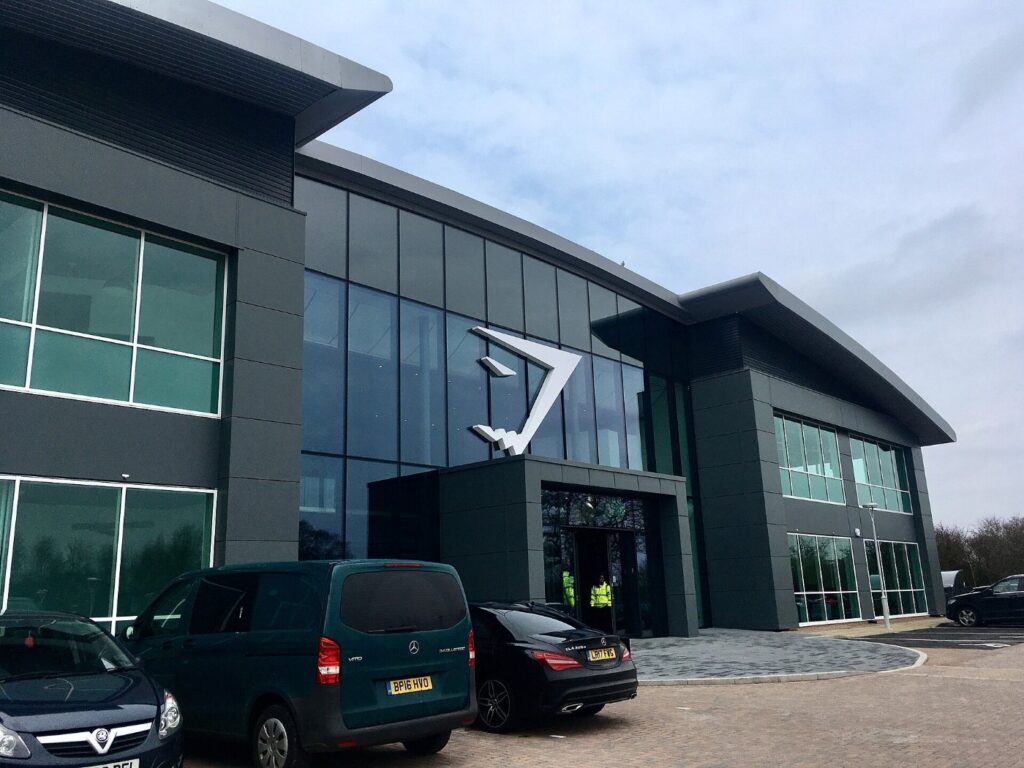
The first permanent store opened on Regent Street, London, in October 2022, followed by more London sites, the Trafford Centre in 2025 and openings in Amsterdam, New York and Dubai. Revenue reached £646 million in 2025, up 6.4% on the year, while pre-tax profit fell to £7 million as the company kept investing. The head office is at Blythe Valley near Solihull.
Gymshark competes for the same customers as Lululemon and Under Armour, and its youthful sportswear sits close to Adidas in many gym bags.
Quick facts
| Founded | 2012, West Midlands, England |
| Founders | Ben Francis and Lewis Morgan |
| Headquarters | Blythe Valley, Solihull |
| Logo | GYMSHARK wordmark with a geometric shark head |
| First logo | Round badge with a shark-headed bodybuilder |
| Main investor | General Atlantic (21% stake bought in 2020) |
| Revenue | £646 million (2025) |
| Website | gymshark.com |