Why Is the Lacoste Logo a Crocodile? The Full Story
Ask an American shopper to describe the Lacoste logo and you will often hear “the alligator shirt.” The animal is a crocodile, the company is French, and the logo started as a joke between tennis players in the 1920s. It went on to become one of the first brand logos ever shown on the outside of a piece of clothing, and in 2026 Lacoste refreshed it again by going back to its own archives.
Why is the Lacoste logo a crocodile?
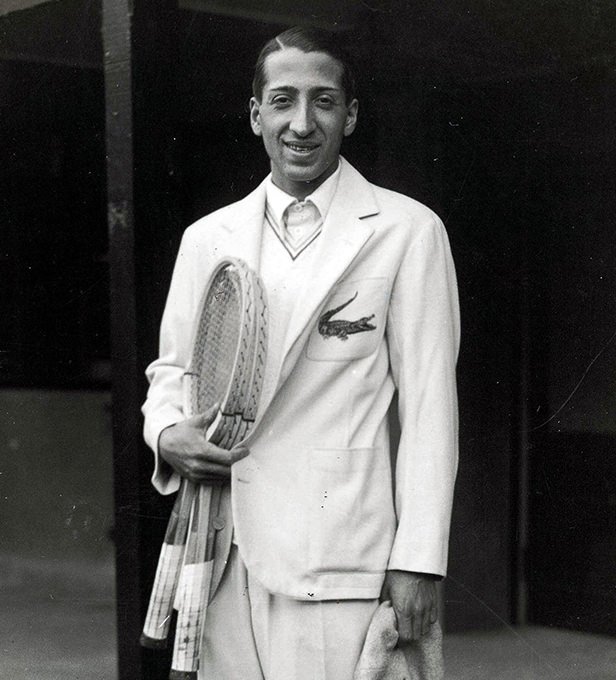
The crocodile was René Lacoste’s nickname before it was a logo. Lacoste was one of France’s “Four Musketeers,” the group of players who took the Davis Cup from the United States in 1927, and he won seven Grand Slam singles titles between 1925 and 1929. The story the company tells goes back to a trip to Boston in 1923, when the young Lacoste made a bet with French team captain Allan Muhr: if he won an important match, Muhr would buy him a crocodile-skin suitcase he had seen in a shop window. He lost the match, but an American journalist heard about the bet and started calling him “the Crocodile.” The name also fitted the way he played, patient and hard to shake off.
His friend Robert George then drew a crocodile, and Lacoste had it embroidered on the blazer he wore to matches. That small patch became the logo of the company he co-founded in 1933.
Is the Lacoste logo a crocodile or an alligator?
It is a crocodile. In the United States the shirts were long called “alligator shirts,” mainly because of the way the brand was sold there (see below), but Lacoste has always described the animal as a crocodile, and the nickname came from a crocodile-skin case. The green animal with its open jaw and red mouth is one of the most copied logos in clothing, and Lacoste has spent decades in court defending it against rival reptile logos in Asia.
When did the crocodile first appear on a shirt?
In 1933 René Lacoste teamed up with André Gillier, who owned France’s largest knitwear company at the time, to make the short-sleeved cotton piqué shirt Lacoste had designed for himself. Tennis players then wore long-sleeved woven shirts; his version had a soft collar, short sleeves and a longer back that stayed tucked in. The crocodile was stitched onto the chest. Lacoste says this was the first time a brand logo was placed on the outside of a garment, and it is widely cited as an early example of what later became normal in sportswear. The original shirt model, the L.12.12, is still in the range.
How has the Lacoste logo changed?
The crocodile has been redrawn several times, but slowly, so most people never notice. Over the decades the outline became cleaner and the colours more consistent, with green for the body and red for the mouth. The LACOSTE wordmark that sits next to it has changed more often. Versions on record include a 1984 wordmark, a 2002 redesign and a lighter version adopted in 2011.
The latest change came in April 2026. Lacoste introduced a new visual identity created with Commission Studio, a creative agency that has worked for Fenty and Rimowa. The wordmark was redrawn with custom serif letters taken from the company archives, the crocodile was adjusted so it can be used on its own or with the name, and the red tongue was made more visible in some uses. The brand green was also pulled back toward its original shade, with ochre and off-white as supporting colours. The new logos are being rolled out across shop signs and shopping bags in about 1,100 points of sale in 98 markets.
What is the connection between Lacoste and Izod?
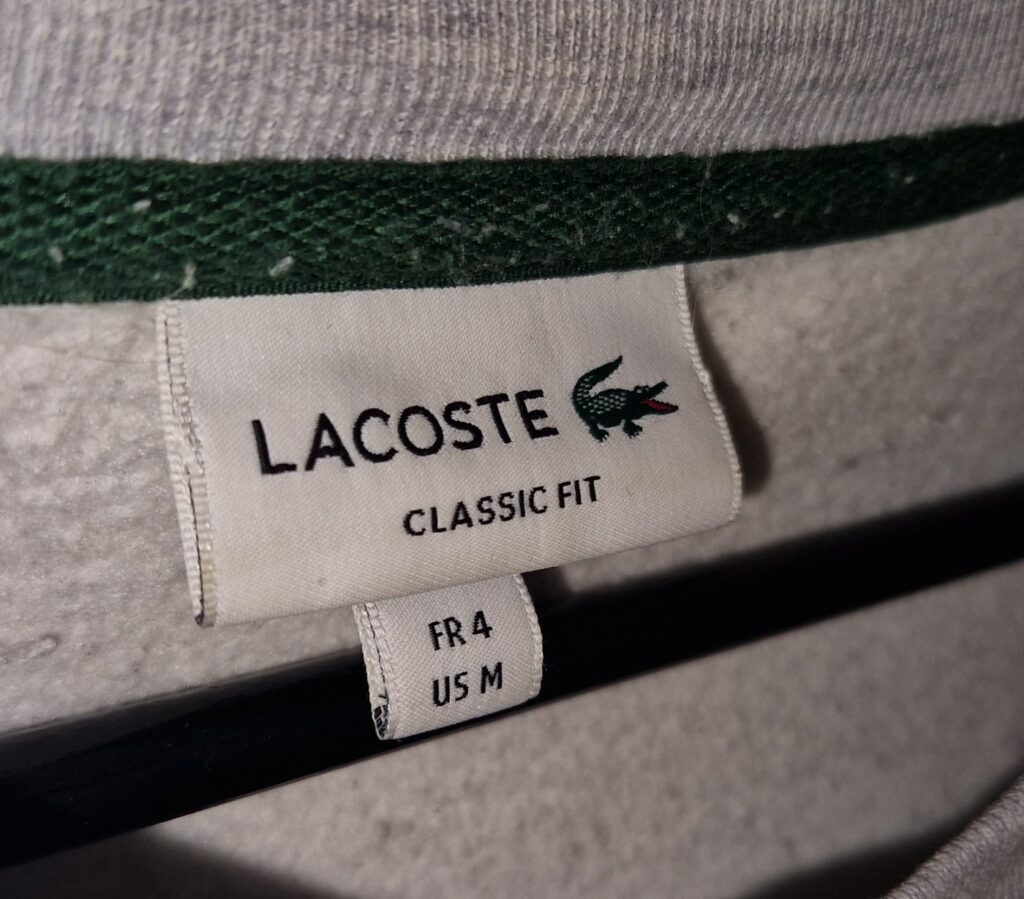
From the early 1950s, Lacoste shirts reached American shops through a licence with David Crystal’s company, which owned the Izod name. The products were sold as Izod Lacoste, and by the 1970s and 1980s they were a preppy uniform on college campuses, where teenagers often simply called the shirt an “Izod.” The crocodile was so popular that a competitor, Le Tigre, was launched in 1977 with a tiger in its place.
The licence ended in 1993, when Lacoste took back control of its American rights, and Izod went its own way. Since then Lacoste has sold under its own name in the U.S., through its own stores and department stores such as Nordstrom, Macy’s, Saks Fifth Avenue and Bloomingdale’s. Lacoste opened its U.S. online store in 2007.
Who owns Lacoste today?
For most of its life Lacoste was controlled by the Lacoste family and the Devanlay company, which held the main clothing licence. In 2012 the Swiss family group Maus Frères bought the company outright, valuing it at about €1 billion. Thierry Guibert, as chief executive, has since bought back many licences and shifted most sales to Lacoste’s own stores. Tennis remains central to the brand: Novak Djokovic signed as an ambassador in 2017, and younger players such as Arthur Fils joined later.
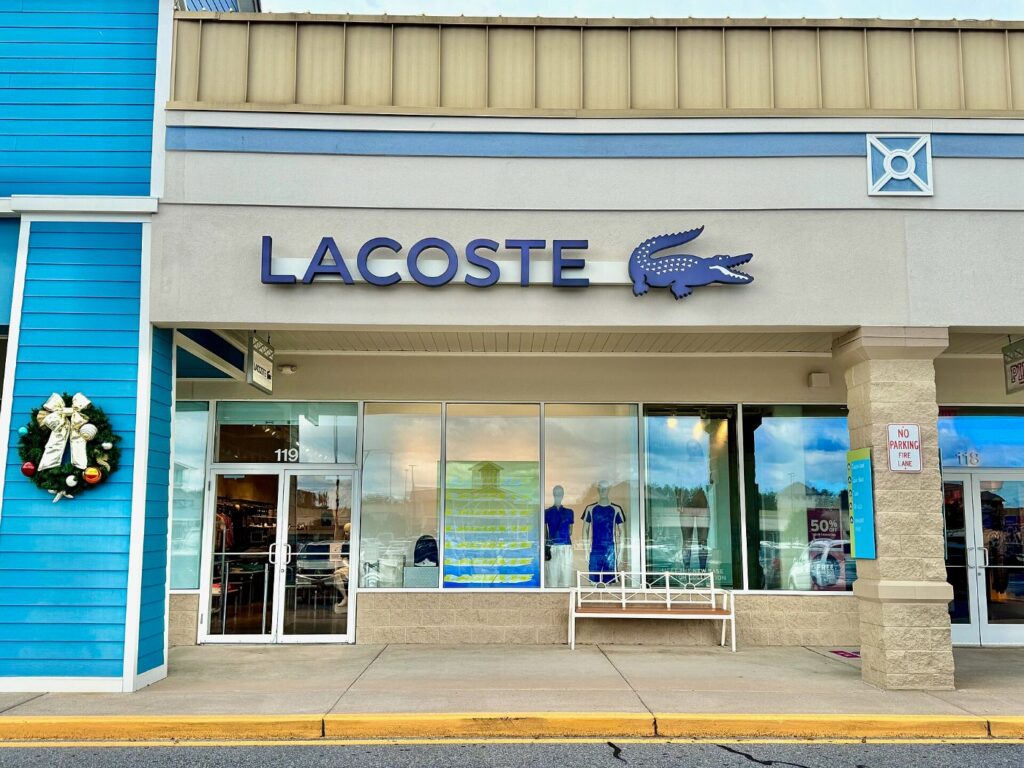
Which other polo shirt brands put a logo on the chest?
The small chest emblem that Lacoste started became the standard for polo shirts. Ralph Lauren used a polo player on horseback from the early 1970s, Tommy Hilfiger chose a flag in red, white and blue, and Brooks Brothers uses its Golden Fleece. Lacoste has also worked with streetwear names, including several collections with Supreme between 2017 and 2019. Very few fashion logos come from a nickname. The Italian label Miu Miu, named after Miuccia Prada’s family nickname, is one of the rare others, and the personal story behind the crocodile is a big reason people still ask about it.
Quick facts
| Founded | 1933, France |
| Founders | René Lacoste and André Gillier |
| Logo | Green crocodile with red mouth, plus LACOSTE wordmark |
| Crocodile drawn by | Robert George (late 1920s) |
| Latest refresh | April 2026, with Commission Studio |
| U.S. history | Sold as Izod Lacoste from the 1950s to 1993 |
| Owner | Maus Frères (since 2012) |
| Signature product | L.12.12 piqué polo shirt |