Häagen-Dazs Logo: The Made-Up Name
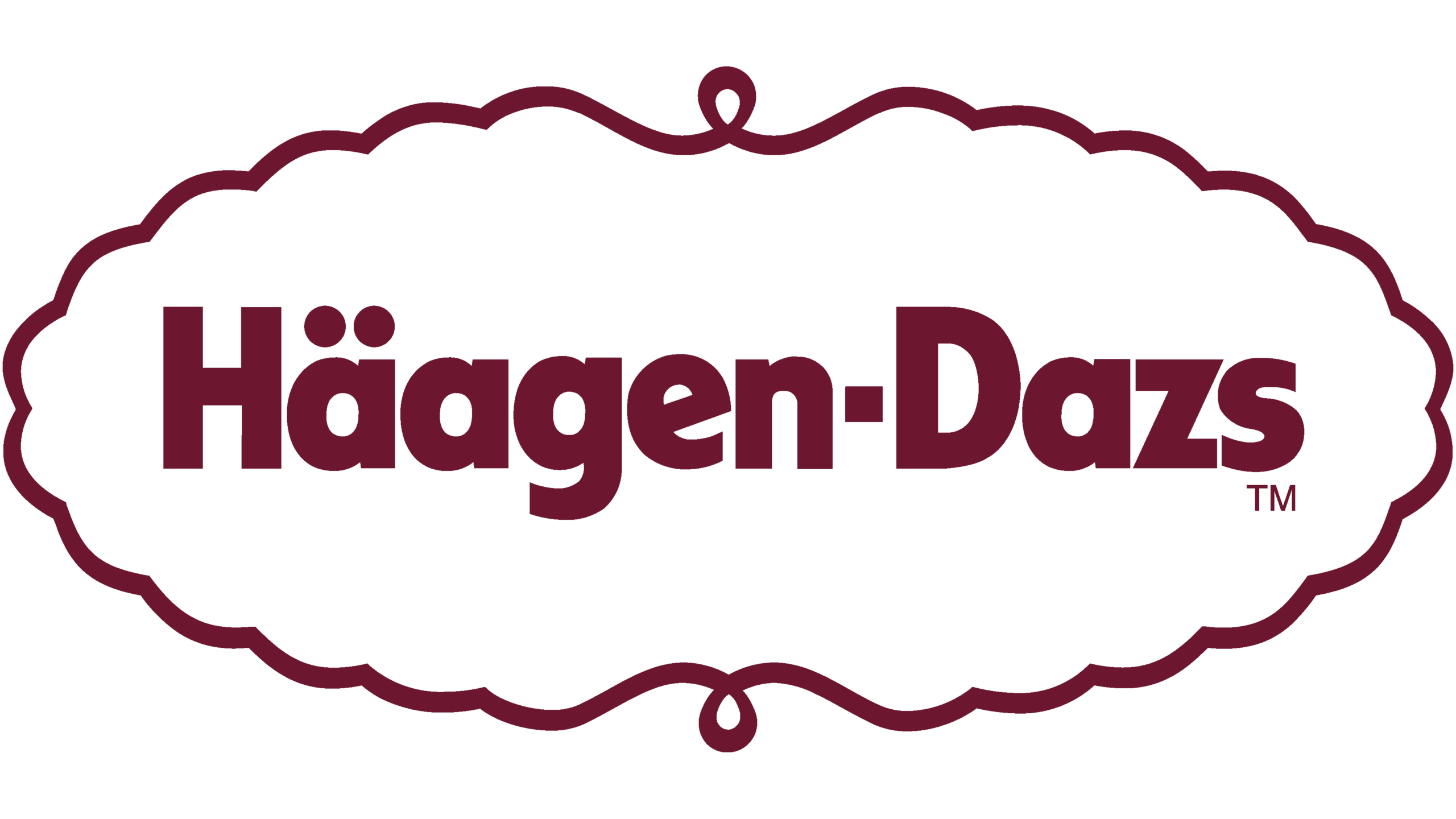
The Häagen-Dazs logo is a burgundy wordmark set in a custom script, framed by an ornate scalloped oval. The oval frame and bespoke lettering date to the brand’s first retail shop in 1976, refined for clarity in a 2017 update that kept the same basic shape.
Why does Häagen-Dazs have a Scandinavian-sounding name?
The name is invented. It contains no real Danish or Scandinavian words, and the umlaut over the “a” and the “zs” ending do not actually occur in the Danish alphabet. Founder Reuben Mattus made the name up at his kitchen table, trying combinations of sounds until he found one that felt distinctive. According to his daughter Doris Hurley, speaking in a 1996 PBS documentary, he chose a Danish-sounding name specifically as a tribute to Denmark’s protection of its Jewish population during the Second World War.
Who founded Häagen-Dazs, and when?
Reuben and Rose Mattus, Polish-American immigrants, started the company in 1960 in the Bronx, New York, selling just three flavors: vanilla, chocolate, and coffee. The idea was to compete on ingredients rather than price, using more cream and less air than mass-market ice cream of the time. The brand’s first retail shop opened in Brooklyn on 15 November 1976, the same period the now-familiar oval logo was introduced.
Did Häagen-Dazs sue other brands over similar names?
In 1980, Häagen-Dazs sued a rival ice cream brand called Frusen Glädjé, Swedish for “frozen joy,” arguing the name copied its own invented-Scandinavian branding strategy. The lawsuit failed. Frusen Glädjé was later sold to Kraft General Foods in 1985 and has since been discontinued.
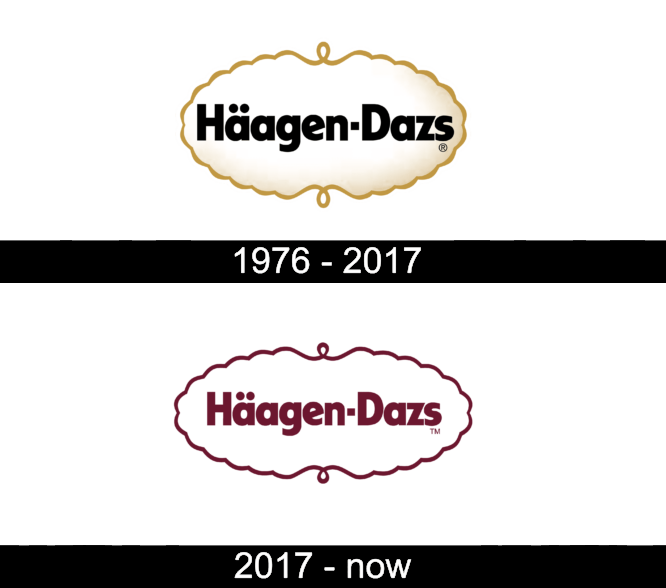
1976-2017: the ornate oval
The long-running logo set the name in a custom script, inside a scalloped oval frame reminiscent of vintage European confectionery packaging, with gold detailing reinforcing the premium positioning.
2017 to today
The 2017 update kept the oval frame and scalloped edges but simplified the ornamentation for clearer reproduction on digital screens and global packaging, and set the wordmark in a deep burgundy.
Who owns Häagen-Dazs today?
Pillsbury bought Häagen-Dazs in 1983. In 1999, Pillsbury and Nestlé merged their ice cream operations, and when General Mills acquired Pillsbury in 2001, Nestlé exercised a contractual right to take over the joint venture, giving Nestlé a long-term license to the Häagen-Dazs trademark in the United States while General Mills kept rights to the brand in other markets. In December 2019, Nestlé agreed to sell its US ice cream business, including its Häagen-Dazs and Dreyer’s operations, to Froneri, a joint venture between Nestlé and the private equity firm PAI Partners, in a deal worth about $4 billion that closed in 2020.
Quick facts
| Founded | 1960, the Bronx, New York, by Reuben and Rose Mattus |
| First retail shop | 15 November 1976, Brooklyn |
| Original flavors | Vanilla, chocolate, coffee |
| Name origin | Invented pseudo-Danish, as a tribute to Denmark’s WWII protection of Jews |
| Acquired by Pillsbury | 1983 |
| Acquired by General Mills (via Pillsbury) | 2001 |
| US business sold to Froneri (Nestlé/PAI Partners) | Announced Dec 2019, closed 2020, ~$4 billion |
| Current logo introduced | 2017 |
Other ice cream and dessert logos: Baskin-Robbins and Nestlé.