Air Canada Logo History: From a Government Railway Subsidiary to Today

Air Canada started in 1937 as a Crown corporation owned by the national railway, flew under the name Trans-Canada Air Lines for nearly three decades, and wasn’t a fully private company until 1989, more than 50 years after it was founded.
How did Air Canada actually start?
Trans-Canada Air Lines (TCA) was established on 11 April 1937 as a Crown corporation subsidiary of Canadian National Railway, beginning operations with two Lockheed Model 10 Electras and a Boeing Stearman biplane. Its first passenger flight flew on 1 September 1937. The airline operated under the TCA name for nearly 30 years before legislation introduced by Jean Chrétien renamed it Air Canada on 1 January 1965; Queen Elizabeth II flew on the first aircraft to carry the new name and livery that year.
Air Canada remained government-owned until privatization, which happened in two stages: 43% of shares were sold publicly in October 1988, with full privatization completed in 1989. The company filed for bankruptcy protection on 1 April 2003 and emerged from restructuring on 30 September 2004 under a new parent company, ACE Aviation Holdings. Air Canada became a founding member of the Star Alliance in May 1997. Today the airline operates a fleet of over 350 aircraft, carried more than 45 million passengers in 2025, and employs roughly 36,000 people.
Logo evolution
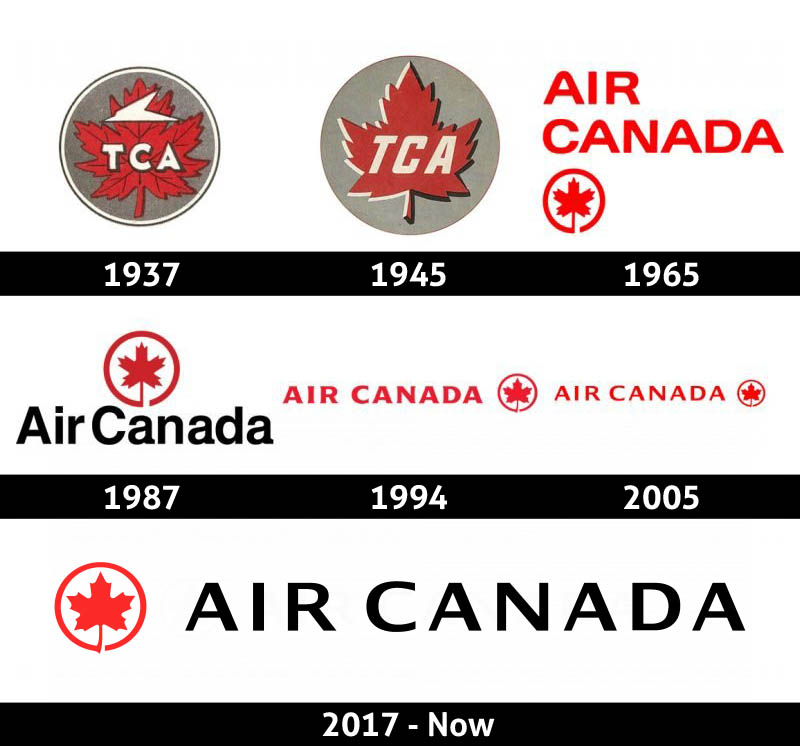
1937: Trans-Canada Air Lines
The earliest logo paired the abbreviation “TCA” with a red maple leaf and a stylized paper airplane above it, emphasizing both flight and Canadian identity from the start.

1945: simplified mark
The paper airplane was dropped, leaving the “TCA” lettering placed directly over the maple leaf, with “Air Canada” occasionally appearing underneath, a quiet preview of the rename that would follow two decades later.
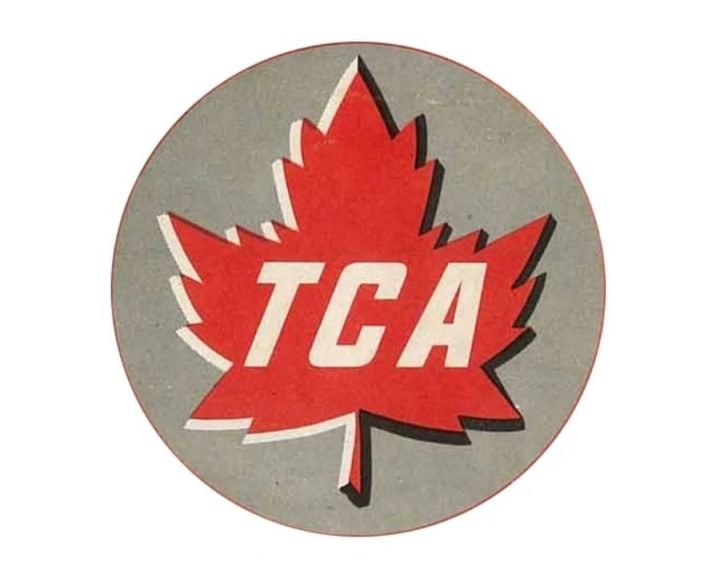
1965: the Air Canada name
With the official renaming, the new logo placed “Air Canada” at the center in a rounded typeface, with the maple leaf enclosed in a red-outlined circle and a brighter red used throughout.
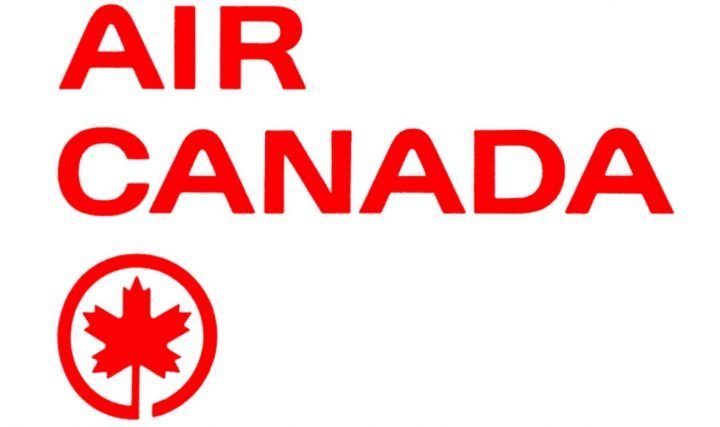
1987: clearer hierarchy
The maple leaf moved above the wordmark, and “Air Canada” appeared in black, giving the logo a more corporate, structured look.

1994: a refined serif
The 1994 redesign introduced a serif typeface and softened the maple leaf’s shape, with red returning to the wordmark itself.

2005-today: sans-serif and flexibility
The 2005 update replaced the serif type with a bold sans-serif, and in 2017 Air Canada added a black wordmark variant alongside the traditional red version, without changing the logo’s basic structure.
Quick facts
| Founded | 11 April 1937, as Trans-Canada Air Lines, a Crown corporation |
| First flight | 1 September 1937 |
| Renamed Air Canada | 1 January 1965 |
| Privatization | 43% sold October 1988; fully private by 1989 |
| Bankruptcy protection and restructuring | Filed April 2003, emerged September 2004 under ACE Aviation Holdings |
| Star Alliance founding member | May 1997 |
Related reading
Further reading
FAQ
When did Trans-Canada Air Lines become Air Canada?
On 1 January 1965, following legislation introduced by Jean Chrétien, ending nearly 28 years under the TCA name.
Was Air Canada always a private company?
No. It operated as a government-owned Crown corporation from its 1937 founding until privatization, completed in two stages between 1988 and 1989.
Did Air Canada ever go bankrupt?
Yes. It filed for bankruptcy protection on 1 April 2003 and emerged from restructuring in September 2004 under a new parent company, ACE Aviation Holdings.
What does the maple leaf on the Air Canada logo represent?
It is Canada’s national symbol and has appeared in every version of the airline’s logo since its 1937 founding as Trans-Canada Air Lines.