BuzzFeed Logo History: Meaning, Symbolism & Internet Media Heritage

BuzzFeed is one of the most recognizable digital media brands of the modern internet era, known for transforming viral content into a global publishing model. Founded in 2006 in New York, the platform evolved from a small experimental “viral lab” into an international media company covering entertainment, news, lifestyle, politics, and social trends. Much like explored in Bored Panda Logo History and Reddit Logo History, its visual identity reflects the speed and simplicity of digital culture. Within the broader category of online media and internet platform logos, BuzzFeed stands out for its bold typography and instantly recognizable red branding.
The BuzzFeed logo history demonstrates how minimal design can become highly memorable when paired with consistency and strong brand positioning.
BuzzFeed Logo Meaning and History: The Origin of a Viral Media Brand
The origin of BuzzFeed is closely tied to internet culture and the rapid spread of online content.
Founder Jonah Peretti originally created the platform as an experimental project focused on understanding why certain ideas, memes, and stories spread across the internet. The name itself came from this concept.
The BuzzFeed logo meaning is directly connected to the word “buzz,” referencing conversations, trends, and viral attention. The logo reflects this energy through bold typography and a vibrant color palette.
Unlike traditional media companies that often rely on complex symbols or newspaper-inspired branding, BuzzFeed adopted a minimalist and modern identity from the beginning.
This approach became central to BuzzFeed logo heritage, helping the platform establish a strong visual presence in digital media.
BuzzFeed Logo Symbolism: Simplicity, Energy, and Digital Culture
The BuzzFeed logo symbolism is rooted in speed, accessibility, and recognition.
The clean wordmark reflects the company’s digital-first philosophy. There are no decorative elements or icons distracting from the name itself.
Typography plays a central role. The selective use of uppercase letters creates rhythm and visual contrast, making the logo feel more dynamic and casual at the same time.
The bright red color reinforces energy and urgency, two qualities strongly associated with viral media and breaking online trends.
This simplicity allows the identity to remain flexible across websites, apps, social media platforms, and video content.
Together, these elements create a logo description that perfectly matches BuzzFeed’s role as a fast-moving internet media brand.
BuzzFeed Logo History Timeline: Evolution of a Digital Media Identity
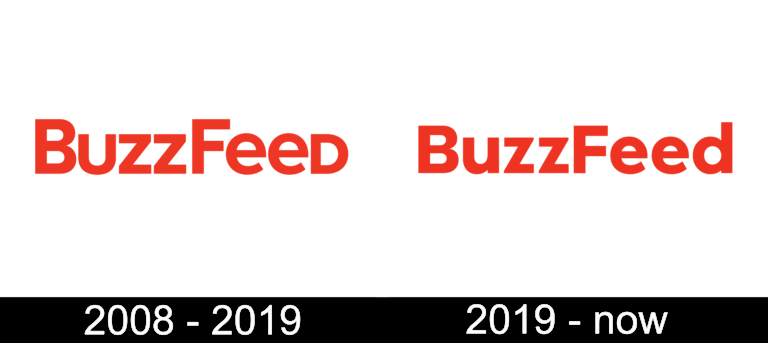
2008–2019: Original Wordmark and Viral Media Branding
The first widely recognized BuzzFeed logo appeared in 2008, during the company’s transition from experimental platform to large-scale media publisher.
The design focused entirely on typography. The word “BuzzFeed” was written in a bold geometric sans-serif typeface using mixed letter cases.
The letters “B,” “F,” and “D” were uppercase, while the remaining letters stayed lowercase. Interestingly, the final “D,” despite being capitalized, matched the size of the lowercase characters, creating a slightly unconventional and playful structure.
The logo was presented in bright red against a white background, establishing the brand’s now-iconic color identity.
This version became strongly associated with the rise of viral internet culture during the 2010s.

2019–Present: Refined Wordmark and Modern Digital Consistency
In 2019, BuzzFeed refined its visual identity while preserving its recognizable structure.
The updated version maintained the same bold typographic approach and red color palette, ensuring continuity and recognition across digital platforms.
The company also expanded the use of reverse-color variations, particularly white lettering on red backgrounds for mobile applications and social media icons.
This refined system improved flexibility while preserving the core identity established during the brand’s early growth.
The redesign reinforced BuzzFeed logo history as an example of consistency in digital branding.
BuzzFeed Logo Typography and Color: Bold Recognition for Digital Media
Typography is the defining feature of the BuzzFeed logo design.
The wordmark uses a geometric sans-serif typeface commonly associated with clarity and modernity. The balanced structure and bold weight ensure strong readability across screens and mobile devices.
The use of selective capitalization introduces rhythm and informality, reflecting the conversational nature of online content.
Color plays an equally important role. The bright red palette communicates energy, urgency, and excitement — qualities strongly connected to social media and viral storytelling.
Combined with white backgrounds, the red creates strong contrast and immediate recognition.
BuzzFeed Logo Heritage: Minimalism That Defined Internet Media
The BuzzFeed logo history demonstrates how a minimalist identity can become deeply associated with an entire era of internet culture.
Rather than relying on intricate graphics, the brand built recognition through typography, color consistency, and constant digital visibility.
Its logo heritage reflects the evolution of online media itself — fast, adaptable, and highly recognizable across platforms.
Even as the company expanded into journalism, entertainment, and global publishing, the visual identity remained rooted in the same bold simplicity that defined its early years.
Today, the BuzzFeed logo remains one of the most recognizable marks in digital publishing.
BuzzFeed Logo History FAQ: Meaning, Symbolism, and Evolution
What does the BuzzFeed logo represent?
It represents viral media, digital culture, and online conversation.
Why is the BuzzFeed logo red?
The red color symbolizes energy, excitement, and fast-moving internet trends.
What font is used in the BuzzFeed logo?
The logo uses a geometric sans-serif typeface similar to Proxima Nova SemiBold.
When was the BuzzFeed logo introduced?
The recognizable wordmark version appeared in 2008.
Has the BuzzFeed logo changed significantly over time?
No, the brand has maintained a consistent typographic identity with only minor refinements.