
Spider-Man Logo History: Meaning, Symbolism & Marvel Brand Heritage
Spider-Man is one of the most recognizable superheroes in the world, a character whose identity has evolved across comics, television, and cinema for decades. First introduced in the early 1960s by Marvel, Spider-Man quickly became a cultural icon, defined not just by his story, but by his visual identity. Much like explored in Batman Logo History and Superman Logo History, his emblem and wordmark have played a crucial role in shaping recognition. Within the broader category of superhero and comic book logos, Spider-Man stands out for its dynamic evolution and expressive design language.
The Spider-Man logo history is closely tied to the character’s development. As the story evolved, so did the visual identity, reflecting changes in tone, audience, and artistic direction.
Spider-Man Logo Meaning and History: Origin of a Superhero Identity
The origin of Spider-Man dates back to the early 1960s, when the character first appeared as an ordinary teenager with extraordinary abilities. Unlike traditional superheroes, Spider-Man was relatable, flawed, and grounded in reality.
This duality influenced the visual identity. The Spider-Man logo meaning revolves around agility, tension, and transformation. Whether through typography or the spider emblem itself, the design always reflects movement and energy.
Early versions focused on bold lettering, designed to stand out on comic book covers. Over time, the identity became more stylized, adapting to different media formats.
This constant evolution defines Spider-Man logo heritage, where change is part of the brand’s DNA.
Spider-Man Logo Symbolism: Power, Motion, and Dual Identity
The Spider-Man logo symbolism is built around two key elements: the wordmark and the spider emblem.
The spider represents transformation and power. It is a direct reference to the character’s origin, while also symbolizing agility and unpredictability.
Typography, on the other hand, reflects personality. The sharp angles, stretched forms, and aggressive shapes often seen in Spider-Man wordmarks suggest motion, tension, and action.
Color plays a central role. Red and blue, associated with the costume, convey energy, heroism, and contrast. Black elements add depth and intensity.
Together, these components create a visual identity that is both dynamic and instantly recognizable.
Spider-Man Logo History Timeline: Evolution of a Superhero Identity
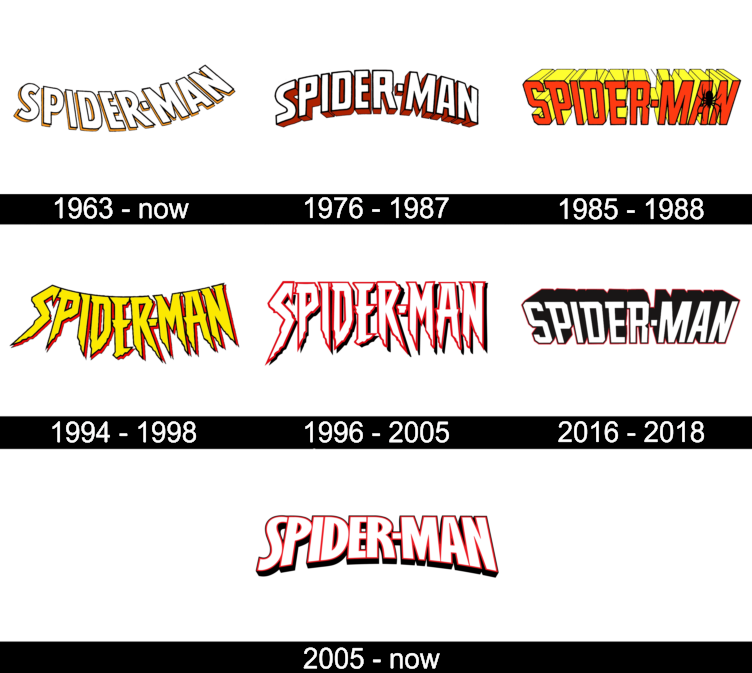
1963–Present: Original Wordmark and Comic Book Foundation
The first Spider-Man logo appeared in the early comic book era. It featured the name written as “Spider-Man” in bold uppercase lettering.
The typeface had soft, rounded shapes, with a slight downward curve across the wordmark. The color scheme combined yellow lettering with red undersides, creating a three-dimensional effect.
This version established the foundation of Spider-Man logo history, focusing on visibility and impact.
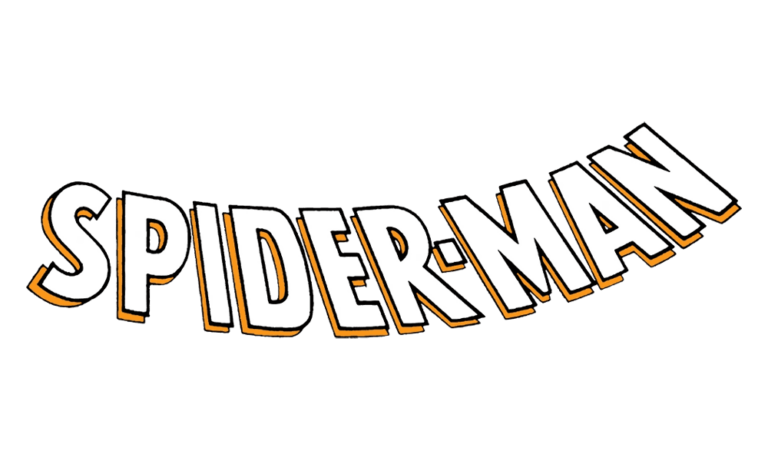
1976–1987: Linear Typography and Upward Movement
In the mid-1970s, the logo was redesigned with a more structured and linear appearance.
The letters became wider and more uniform, while the curvature of the wordmark was reversed, now bending upward instead of downward.
The color palette shifted to white letters with red undersides, maintaining the three-dimensional look while improving contrast.
This version introduced a stronger sense of direction and motion.
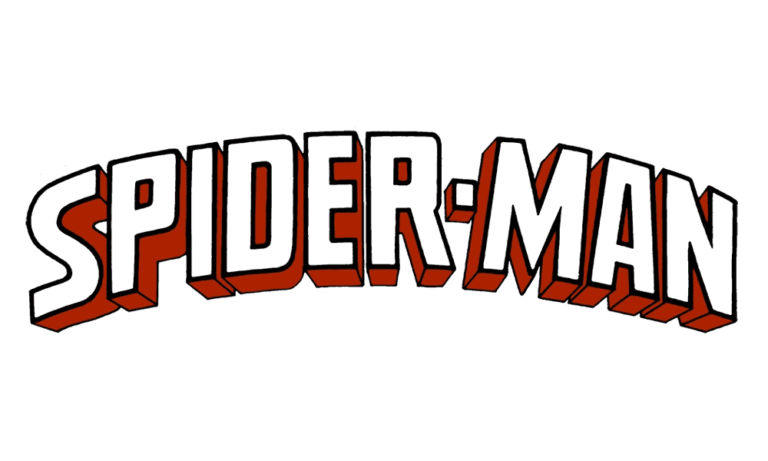
1985–1988: Bold 3D Construction and Stronger Visual Depth
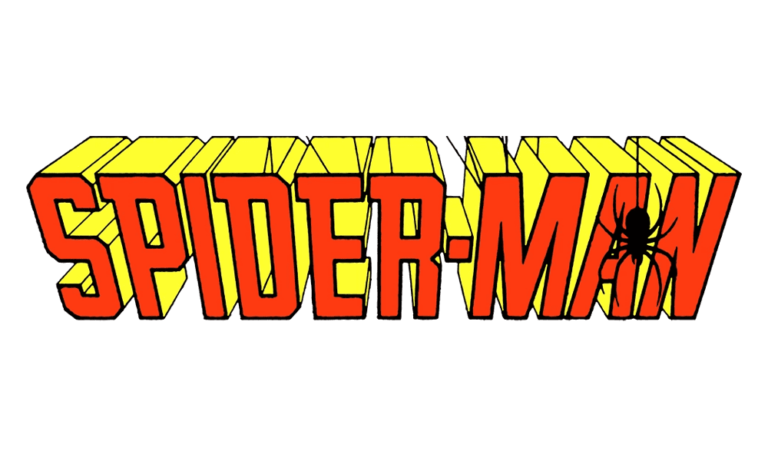
The 1985 redesign introduced a more dramatic and dimensional approach. The lettering appeared as solid three-dimensional forms, viewed from above.
The characters became taller and more geometric, with sharper proportions and clearer structure.
The color scheme changed to red with yellow accents, enhancing visibility and intensity.
This phase reflects a more powerful and assertive visual identity.
1994–2005: Animated Series Logo and Aggressive Letterforms
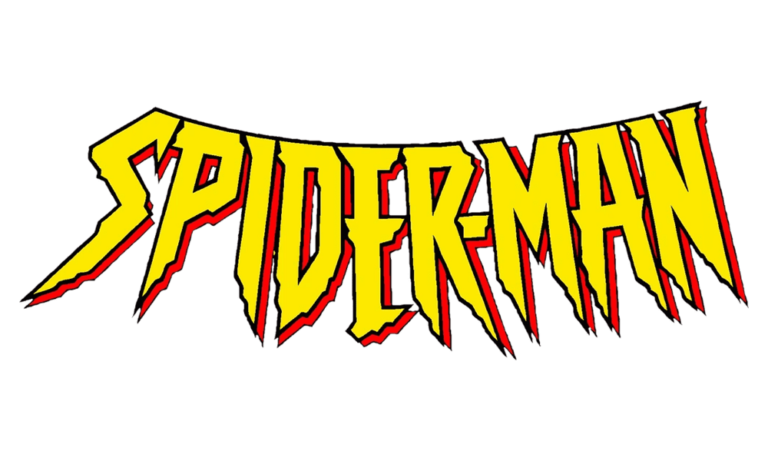
With the release of the animated series, the Spider-Man logo took on a more stylized and aggressive form.
The letters became elongated, jagged, and angular, creating a sense of tension and movement. The wordmark was flat, with white lettering outlined in red.
This design emphasized energy and action, aligning with the tone of the animated series.
1996–2005: Simplified Composition and Modern Balance
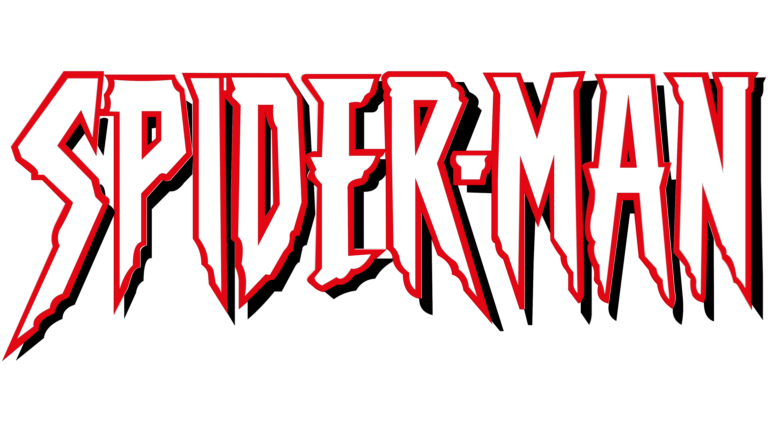
In 1996, the logo was refined to create a cleaner and more balanced composition.
The lettering was straightened and placed in a horizontal alignment. The gothic elements were softened, resulting in a more modern appearance.
The color palette remained focused on red and white, improving clarity and readability.
This version maintained the dynamic feel while introducing greater simplicity.
2005–Present: Contemporary Identity and Flexible Branding
Modern Spider-Man logos vary depending on the medium, including films, comics, and merchandise.
The general direction focuses on cleaner, more adaptable typography, often combined with strong shadow effects and geometric shapes.
The wordmark is typically bold and slightly angled, reinforcing motion and energy.
This flexibility defines the current stage of Spider-Man logo history, where consistency is maintained through core elements rather than a single fixed design.
2016–2018: Geometric Refinement and Dynamic Angles
The 2016 version introduced a more geometric and structured approach to the wordmark.
The letters featured rounded corners and smooth edges, combined with a strong black shadow that added depth.
The composition was slightly angled, creating a sense of motion and momentum.
This version reflects a modern interpretation of the Spider-Man identity, balancing clarity with energy.
Spider-Man Logo Typography and Color: Energy, Contrast, and Recognition
Typography in the Spider-Man logo design is constantly evolving, but always retains a sense of movement.
The use of sharp angles, stretched forms, and dynamic spacing creates tension and visual interest. Even in simpler versions, the lettering feels active rather than static.
Color is a defining element in the logo description. Red dominates the palette, symbolizing action and intensity. Blue, when present, adds balance and depth.
Black is often used for outlines or shadows, enhancing contrast and making the design more striking.
These elements ensure that the logo remains impactful across different formats and platforms.
Spider-Man Logo Heritage: Evolution as Identity
The Spider-Man logo history is defined by change. Unlike brands that rely on consistency, Spider-Man evolves continuously, reflecting the character’s journey across generations.
This adaptability is the foundation of Spider-Man logo heritage. Each version captures a different era, tone, or interpretation of the character.
Despite these changes, certain elements remain constant — bold typography, strong contrast, and a sense of motion.
In the world of superhero branding, Spider-Man stands as a unique example of how evolution itself can become a defining feature of identity.
Spider-Man Logo History FAQ: Meaning, Symbolism, and Evolution
What does the Spider-Man logo symbolize?
It symbolizes agility, power, and transformation through the spider motif and dynamic typography.
Why has the Spider-Man logo changed so often?
To reflect different comic eras, series, and film adaptations.
What colors are used in the Spider-Man logo?
Primarily red, white, black, and sometimes blue.
When was the first Spider-Man logo created?
It appeared in the early 1960s alongside the original comics.
What makes the Spider-Man logo unique?
Its constant evolution and strong sense of motion.