Bulgaria Air Logo History: Meaning, Symbolism & Brand Heritage
The visual identity of Bulgaria Air reflects the rebirth of national aviation branding in Eastern Europe after the early 2000s. As Bulgaria’s flag carrier, Bulgaria Air inherited the responsibility of representing the country internationally while building a modern, competitive airline image. Its logo history reveals a careful transition from direct national symbolism toward a more refined, contemporary visual language aligned with European airline standards.
Within airline logo history, Bulgaria Air belongs to the same regional narrative as TAROM logo history and Air Serbia logo heritage, where post-transition carriers balanced tradition with modernization. As part of the broader European airline logo heritage, Bulgaria Air demonstrates how newer flag carriers established credible identities without relying on legacy-era emblems.
Meaning and History: The Origin of the Bulgaria Air Identity
Bulgaria Air was founded in 2002 following the restructuring of Bulgaria’s civil aviation sector. Created to serve as the country’s national carrier, the airline immediately required a visual identity capable of signaling reliability, state representation, and international legitimacy.
The early logo meaning was closely tied to national identity. Colors derived from the Bulgarian flag and sharp, assertive typography emphasized continuity and sovereignty. As the airline expanded its network across Europe, the Middle East, and North Africa, the need for a more versatile and contemporary brand language became evident.
Subsequent refinements reflected Bulgaria Air’s strategic evolution, shifting focus from symbolic assertion toward elegance, clarity, and alignment with modern aviation branding.
Logo Symbolism: National Colors and Wing Motifs
The symbolism of the Bulgaria Air logo is rooted in two core ideas: national identity and flight. Early designs leaned heavily on color symbolism, using red, green, and white to reference the Bulgarian flag. This approach ensured immediate national recognition, particularly important for a newly established flag carrier.
Over time, symbolism became more abstract. The geometric emblem evolved into a ribbon-like wing form, a universal aviation metaphor representing motion, lift, and connectivity. This shift allowed the logo to communicate flight and progress without explicit national imagery, making it more adaptable for international audiences.
Typography also plays a symbolic role. The transition from serif to softened sans-serif lettering reflects a broader industry move toward accessibility, modernity, and digital legibility.
Bulgaria Air Logo History Timeline
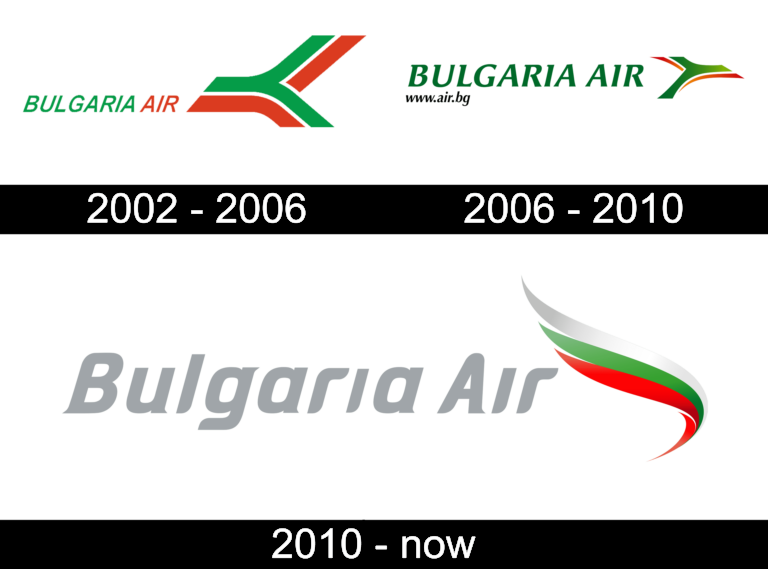
2002–2006: National Colors and Geometric Assertion
The original Bulgaria Air logo introduced in 2002 featured an italicized uppercase wordmark rendered in red and green. Set in a traditional sans-serif typeface, the lettering conveyed momentum and confidence. To the right, a bold abstract emblem composed of thick red and green geometric lines reinforced the national color palette.
This identity clearly emphasized Bulgaria Air’s role as a state-founded airline, prioritizing recognition and symbolic clarity during its formative years.

2006–2010: Serif Elegance and Transitional Refinement
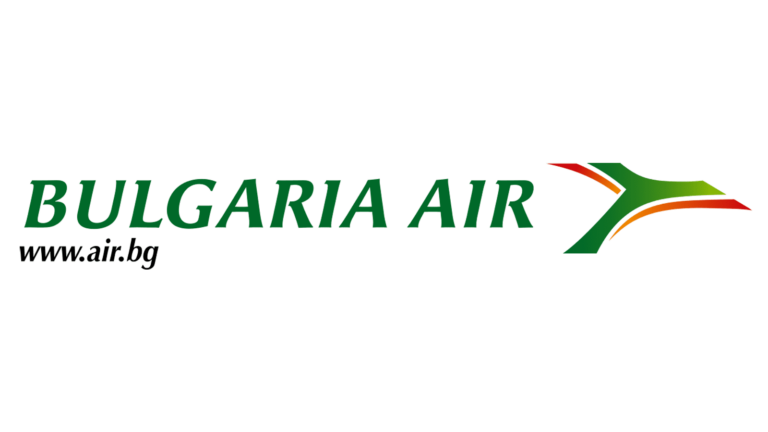
In 2006, Bulgaria Air refined its visual identity by introducing a serif wordmark with pronounced bars and triangular serifs. This change added a sense of heritage and authority, aligning the airline more closely with established European carriers.
The geometric emblem was softened, and subtle gradients were introduced, particularly in the green elements. A small black tagline featuring the airline’s website appeared beneath the wordmark, reflecting the growing importance of digital presence.
2010–Present: Wing Ribbons and Contemporary Identity
The 2010 redesign marked a decisive modernization of the Bulgaria Air logo. The color palette shifted to gray, red, and green, reducing visual intensity while maintaining national references. The wordmark adopted a bold yet softened sans-serif typeface in light gray, improving readability and elegance.
The emblem transformed into three flowing ribbon-like shapes forming a stylized wing. This abstract symbol communicates flight, harmony, and movement, positioning Bulgaria Air firmly within contemporary airline branding norms.
Bulgaria Air Logo Heritage in the European Context
Bulgaria Air’s logo heritage reflects the broader evolution of Eastern European aviation brands in the 21st century. Unlike legacy carriers with decades-old symbols, Bulgaria Air built its identity from scratch, allowing greater flexibility and responsiveness to design trends.
Compared with identities explored in LOT Polish Airlines logo symbolism or Croatia Airlines logo history, Bulgaria Air stands out for its relatively rapid transition from explicit national symbolism to refined abstraction. This approach helped the airline maintain relevance as it integrated into the European aviation market.
Bulgaria Air Logo as a Modern Flag Carrier Identity
The Bulgaria Air logo history illustrates how a young flag carrier can successfully balance national representation with contemporary design. From bold flag-inspired graphics to an elegant wing emblem, Bulgaria Air’s visual identity matured alongside the airline itself. Within airline logo history and broader logo heritage analysis, it serves as a strong example of post-2000 European aviation branding done with restraint and clarity.
FAQ: Bulgaria Air Logo Meaning and History
What does the Bulgaria Air logo represent?
It represents national identity, flight, and modern connectivity through color and wing symbolism.
When was the first Bulgaria Air logo introduced?
The original logo was introduced in 2002.
Why did Bulgaria Air redesign its logo in 2010?
The redesign modernized the brand, improving international appeal and visual clarity.
Is Bulgaria Air still operating today?
Yes, Bulgaria Air continues to operate as Bulgaria’s national flag carrier.