
Yeti Airlines Logo History: Meaning, Symbolism & Brand Heritage

The visual identity of Yeti Airlines is one of the most distinctive in South Asian aviation, rooted deeply in local mythology while evolving to meet modern branding standards. As Nepal’s aviation sector expanded alongside tourism and regional connectivity, Yeti Airlines developed a logo history that reflects both cultural symbolism and growing corporate maturity.
Within airline logo history, Yeti Airlines occupies a unique position comparable to brands explored in Air India logo history and SriLankan Airlines logo meaning, where national identity and symbolic imagery play a defining role. As part of the broader Asian airline logo heritage, the Yeti Airlines emblem demonstrates how regional mythology can be translated into a recognizable and enduring visual system.
Meaning and History: The Origin of the Yeti Airlines Identity
Yeti Airlines was founded in 1998 by Ang Tshiring Sherpa, at a time when Nepal’s domestic aviation market was undergoing gradual modernization. From its inception, the airline positioned itself as a reliable connector between Kathmandu and the country’s most challenging and remote destinations, many of which are critical gateways for tourism and trade.
The logo meaning was shaped by geography and folklore. The Yeti, a legendary creature associated with the Himalayan region, was chosen as the airline’s symbolic anchor. This decision immediately differentiated the brand from generic aviation identities and tied it unmistakably to Nepal’s cultural landscape. Rather than adopting abstract wings or globes, Yeti Airlines embraced a symbol that resonated locally while intriguing international travelers.
Over the years, as the airline expanded its fleet and operational capabilities, the visual identity remained remarkably consistent, reinforcing trust and recognition among passengers.
Logo Symbolism: Myth, Strength, and Himalayan Identity
The symbolism of the Yeti Airlines logo is grounded in strength, resilience, and mystery. The Yeti paw, featured prominently in the emblem, represents endurance and adaptability, qualities essential for aviation in Nepal’s mountainous terrain. Unlike literal depictions, the paw serves as an abstract symbol, allowing mythological reference without narrative complexity.
The stylized “Y” integrated into the emblem reinforces brand recognition while echoing upward motion, subtly referencing ascent and flight. Color plays a critical symbolic role as well. Green reflects Nepal’s natural landscapes and sustainability, while gold accents introduced later add a sense of prestige and confidence.
Typography supports this symbolism by balancing tradition and modernity, shifting over time to reflect the airline’s evolving identity.
Yeti Airlines Logo History Timeline

1998–2024: Himalayan Mythology Emblem Era
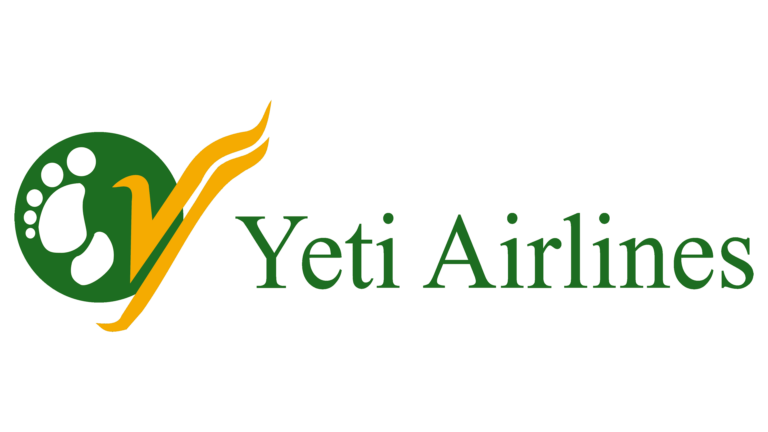
The original Yeti Airlines logo introduced in 1998 remained unchanged for more than two decades. It featured a solid green circular badge overlapped by a white Yeti paw and a bright yellow-to-orange stylized capital “Y.” The emblem conveyed warmth, regional identity, and approachability. Accompanying the symbol was a modest green wordmark set in a traditional serif typeface, reinforcing reliability and heritage.
This long period of consistency helped establish strong brand recognition within Nepal’s domestic aviation market and among international visitors.
2024–Present: Modernized Heritage Identity
In 2024, Yeti Airlines unveiled a comprehensive redesign that refined rather than replaced its established symbolism. The green palette was lightened for clarity and freshness, the Yeti paw was enlarged to strengthen visual impact, and the stylized “Y” was redrawn with thicker lines in a smooth gold tone.
The wordmark was completely updated, adopting an elegant, slanted modern serif typeface in black. This redesign signaled confidence, growth, and a readiness to compete visually with contemporary regional airlines while preserving the brand’s mythological origin.
Yeti Airlines Logo Heritage and Cultural Impact
The Yeti Airlines logo heritage is closely intertwined with Nepal’s identity as a destination defined by mountains, mythology, and adventure. By embracing a culturally specific symbol, the airline positioned itself as an authentic representative of the region rather than a generic carrier.
When compared with identities discussed in Thai Airways logo symbolism or Garuda Indonesia logo history, Yeti Airlines stands out for its direct use of local folklore. This approach strengthened emotional connection with domestic travelers while offering international passengers a memorable visual association with Nepal.
Yeti Airlines Logo as a Symbol of Regional Authenticity
The Yeti Airlines logo history illustrates how cultural symbolism and brand consistency can coexist with modernization. From its original emblem rooted in Himalayan mythology to its refined contemporary identity, the airline preserved its core meaning while adapting visually to new expectations. Within airline logo history and broader logo heritage analysis, Yeti Airlines represents a compelling example of regional authenticity translated into lasting brand identity.
FAQ: Yeti Airlines Logo Meaning and History
What does the Yeti Airlines logo represent?
The logo represents strength, resilience, and Himalayan mythology through the Yeti paw symbol.
When was the original Yeti Airlines logo introduced?
The original logo was introduced in 1998 and remained in use until 2024.
Why did Yeti Airlines redesign its logo in 2024?
The redesign modernized the visual identity while preserving core symbolism, reflecting growth and maturity.
Is the Yeti symbol still used in the current logo?
Yes, the Yeti paw remains central to the airline’s visual identity.