Pixar Logo: Luxo Jr. the Lamp

The old article on Pixar’s logo credits only Steve Jobs with starting the company and skips the two people who actually built the technical group he later bought. It also leaves out Disney’s 2006 purchase of Pixar, the deal that put Pixar’s own leadership in charge of Disney Animation, and it never mentions John Lasseter’s 2017 leave of absence and 2018 departure. The design history (the 1979 emblem, the 1986 BSD icon, and the 1994 serif wordmark with the Luxo Jr. lamp) is mostly accurate and is kept below, rewritten for clarity.
Who actually founded the group that became Pixar?
Pixar’s roots go back to a computer graphics research team at the New York Institute of Technology in the early 1970s. In 1979, George Lucas hired that team’s leader, Ed Catmull, to run a new Computer Division at Lucasfilm. Alvy Ray Smith, who had worked alongside Catmull at NYIT, joined as director of the division’s Graphics Group. Catmull and Smith are the two figures most responsible for building the technology and the team that later became Pixar, work the old article skipped entirely by naming only the person who eventually bought the division.
When did Steve Jobs buy the company, and what happened to it?
In February 1986, Steve Jobs paid Lucasfilm roughly $10 million (around $5 million for the technology and $5 million in a cash investment in the new company) to spin the Graphics Group out as an independent business, which took the name Pixar. Catmull became president and Smith became executive vice president. Jobs later put in tens of millions more, eventually holding a controlling stake, and stayed as chairman and primary funder through Pixar’s lean early years and its 1995 initial public offering, which followed the release of Toy Story.
What happened when Disney bought Pixar?
Disney announced on January 24, 2006, that it would acquire Pixar in an all stock deal worth about $7.4 billion, with Pixar shareholders receiving 2.3 Disney shares for each Pixar share they held. The deal closed on May 5, 2006. Jobs, who owned roughly half of Pixar’s stock, became Disney’s largest individual shareholder with about a 7 percent stake and joined Disney’s board. His Pixar chairman and CEO titles were abolished as part of the deal. The single biggest gap in the old version is that it never mentions this acquisition at all, even though it is the event that put Pixar’s own leaders in charge of Disney’s broader animation business: Catmull became president of both Pixar and Walt Disney Animation Studios, and John Lasseter became chief creative officer of both studios.
Why does John Lasseter no longer appear in Pixar’s leadership?
In November 2017, Lasseter took a leave of absence that he described as a six month sabbatical, after a Hollywood Reporter story detailed complaints from colleagues about unwanted hugging, kissing, and comments on physical appearance. In an email to staff he apologized for what he called “missteps.” In June 2018, Disney announced that Lasseter would not return to his posts and would leave the company by the end of that year, serving only as a consultant in the interim. He left Pixar and Disney Animation leadership for good at the end of 2018.
How has the Pixar logo changed over time?
The logo history itself holds up reasonably well in the old article, and the design choices below are kept with the existing images.
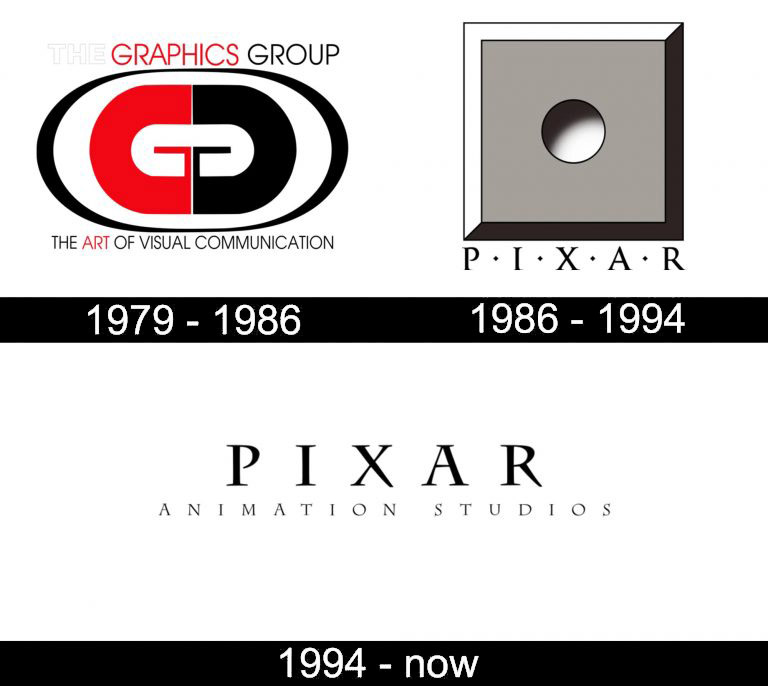
- 1979 to 1986: As the Graphics Group inside Lucasfilm’s Computer Division, the team used a plain technical wordmark rather than a consumer-facing logo.
- 1986: After the spinout, the new company adopted a blocky, geometric wordmark rendered in a style associated with early BSD Unix branding, reflecting Pixar’s roots as a hardware and software company before it became known for animated films.
- 1994 to 1995: Ahead of Toy Story’s 1995 release, Pixar moved to the red serif wordmark still in use today. The typeface is often described in design write-ups as a bold serif in the Charlemagne family, and the redesign is frequently attributed to Pixar artist Pete Docter, though neither detail has been confirmed in an on-the-record company statement, so it is worth treating as a commonly repeated account rather than a confirmed fact.
- 1995: Pixar added its Luxo Jr. desk lamp mascot to the logo, a reference to the studio’s 1986 short film “Luxo Jr.,” which had already become an informal symbol of the company.

Quick facts
| Founded as Lucasfilm’s Graphics Group | 1979, under Ed Catmull, with Alvy Ray Smith as director |
| Spun out as Pixar | February 1986, bought by Steve Jobs for about $10 million |
| First feature film | Toy Story, released 1995 |
| Disney acquisition announced / closed | January 24, 2006 / May 5, 2006, about $7.4 billion in stock |
| Jobs’ resulting Disney stake | About 7 percent, making him Disney’s largest individual shareholder |
| Lasseter leave / departure | Leave announced November 2017; left the company by the end of 2018 |
Related reading
Further reading
Frequently asked questions
Who founded the group that became Pixar?
Ed Catmull and Alvy Ray Smith built the Lucasfilm Computer Division’s Graphics Group starting in 1979. Steve Jobs later bought that group from Lucasfilm in 1986 and renamed it Pixar; he funded and chaired the company but did not found the original technical team.
How much did Disney pay for Pixar?
Disney paid about $7.4 billion in an all stock deal, announced in January 2006 and completed in May 2006, giving Pixar shareholders 2.3 Disney shares for each Pixar share.
Did Steve Jobs become a Disney shareholder?
Yes. His roughly 50 percent stake in Pixar converted into about a 7 percent stake in Disney, making him Disney’s largest individual shareholder, and he joined Disney’s board.
Why did John Lasseter leave Pixar and Disney?
Lasseter took a leave of absence in November 2017 after complaints about his conduct toward colleagues, including unwanted hugging and comments on physical appearance. Disney announced in June 2018 that he would not return and would leave the company by the end of that year.