
KLM Logo History: Meaning, Symbolism & Brand Heritage
Within global aviation logo history, KLM Royal Dutch Airlines holds a position unmatched by any other active airline. Founded in 1919, KLM is the oldest airline in the world still operating under its original name, a distinction that profoundly shaped both its corporate identity and its visual language. From the earliest days of commercial aviation, KLM understood the importance of symbolism, continuity, and authority in building trust around a still-novel mode of transportation.
The KLM logo history is inseparable from European aviation heritage itself. While other legacy carriers, such as Lufthansa logo or Air France logo history, evolved through periods of national redefinition and corporate modernization, KLM maintained a remarkably consistent symbolic core. Across more than a century, its visual identity repeatedly returned to the same foundational elements: the crown, the initials, and a restrained color palette. This consistency transformed the KLM logo into one of the most enduring emblems in airline branding, reinforcing both royal patronage and long-term reliability.
Meaning and History: The Origin of the KLM Logo
KLM was founded in 1919 by Dutch military pilot Albert Plesman. Only months after its establishment, the airline was granted “Royal” status by royal decree, a rare honor that permanently defined its brand identity. The name KLM itself is an acronym for Koninklijke Luchtvaart Maatschappij, meaning “Royal Airline Company.”
From the outset, the logo meaning of KLM revolved around legitimacy, authority, and national representation. The crown symbolized royal endorsement and institutional trust, while the initials communicated clarity and professionalism. Even after the 2004 merger with Air France, which created the Air France-KLM group, KLM retained full brand autonomy, continuing to operate under its historic name and emblem. This decision further reinforced the airline’s logo heritage as a symbol of continuity rather than corporate consolidation.
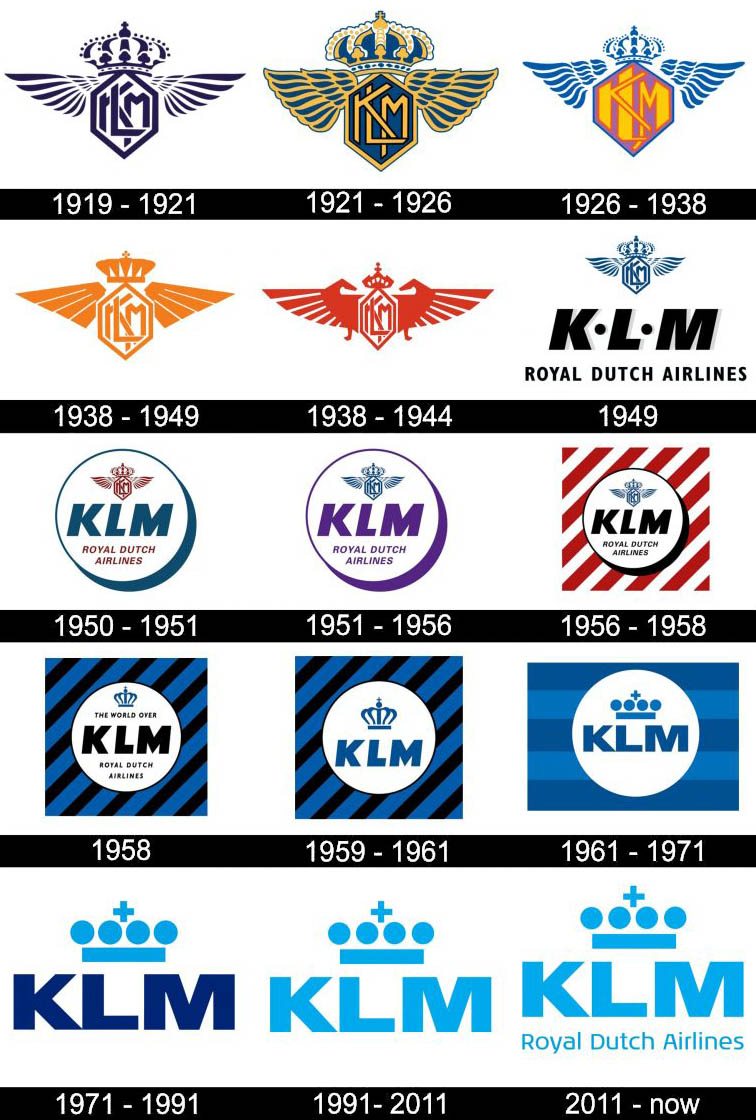
KLM Logo History Timeline
1919–1921: Heraldic Foundations and Early Authority
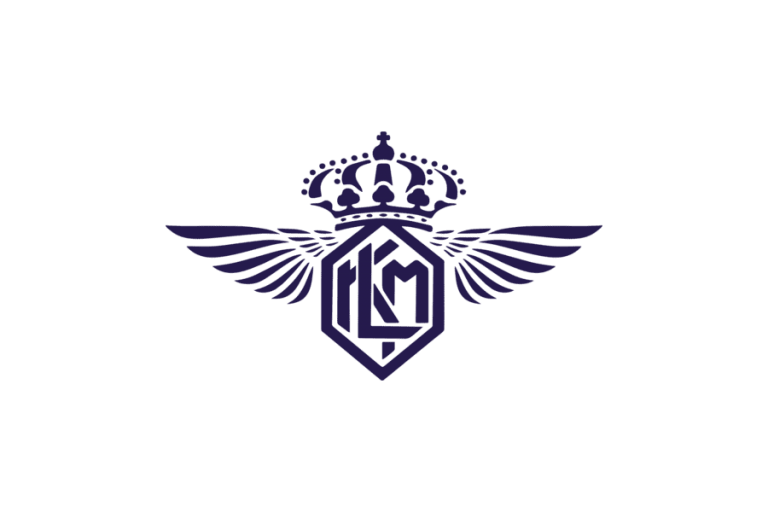
The first KLM logo, introduced in 1919, featured intertwined “K,” “L,” and “M” letters placed inside a hexagonal crest. Wings extended from the sides, and a crown sat above the emblem. This composition reflected early aviation’s close relationship with heraldry, authority, and national symbolism.
1921–1926: Precision and Royal Emphasis
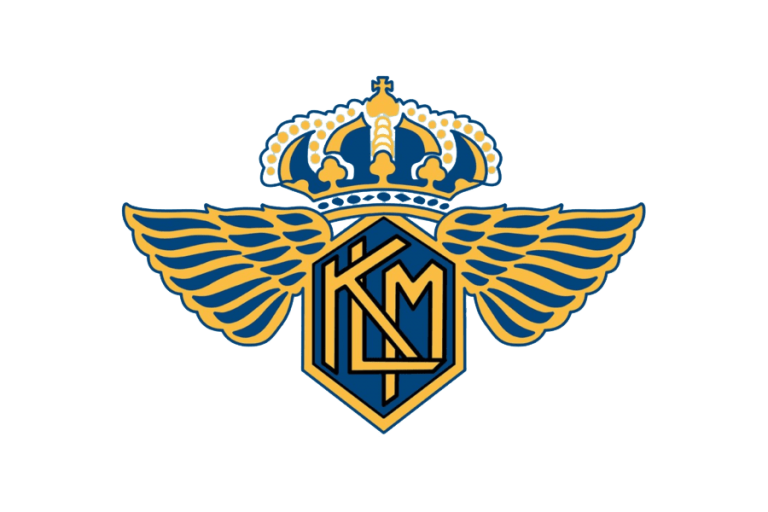
In 1921, the logo adopted a calmer blue and yellow palette with a strict black outline. The wings and crown were enlarged and refined, appearing smoother and more confident. This redesign emphasized royal legitimacy and visual precision.
1926–1938: Decorative Color and Geometric Confidence
The 1926 redesign introduced a more decorative approach. Large yellow geometric letters outlined in red appeared on a light pink background, while the crown and wings were rendered in blue and white. This visually rich badge reflected the optimism of interwar aviation.
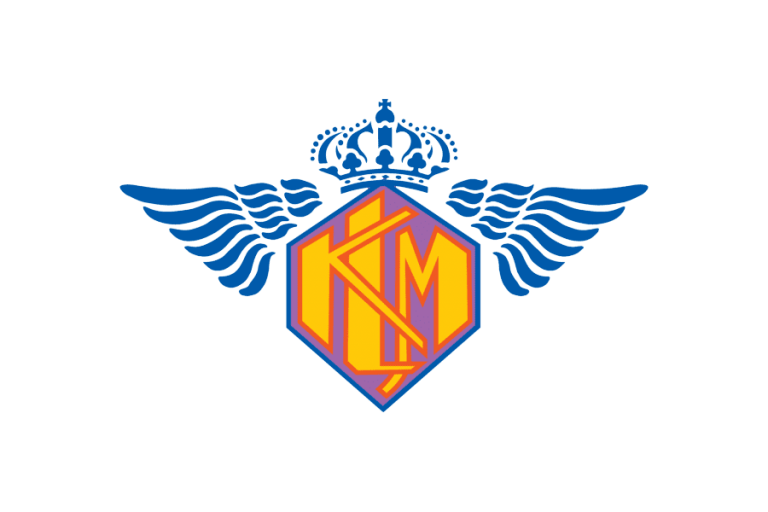
1938–1949: Simplification and Wartime Restraint
In 1938, the logo was simplified and recolored in orange and white, returning closer to the original contours. Lines became cleaner and more modern, aligning with contemporary design trends and practical reproduction needs.
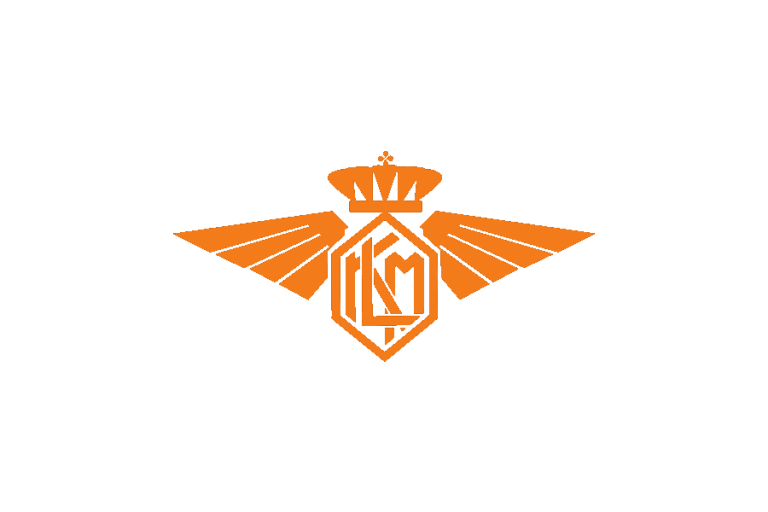
1938–1944: Alternative Symbolic Interpretation
A secondary version introduced in 1938 used dark red on white. The wings became highly stylized, resembling abstract horses facing the crest. This expressive design made KLM stand out visually during a turbulent historical period.
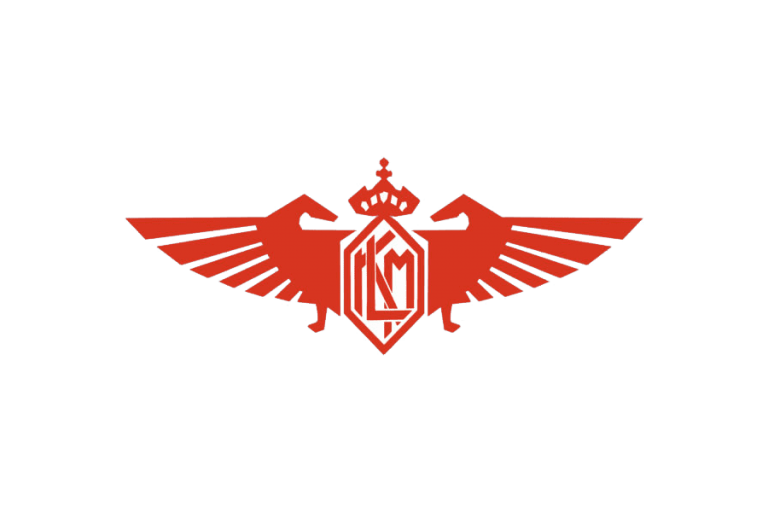
1949: Institutional Structure and Corporate Clarity
In 1949, the palette returned to blue and white. A bold black “KLM” inscription appeared beneath the emblem, separated by dots, accompanied by a “Royal Dutch Airlines” tagline in italic sans-serif. This marked a move toward corporate standardization.
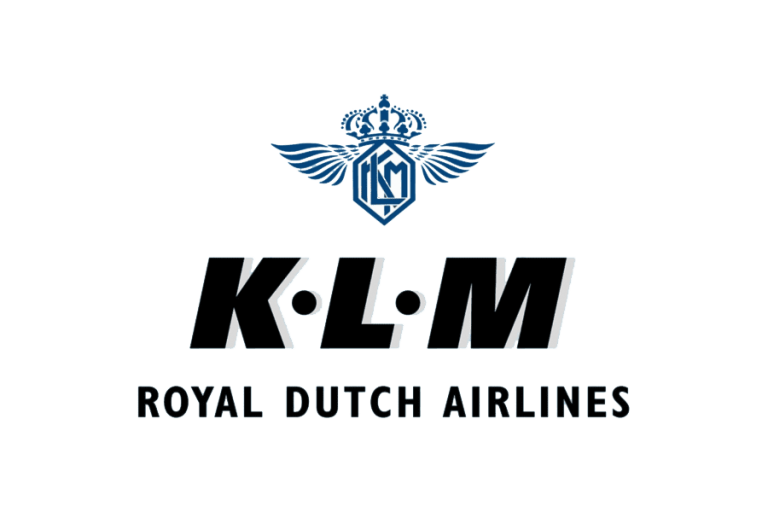
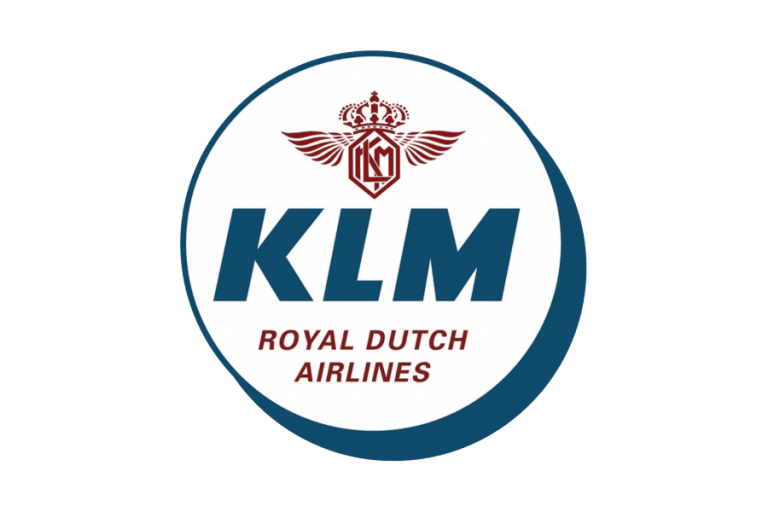
1950–1951: Circular Emblem and Burgundy Accents
The emblem transitioned into a circular form in 1950. Burgundy accents were introduced, while the KLM logotype became central, set in blue within a blue-outlined circle.
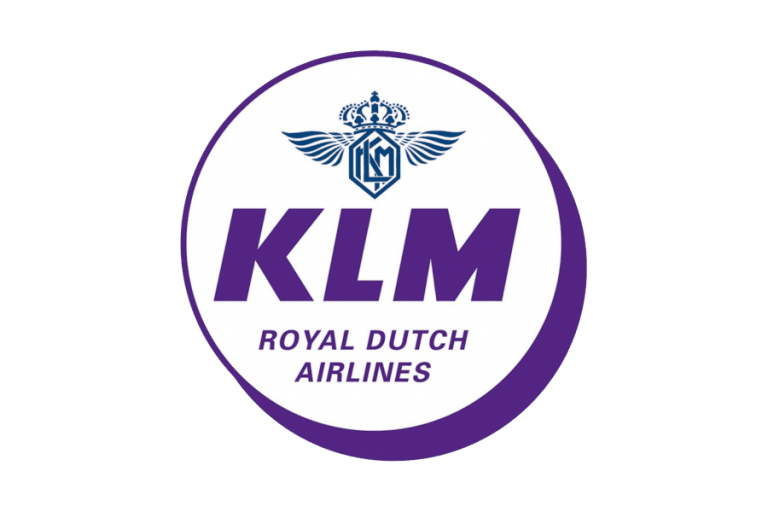
1951–1956: Color Experimentation and Stability
Purple replaced most surrounding elements, while the winged emblem remained blue on white. The structure remained consistent, demonstrating KLM’s willingness to experiment without abandoning core symbolism.
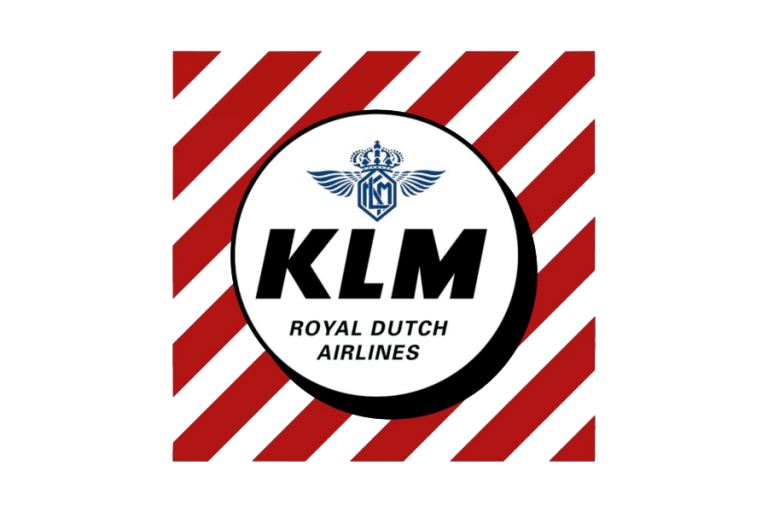
1956–1958: Graphic Boldness and Modern Flair
In 1956, black replaced purple, and the emblem was placed on a square background with red and white diagonal stripes. This bold composition reflected postwar optimism and graphic experimentation.
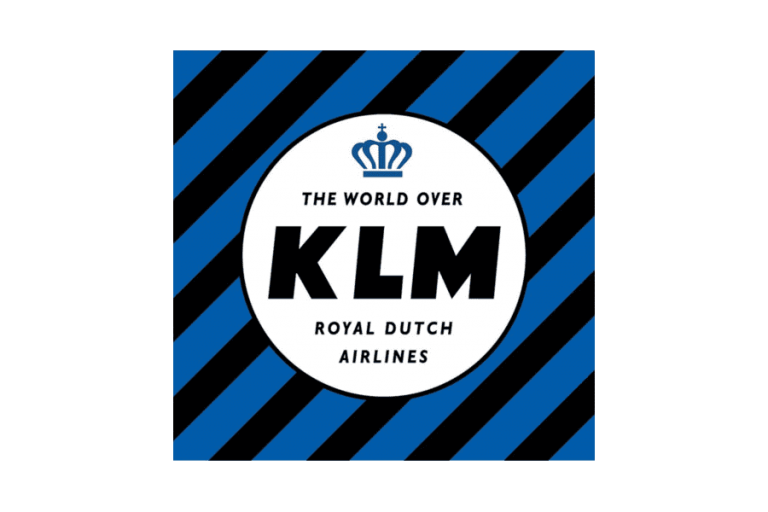
1958: Crown as Primary Symbol
A major shift occurred in 1958 when the winged crest was replaced by a smooth blue crown. The “The World Over” tagline appeared, signaling KLM’s expanding global ambition.
1959–1961: Reduction and Clarity
All taglines were removed in 1959. The logo featured a blue “KLM” wordmark with a matching crown above, set against a striped background. This version emphasized clarity and hierarchy.
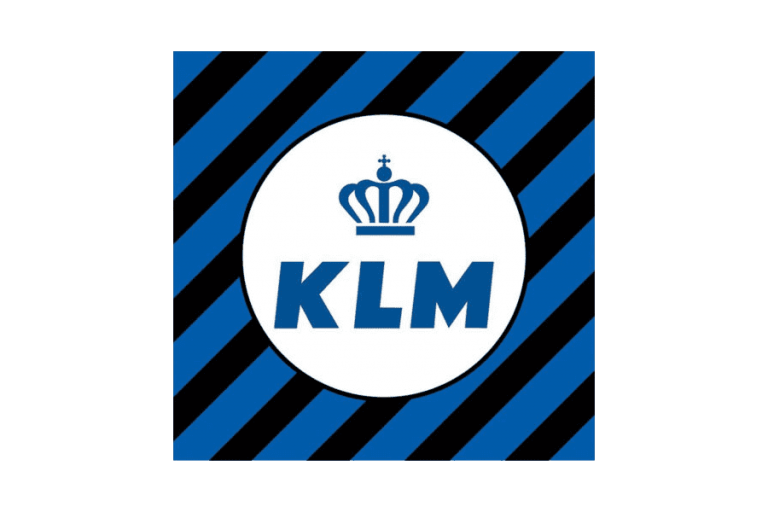
1961–1971: Geometric Modernism
In 1961, diagonal stripes became horizontal, and the typography evolved into a modern geometric sans-serif. The crown transformed into a minimalist symbol composed of dots and a cross, signaling a modernist shift.
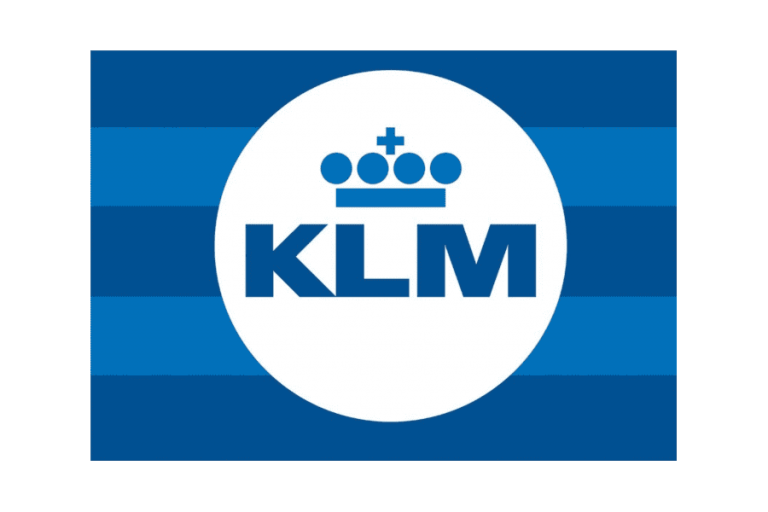
1971–1991: Iconic Simplification
The 1971 redesign removed all secondary elements. Only the wordmark and crown remained, rendered in contrasting blue tones. This marked the beginning of KLM’s most recognizable modern identity.
1991–2011: Unified Color and Contemporary Tone
In 1991, both the lettering and crown adopted the same light blue shade. This unified palette gave the brand a fresher, more contemporary appearance while preserving heritage.
2011–Today: Refined Heritage and Modern Legibility
The current logo, adopted in 2011, refined both typography and crown design. A clean sans-serif wordmark improved legibility, while the stylized crown retained its symbolic authority. The “Royal Dutch Airlines” inscription reappeared, reinforcing heritage and status.
Logo Symbolism: Crown, Authority, and Continuity
The symbolism of the KLM logo is rooted in monarchy, trust, and longevity. The crown represents royal endorsement and institutional reliability, while the initials emphasize professionalism and clarity. Unlike many airline logos that rely on abstract motion, KLM’s identity communicates stability through restraint.
The consistent use of light blue reinforces associations with the sky, safety, and calmness, aligning visual identity with the airline’s core promise.
KLM Logo History and Enduring Brand Authority
The KLM logo history demonstrates how disciplined visual evolution can sustain relevance for more than a century. While design trends changed dramatically, KLM refined rather than replaced its identity, preserving symbolic continuity while adapting form.
Today, the KLM logo stands as one of the most authoritative examples of logo heritage in global aviation, embodying trust, longevity, and national identity through one of the industry’s most enduring visual systems.
FAQ: KLM Logo Meaning and History
What does the KLM logo represent?
The logo represents royal authority, reliability, and continuity through the crown and initials.
Why does KLM use a crown in its logo?
The crown symbolizes the airline’s royal status granted by decree in 1919.
Is KLM the oldest airline still operating under its original name?
Yes, KLM is the world’s oldest airline still flying under its original name.
Has the KLM logo changed significantly over time?
It evolved through refinements but consistently preserved its core symbols.