
AirAsia Logo History: Meaning, Symbolism & Brand Heritage

Within Asian aviation logo history, AirAsia occupies a defining position as one of the earliest low-cost carriers in the region to successfully merge aggressive pricing with a bold, unmistakable visual identity. Founded during the formative years of budget aviation in Southeast Asia, AirAsia developed alongside a rapidly expanding regional travel market, where visibility, memorability, and emotional impact were essential for differentiation.
The AirAsia logo history reflects this context clearly. Rather than following conservative airline branding conventions, the company embraced expressive typography and high-impact color from an early stage. This approach aligns AirAsia with other disruptive low-cost brands examined in Ryanair logo history and the visual minimalism explored in easyJet logo heritage, while still maintaining a distinct regional character rooted in accessibility and momentum. Over time, AirAsia’s logo heritage evolved through refinement rather than reinvention, reinforcing brand recognition across dozens of markets.
Meaning and History: The Origin of the AirAsia Logo
AirAsia was founded in the mid-1990s and initially operated as a domestic Malaysian carrier. For several years, its operations remained regional, only expanding internationally in the early 2000s. This gradual growth shaped the airline’s visual identity, which prioritized energy and approachability over institutional authority.
The logo meaning of AirAsia has always been closely tied to motion, affordability, and confidence. Instead of symbolic aircraft imagery or national emblems, the brand relied primarily on typography and color to communicate its purpose. Bright red became the cornerstone of its logo heritage, conveying urgency, passion, and progress, while italicized letterforms reinforced a sense of forward movement consistent with the airline’s rapid expansion strategy.
AirAsia Logo History Timeline
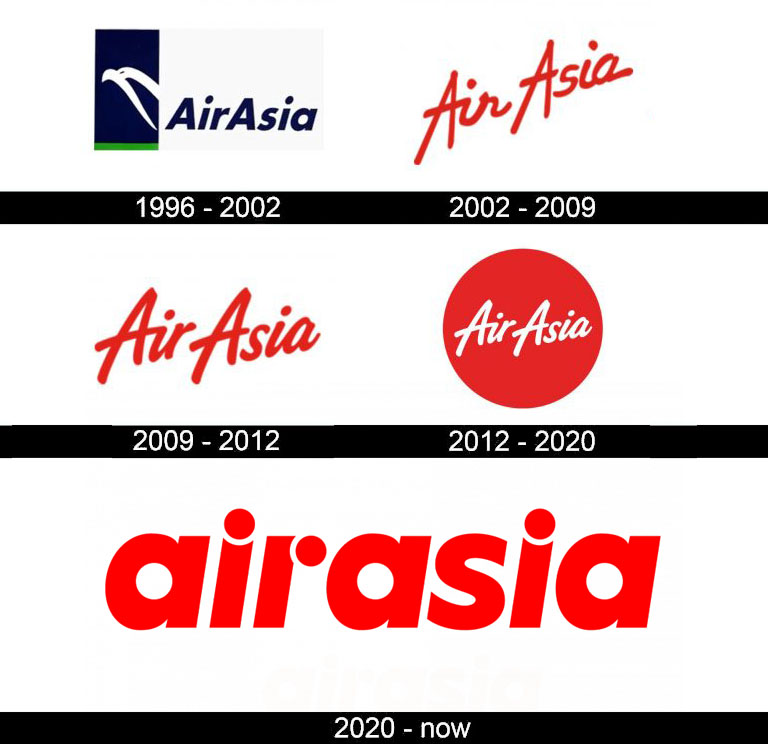
1996–2002: Early Experimentation and Transitional Identity
The first AirAsia logo introduced in 1996 differed markedly from the brand’s later identity. It featured a vertically oriented blue rectangular emblem with a thin green line at the bottom and a white outline of a bird. This symbol was paired with bold italicized sans-serif lettering, suggesting motion and optimism.
This early logo description reflected a transitional phase, combining traditional airline symbolism with emerging modernist typography. It remains the only AirAsia logo not built around the red-and-white palette that would later define the brand.

2002–2009: Script Typography and Brand Assertion
In 2002, AirAsia adopted a radically different visual approach. The new logo removed all graphic elements and introduced a handwriting-inspired script wordmark rendered diagonally in vivid red. This marked a decisive break from conventional airline branding and immediately positioned AirAsia as bold and unconventional.
The informal script conveyed accessibility and human presence, while the diagonal orientation amplified dynamism. This redesign established the foundation of AirAsia’s long-term visual identity and cemented red as its primary brand color.
2009–2012: Stabilization and Professional Confidence
The 2009 update retained the script style but refined its execution. The lettering became bolder, the angle less pronounced, and the wordmark aligned closer to a horizontal axis. These adjustments increased visual stability without sacrificing personality.
This phase of the logo heritage communicated maturity and operational confidence, reflecting AirAsia’s growing international footprint and solidifying trust among passengers.
2012–2020: Containment and Visual Focus
In 2012, AirAsia introduced a large red circular background behind the white script wordmark. This addition enhanced contrast and ensured strong visibility across aircraft liveries, digital platforms, and airport environments.
The circle functioned as a unifying container, concentrating attention on the brand name and reinforcing memorability. While the typography remained familiar, the new structure elevated the logo’s versatility and consistency.
2020–Today: Custom Typography and Contemporary Identity
The 2020 redesign marked the most significant evolution in AirAsia logo history. The script was replaced with a custom italicized lowercase sans-serif wordmark, featuring bold strokes and distinctive detailing. The dots above both “i” letters and the “r” overlap the vertical stems, creating subtle white arches that resemble smiles.
This typographic innovation introduced personality through form rather than script, aligning the logo with contemporary digital branding trends. The intense red palette was preserved, maintaining continuity within the brand’s visual heritage while signaling modernization.
Logo Symbolism: Energy, Motion, and Accessibility
The symbolism of the AirAsia logo is primarily typographic and chromatic. Italicized forms suggest speed and progress, while lowercase letters soften the brand’s presence, reinforcing approachability. The red color embodies energy, ambition, and confidence, distinguishing AirAsia from competitors that rely on cooler, more restrained palettes.
Rather than using literal aviation symbols, AirAsia communicates its values through expressive letterforms and high-contrast color, demonstrating how minimal elements can carry strong meaning within airline branding.
AirAsia Logo History and Brand Consistency
The AirAsia logo history illustrates how a low-cost airline can build powerful recognition through consistency and bold design choices. Across multiple refinements, the brand preserved its core visual principles while adapting typography to changing media environments and audience expectations.
Today, the AirAsia logo stands as a symbol of affordability, momentum, and regional leadership. Its evolution reflects a clear understanding of logo heritage as an asset, proving that strong branding does not require constant reinvention, but thoughtful progression rooted in origin and purpose.
FAQ: AirAsia Logo Meaning and History
What does the AirAsia logo represent?
The logo represents energy, affordability, and forward motion through bold typography and a vibrant red palette.
Why is red dominant in the AirAsia logo?
Red conveys passion, urgency, and confidence, aligning with AirAsia’s dynamic low-cost positioning.
Has the AirAsia logo changed significantly over time?
The logo evolved through refinements, but its core color and emphasis on typography have remained consistent.
What makes the current AirAsia logo unique?
Its custom lowercase typeface features distinctive overlapping dots that add personality and memorability.