Marvel Logo History: Meaning, Symbolism & Brand Heritage

Few logos in the entertainment world spark as much recognition and excitement as the bold red rectangle that reads MARVEL. Behind those six letters lies not only a visual identity, but an entire universe — one built on heroes, storytelling, and decades of cultural influence. From its beginnings in 1939 as Timely Comics to today’s blockbuster powerhouse Marvel Studios, the brand’s logo has evolved alongside its growing mythology, shifting media landscape, and global audience.
In this in-depth guide, we explore the complete Marvel logo history, uncover its symbolic meaning, decode its visual evolution, and look at how the brand’s iconic identity became one of the strongest in modern pop-culture heritage.
Meaning & Origins of the Marvel Brand
Marvel began in 1939, when publisher Martin Goodman founded Timely Comics. At the time, the company had no idea it was laying the groundwork for one of the largest fictional universes ever created. Over the following decades, Timely became Atlas, and eventually, in 1961, the Marvel era began—ushering in Spider-Man, the Fantastic Four, the X-Men, and a growing constellation of heroes.
Marvel isn’t just a publishing company—it is a living story engine. And its visual identity has always acted as a gateway to that universe. Every redesign, every refinement, and every shift in typography reflects not only corporate change but a deeper transformation in how Marvel sees itself and how millions of fans see Marvel.
Marvel Logo History & Evolution

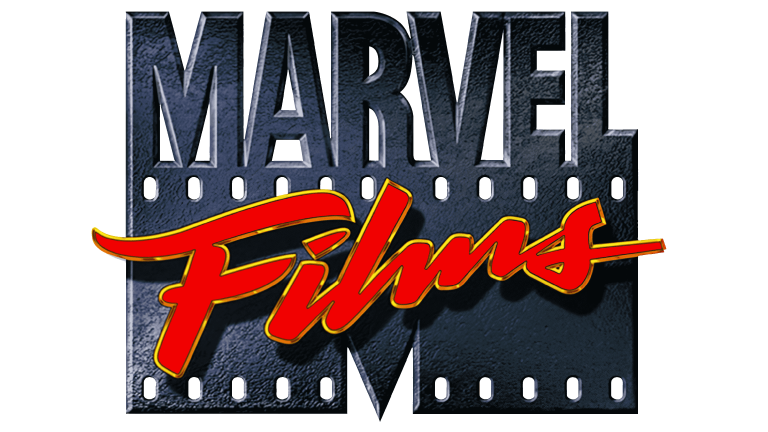
1993–1996: The Early Marvel Films Era
The first official logo for Marvel’s film branch embraced a metallic aesthetic. The word MARVEL appeared as though cast in steel, sitting atop a wide blocky “M” that echoed the bold, dimensional style seen in the MTV logo of the era. A red-and-yellow cursive “Films” was added diagonally—a visual mix that felt energetic but still experimental.
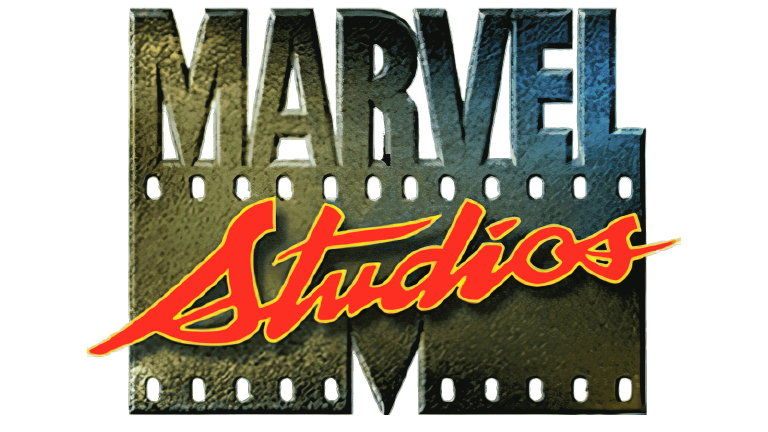
1996–2002: Sharper, Brighter, Still Metallic
The structure remained mostly the same, but Marvel added a bright yellow glow along the left side of the emblem. “Films” was updated to “Studios,” marking a shift in ambition as Marvel slowly started building the foundation for something greater.
2002–2008: The Red Rectangle Takes Over
This period introduced the first version of the now-iconic identity: a scarlet-red rectangle with bold white lettering. Clean, confident, and unmistakable, this design set the tone for the Marvel Studios brand and became an essential step toward its modern look.
2008–2013: The Era of Blockbusters Begins
A deeper red background and tighter lettering defined this version. Beneath the “MARVEL” block, two thick horizontal lines framed the word “STUDIOS,” set in a lightweight extended sans-serif font. It was clean and cinematic—perfect for the exploding Marvel film universe.
2013–2016: A Refined Two-Part Structure
The 2013 redesign separated the two components: “MARVEL” stayed in its classic red box, while “STUDIOS” shifted to black text on a white background. This update made the logo more flexible and better suited for dynamic film intros.
2016–Today: The Modern Marvel Studios Identity
In 2016, Marvel Studios unveiled the current logo—a horizontally stretched rectangle divided into two halves:
-
Left: Red block with the classic white MARVEL lettering
-
Right: White block with the word STUDIOS in black, squeezed between two horizontal lines
The overall design is cinematic yet grounded. It balances tradition with modern film-studio energy and has become widely associated with Marvel’s epic title sequences.
Symbolism Behind the Marvel Logo
The Marvel logo is powerful precisely because it is simple. Its symbolism comes not from shapes or mascots but from tone and presentation:
Red:
Passion, urgency, strength, and action—core themes in Marvel storytelling.
White:
Clarity, heroism, and the iconic “clean page” of comic-book panels.
Black (in some versions):
Authority and cinematic weight.
The Marvel logo isn’t decorative; it’s declarative. It signals energy, narrative power, and the raw emotion of seeing heroes rise, fall, and return again.
The Heritage of the Marvel Logo
The Marvel logo is a modern example of branding through consistency. Across decades of change—publishers, formats, leadership, cinematic universes—the red rectangle remained the heartbeat. It became a window into a shared world of characters, stories, and emotional connections.
What makes the Marvel logo culturally significant isn’t just design—it’s memory. It triggers childhood nostalgia, movie-theater excitement, comic-book curiosity, and the feeling that what you’re about to watch will be larger than life.
This is logo heritage at its purest form: a visual symbol that accumulates emotional weight over time until it becomes more than a logo—it becomes part of popular culture.
Font Used in the Marvel Logo
Marvel uses a custom, condensed sans-serif typeface close to:
-
Benton Sans Extra Comp Black
The typography is bold, geometric, and tightly spaced, with a visual punch designed to work across comics, movie screens, merchandise, and digital platforms.
Color Palette & Visual Style
Marvel’s branding relies heavily on:
– Scarlet Red (#ED1D24 or similar)
– Pure White
– Black accents
This palette is high-impact, high-contrast, and instantly recognizable from any distance. It works exceptionally well in both digital and print environments.
FAQs About the Marvel Logo
What does the Marvel logo represent?
It represents energy, action, and storytelling. The logo’s color scheme and bold type signal the excitement and emotional punch of the Marvel universe.
Why is the Marvel logo red?
Red evokes passion, strength, urgency, and heroism—core themes in Marvel films and comics.
Has Marvel changed its logo much over the years?
Yes, but always with evolution, not reinvention. The modern red-and-white block has existed since the early 2000s, with refinements for film applications.
Who designed the modern Marvel Studios logo?
The refined versions were developed internally by Marvel and adapted by film-brand teams to create the cinematic intro used in the MCU.
Is the Marvel Studios logo different from the Marvel Comics logo?
Yes. The core “MARVEL” block is consistent, but the Studios logo features an extended layout with the word “STUDIOS” on the right.
5 Facts About Marvel You Probably Didn’t Know
1. Marvel almost didn’t get its modern name.
For decades, the company was known as Timely Comics and later Atlas Comics before settling on Marvel in 1961.
2. The Marvel logo originally looked metallic.
Before the iconic red rectangle, Marvel experimented with chrome-like lettering for its film division.
3. Stan Lee didn’t create the Marvel logo—but he did shape its identity.
His storytelling tone influenced the logo’s bold, punchy visual approach.
4. The modern intro sequence debuted with Iron Man (2008).
This title card helped define the entire MCU brand aesthetic.
5. The Marvel logo is now one of the most merchandised logos in the world.
Appearing on everything from films to clothing to theme parks.