World of Warships Logo History: Meaning, Symbolism & Brand Heritage
The visual identity of World of Warships represents one of the most disciplined and coherent branding extensions in modern gaming. Released in 2015, World of Warships did not attempt to reinvent the wheel visually. Instead, it expanded an already established design language, translating armored warfare symbolism into a naval context with precision and restraint.
Within gaming logo history, World of Warships occupies a unique position as a direct sibling to World of Tanks logo heritage, sharing not only gameplay DNA but also a unified visual philosophy. This continuity places it alongside a small group of franchises that successfully built a multi-title universe without fragmenting brand identity. As part of the broader military game logo heritage archive, World of Warships demonstrates how consistency can enhance credibility and immersion.
Meaning and History: The Origin of the World of Warships Identity
Following the unprecedented success of World of Tanks, Wargaming sought to expand its concept of historical vehicular combat beyond land warfare. The decision to focus on warships of the early and mid-20th century allowed the studio to preserve its commitment to realism while exploring a completely different battlefield.
From the outset, the logo meaning was intended to communicate scale, authority, and tradition. Naval warfare carries a different emotional weight than tank combat, emphasizing patience, positioning, and atmosphere. This distinction is reflected in the logo’s design, which feels heavier, more ceremonial, and more structured than its predecessor, while still remaining unmistakably part of the same universe.
The choice to maintain visual continuity across titles reinforced Wargaming’s identity as a creator of serious, historically grounded multiplayer experiences.
World of Warships Logo History Timeline
2015–Today: A Unified and Unchanged Emblem
The World of Warships logo was introduced in 2015 and has remained unchanged since its debut. This stability reflects confidence in the original design and a clear understanding of the brand’s long-term positioning.
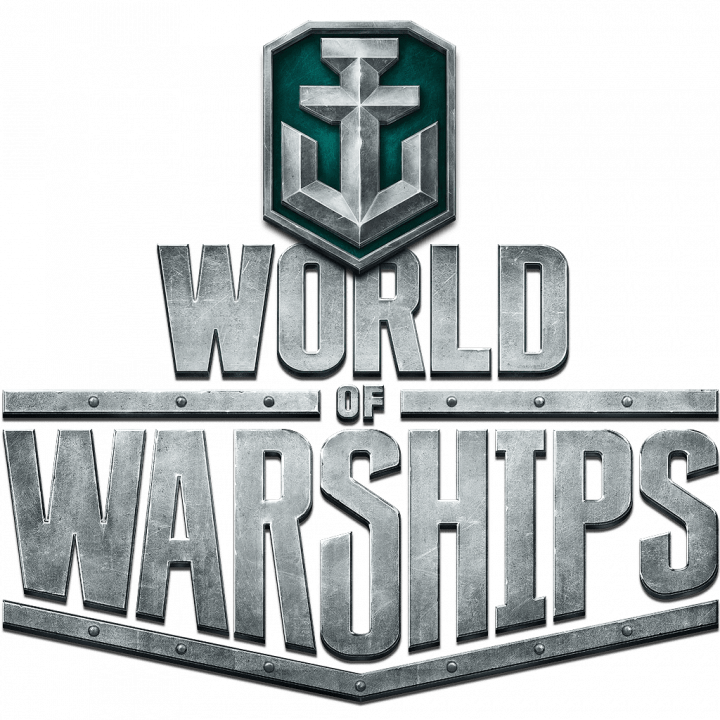
The logo consists of a wordmark placed beneath a shield-shaped emblem. The wordmark is set in all capital letters, using a bold sans-serif typeface reminiscent of Impact, subtly modified to enhance balance and legibility. The metallic gray finish gives the letters a three-dimensional appearance, evoking steel and naval machinery.
A distinctive feature is the enlarged central “S” in “WARSHIPS,” which visually anchors the underline at an angle. This diagonal line mirrors the geometry of the shield above, creating a strong vertical and horizontal alignment between text and symbol.
The emblem itself is a shield rendered in muted green tones, enclosed within a metallic frame. At its center sits a stylized anchor, executed in the same steel-like finish as the wordmark and border. The anchor serves as both a literal naval reference and a symbolic representation of stability and control.
Logo Symbolism: Authority, Tradition, and Naval Power
The World of Warships logo symbolism draws heavily from maritime tradition. The shield represents protection and command, while the anchor signifies strength, reliability, and mastery of the sea. Together, these elements evoke the hierarchy and discipline of naval warfare.
The restrained color palette plays a crucial role. Green introduces a sense of depth and calm authority, while metallic gray reinforces industrial power and realism. Unlike fantasy or arcade-style games, World of Warships avoids bright or exaggerated colors, aligning its visual identity with historical authenticity.
The three-dimensional treatment of the logo elements enhances the perception of mass and durability, echoing the physical presence of battleships and cruisers central to the game’s experience.
Typography and Visual Consistency
Typography in the World of Warships logo heritage is deliberately assertive. The heavy sans-serif lettering communicates confidence and seriousness, while subtle modifications prevent the type from feeling generic. The interplay between straight lines and angled elements introduces movement without sacrificing stability.
Crucially, the logo maintains visual harmony with World of Tanks. This shared typographic and symbolic framework strengthens brand recognition across titles and reinforces the idea of a unified combat universe.
World of Warships Logo Heritage and Cultural Impact
As World of Warships expanded across PC, console, and mobile platforms, its logo became a recognizable marker of quality and authenticity within the gaming community. The unchanged emblem allowed players to associate the brand with reliability and long-term support, values essential in live-service games.
When compared to evolving identities explored in Fortnite logo history or Roblox logo heritage, World of Warships demonstrates the power of restraint. Its logo does not seek novelty but authority, positioning the game as a premium, experience-driven title within naval combat game history.
World of Warships Logo Heritage and Strategic Consistency
The World of Warships logo history illustrates how thoughtful continuity can strengthen a brand rather than limit it. By extending the established visual language of its predecessor and adapting it to naval warfare, the game achieved instant credibility and lasting recognition. Within gaming logo history and the wider military-themed brand heritage landscape, World of Warships stands as a clear example of how consistency, symbolism, and restraint can define a successful visual identity.
FAQ: World of Warships Logo Meaning and History
What does the World of Warships logo represent?
It represents naval authority, stability, and military tradition through shield and anchor symbolism.
Has the World of Warships logo ever changed?
No. The logo introduced in 2015 has remained unchanged.
Who developed World of Warships?
The game was developed by Wargaming.
Why is the World of Warships logo similar to World of Tanks?
Both games share a unified visual identity, reflecting their place within the same combat universe.