Roblox Logo History: Meaning, Symbolism & Brand Heritage

The visual identity of Roblox is one of the most unusual and dynamic cases in modern digital branding. Unlike traditional entertainment brands, Roblox did not emerge as a finished product with a fixed identity. Instead, its logo history mirrors the platform’s experimental nature, evolving alongside its technology, community, and creative philosophy. Few digital platforms have allowed their visual language to change so frequently while still maintaining a recognizable core.
Within games logo history, Roblox stands apart. While companies explored in FreezeNova logo history or Clash o f Clans logo heritage followed more linear refinement paths, Roblox embraced constant reinvention. Its logo heritage reflects the platform’s foundational promise: experimentation, creativity, and user-driven imagination. This places Roblox in a unique position within the broader technology and gaming logo heritage archive.
Meaning and History: The Origin of the Roblox Identity
Roblox’s roots predate its current name by more than a decade. The project began as an educational physics simulator, long before it became a global gaming platform. As the company’s focus shifted from physics software to interactive virtual worlds, its name and identity evolved repeatedly, each time reflecting a new stage of ambition.
The word “Roblox” itself is a fusion of “robot” and “blocks,” a direct reference to construction, modular creativity, and digital building. From the beginning, the logo meaning revolved around structure and play rather than narrative storytelling. Unlike character-driven brands, Roblox relied on typography and geometry to communicate its purpose.
As the platform matured, its visual identity moved from colorful experimentation toward confident minimalism, reinforcing its transition from niche project to global creative ecosystem.
Roblox Logo History Timeline
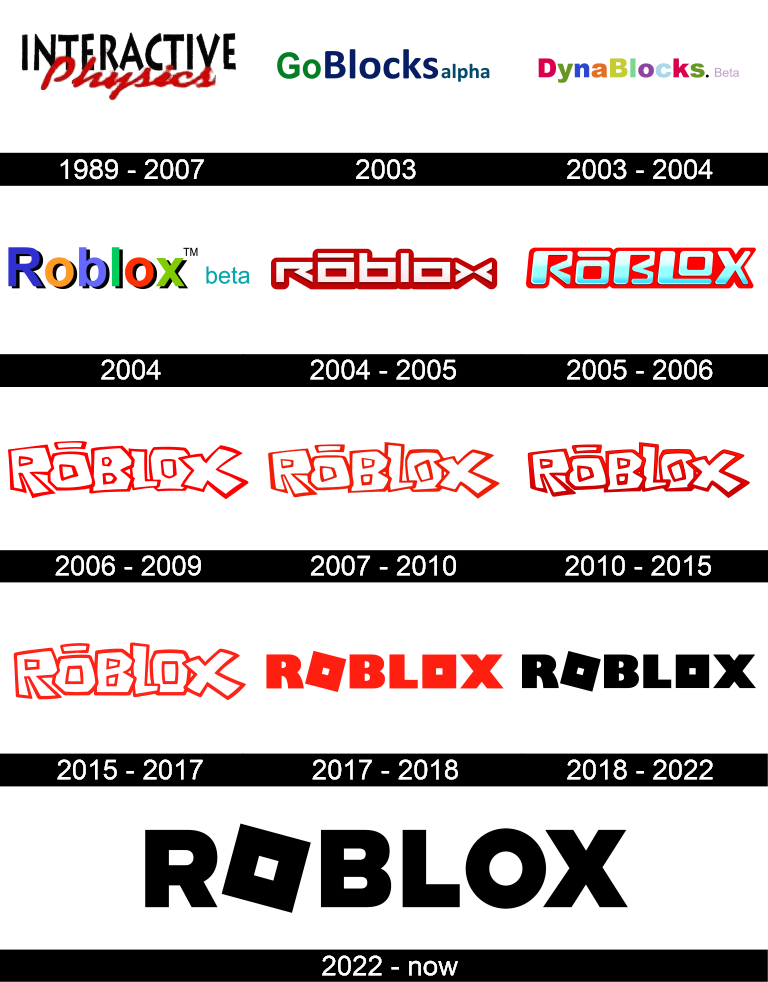
1989–2007: Interactive Physics Origins
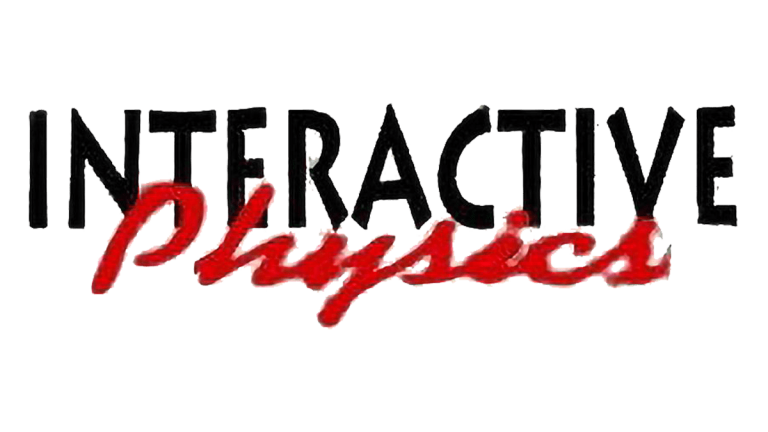
The earliest chapter in Roblox logo history belongs to the Interactive Physics era. The original logo featured a two-level wordmark, with “Interactive” in uppercase serif lettering and “Physics” in bold cursive script. Color variations existed across platforms, with blue backgrounds and contrasting text styles emphasizing educational credibility.
This identity reflected software reliability rather than entertainment, positioning the brand firmly in academic and technical environments.
2003: GoBlocks Alpha Identity
In 2003, the project reemerged as GoBlocks. The logo adopted a clean sans-serif wordmark, with “Go” in green and “Blocks” in dark blue. A small “Alpha” tag reinforced the experimental nature of the platform.
The restrained palette and modest typography suggested early-stage development rather than brand confidence.
2003–2004: DynaBlocks Experimentation
Later in 2003, the platform was renamed DynaBlocks. The logo shifted dramatically toward color saturation, featuring heavy sans-serif lettering rendered in multiple bright hues. This version emphasized creativity and motion, but its complexity limited long-term usability.
The inclusion of a lightweight “Beta” descriptor reflected ongoing experimentation rather than brand stability.
2004: First ROBLOX Wordmark
The ROBLOX name was introduced in 2004 alongside a multicolored sans-serif wordmark. Each letter appeared in a different shade, reinforcing playfulness and diversity. Though visually friendly, this logo remained in use only briefly.
2004–2005: Futuristic Blue and Red Identity
Later in 2004, Roblox adopted a more futuristic logo. The custom sans-serif wordmark featured gradient blue and white fills with red outlines. The “X” was stylized as opposing arrowheads, symbolizing interaction and direction.
This version marked the first attempt to establish a strong, tech-oriented visual identity.
2005–2006: Capitalization and Enhanced Energy
In 2005, the lettering was converted to uppercase, outlines were thickened, and gradients intensified. Light blue highlights added depth, giving the logo a more dynamic, almost sci-fi appearance.
This version leaned heavily into futurism, reflecting the platform’s technological ambitions.
2006–2009: Graffiti-Style Expression
The 2006 redesign introduced a graffiti-inspired wordmark with heavy, hand-drawn uppercase letters. Painted white and outlined in red, the logo felt rebellious, youthful, and confident.
This era aligned closely with Roblox’s growing creator community and its appeal to younger audiences.
2007–2010: Refinement and Softened Edges
In 2007, the graffiti-style logo was refined. Lines were softened, and the red outline became slightly lighter. This version functioned as both a primary and secondary mark during a period of rapid platform growth.
2010–2015: Boldness and Volume
The 2010 update emphasized volume and strength. Outlines became bolder, dark red gradients were added, and angles were softened without compromising solidity. This version balanced playfulness with authority.
2014: Unused Redesign
An unused 2014 logo explored a cleaner sans-serif typeface arranged in a straight line. Though never officially adopted, it foreshadowed future simplification.
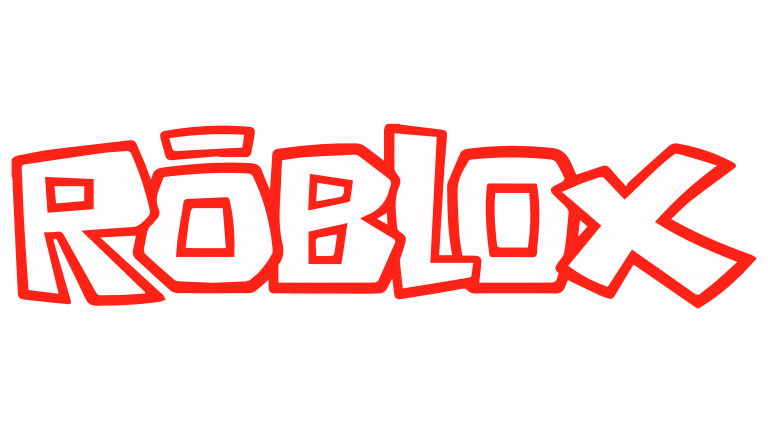
2015–2017: Subtle Modernization
In 2015, the logo was slightly lightened and simplified. A version with the “Powering Imagination” tagline appeared beneath the wordmark, reinforcing the platform’s creative mission.
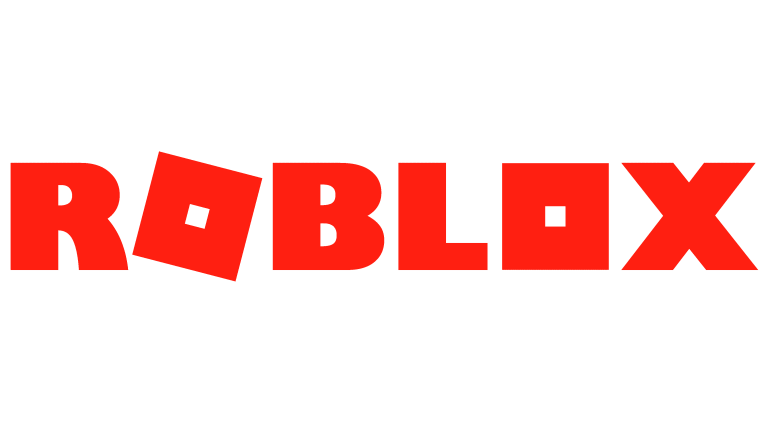
2017–2018: Square “O” Introduction
The 2017 redesign marked a turning point. The wordmark became solid red, and both “O” letters were replaced by square shapes, one rotated diagonally. This introduced the geometric identity that would define Roblox moving forward.
2018–2022: Black Minimalism
In 2018, the logo was simplified further by switching to a black color palette. The heavy geometric letters remained unchanged, but the monochrome treatment added seriousness and versatility.

2022–Today: Refined Geometry and Balance
The current logo, introduced in 2022, refined the typeface while preserving the iconic tilted square “O.” Straight bars and cleaner geometry balanced the composition, resulting in a powerful, professional identity suitable for a global platform.
Logo Symbolism: Geometry, Creativity, and Stability
The Roblox logo symbolism is rooted in geometry rather than imagery. The square “O” represents a block, a pixel, and a building unit. Its diagonal tilt suggests motion, creativity, and nonconformity.
The restrained color palette of black or gray reinforces stability and maturity, signaling Roblox’s evolution from experimental platform to established digital ecosystem. This shift aligns Roblox with other minimal-first identities explored in modern tech logo heritage, where confidence replaces visual noise.
Roblox Logo Heritage and Digital Impact
Roblox’s logo heritage reflects the platform’s willingness to evolve publicly. Few brands allow such visible experimentation, yet Roblox transformed this instability into strength. Each redesign marked progress rather than inconsistency.
When compared to identities analyzed in Minecraft logo history or Epic Games logo heritage, Roblox stands out for the sheer number of iterations that ultimately converged into a simple, iconic mark.
Conclusion: Roblox Logo Heritage and the Power of Creative Evolution
The Roblox logo history demonstrates that strong brand identity does not always require early perfection. Through constant refinement, experimentation, and community-driven growth, Roblox shaped a visual language that reflects its core mission. Within digital platform logo history and the wider landscape of technology brand heritage, Roblox remains a defining example of how creative freedom can lead to lasting visual authority.
FAQ: Roblox Logo Meaning and History
What does the Roblox logo represent?
It represents creativity, construction, and digital building through geometric forms.
Why did Roblox change its logo so many times?
The platform evolved rapidly, and each redesign reflected a new phase of growth and focus.
Why is the Roblox logo gray or black today?
Neutral colors emphasize stability, professionalism, and content quality over visual noise.
Who created Roblox?
Roblox was created by David Baszucki and Erik Cassel.