Washington Mystics Logo History: Meaning, Symbolism & Brand Heritage
The Washington Mystics logo history reflects the steady rise of a franchise that transformed from an early WNBA expansion team into a championship-winning organization. Based in the U.S. capital, the Mystics have always balanced competitive ambition with civic responsibility, positioning themselves as both a serious basketball operation and an active community presence. Their visual identity mirrors this balance, combining elegance, mystique, and competitive intent in a logo that has evolved carefully rather than dramatically.
As part of the Women’s National Basketball Association, the Mystics developed alongside other long-term contenders such as the Connecticut Sun and the New York Liberty, franchises defined by persistence and gradual refinement rather than overnight dominance. The Mystics’ logo heritage follows the same philosophy, retaining its core structure while adapting its tone to reflect maturity, confidence, and eventual championship success.
Meaning and History: The Rise of the Washington Mystics
The Washington Mystics were established in 1998, entering the league during a period of rapid WNBA growth. Early seasons were marked by fluctuation, as the team navigated roster changes and competitive inconsistency. However, the franchise steadily built a foundation centered on player development, organizational stability, and long-term vision.
Playoff appearances became more frequent, signaling incremental progress. That journey reached its defining moment in 2019, when the Mystics captured their first WNBA Championship, defeating the Connecticut Sun in the Finals. This achievement validated years of patience and strategic growth and permanently reshaped the franchise’s identity.
Throughout this evolution, the Washington Mystics logo meaning remained consistent. The concept of “mystics” evokes intuition, precision, and unseen forces, qualities well-suited to a team that relied on tactical discipline and composure rather than spectacle alone.
Washington Mystics Logo History Timeline
1998–2010: Whimsical Origins and Aspirational Elegance
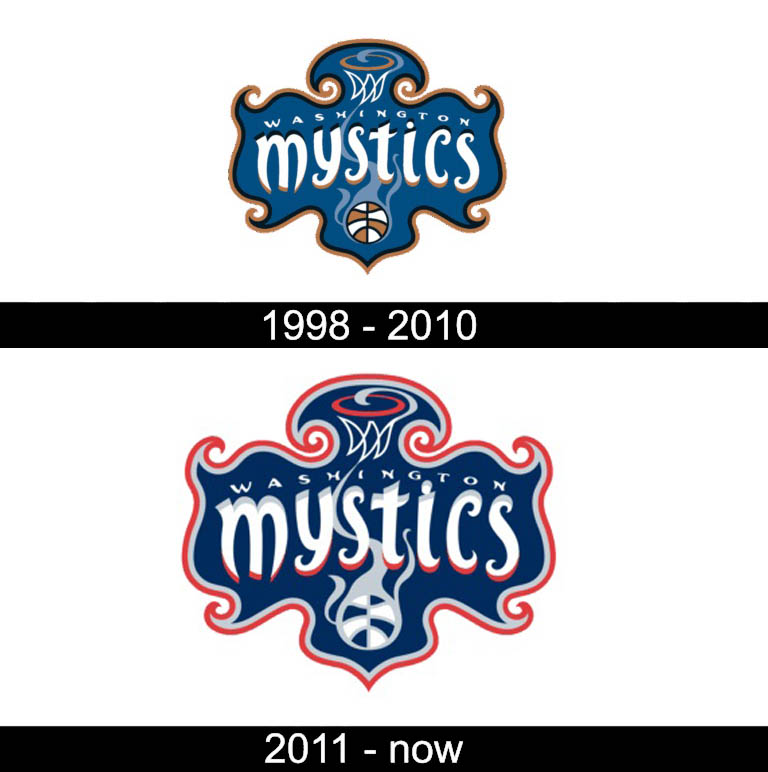
The original Washington Mystics logo introduced in 1998 featured an unconventional and elegant composition. The emblem’s vertical structure drew immediate attention, with a basketball net placed at the top and a basketball at the bottom. Curved lines extended upward from the ball toward the net, visually representing motion, scoring, and aspiration.
At the center, the word “Mystics” appeared in large, decorative white lettering, its playful, handwritten style reinforcing the franchise’s mystical theme. “Washington” was positioned above in a much smaller font, grounding the imaginative design in geographic identity. Gold and blue dominated the color palette, lending the logo a refined, almost ceremonial feel that distinguished it from more aggressive league marks.
2011–Today: Bold Refinement and Championship Identity
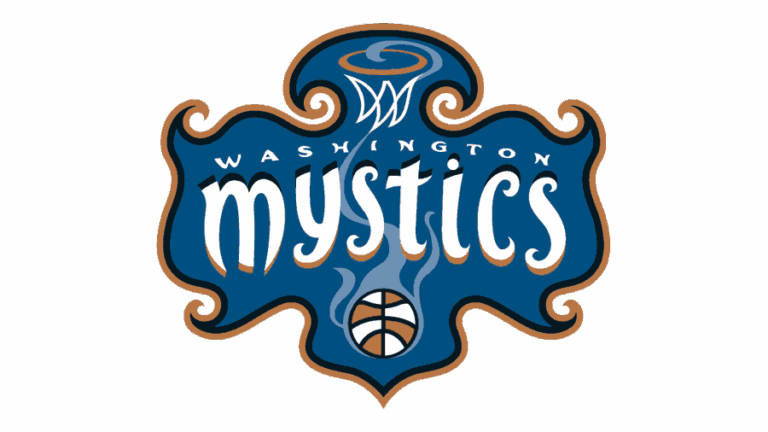
The 2011 redesign preserved the original structure almost entirely, signaling respect for established brand equity. However, the emotional tone of the logo shifted significantly. Gold accents were replaced with red, introducing urgency, strength, and competitive intensity. Blue tones were deepened, and light gray replaced softer highlights, creating stronger contrast and visual depth.
This version of the logo aligned perfectly with the franchise’s growing competitiveness and eventual championship run. The Mystics’ visual identity now communicated authority and confidence, placing them stylistically alongside modernized contenders such as the Las Vegas Aces and the Seattle Storm, teams whose branding similarly evolved without abandoning core concepts.
Logo Symbolism: Precision, Aspiration, and Competitive Focus
The Washington Mystics logo symbolism is built around upward motion and inevitability. The basketball rising toward the net conveys preparation and execution, while the flowing lines suggest control rather than chaos. Unlike logos that emphasize raw aggression, the Mystics’ emblem reflects calculated success.
Color reinforces this message. Red symbolizes determination and competitive fire, blue conveys discipline and composure, and white ensures clarity and balance. The shift from gold to red marked a transition from promise to performance, aligning visual identity with on-court results.
Typography further supports the brand’s personality. The decorative “Mystics” lettering adds character and individuality, while the clean sans-serif “Washington” provides structure and professionalism. Together, they create a logo that feels distinctive without sacrificing legibility or authority.
A Logo Heritage Defined by Patience and Purpose
The Washington Mystics logo history is a study in controlled evolution. Rather than pursuing frequent redesigns, the franchise refined an existing concept, allowing meaning to deepen through association with performance and achievement. The result is a logo heritage that feels authentic, earned, and aligned with the team’s journey.
Within WNBA logo history, the Mystics stand as an example of how visual consistency, paired with strategic refinement, can support long-term brand credibility. Their logo does not chase trends; it reflects growth, resilience, and the quiet confidence of a champion.
FAQ: Washington Mystics Logo Meaning and History
What does the Washington Mystics logo represent?
The logo represents aspiration, precision, and competitive focus, symbolized by a basketball rising toward the net.
When did the Washington Mystics win their first WNBA Championship?
The Mystics won their first championship in 2019.
Why did the Washington Mystics change their logo colors in 2011?
The shift from gold to red added boldness and reflected the team’s growing competitive identity.
Has the Washington Mystics logo structure changed over time?
No, the core structure has remained consistent, with refinements focused on color and tone.