Car Logos with a Horse: History and Meaning Behind Each Brand
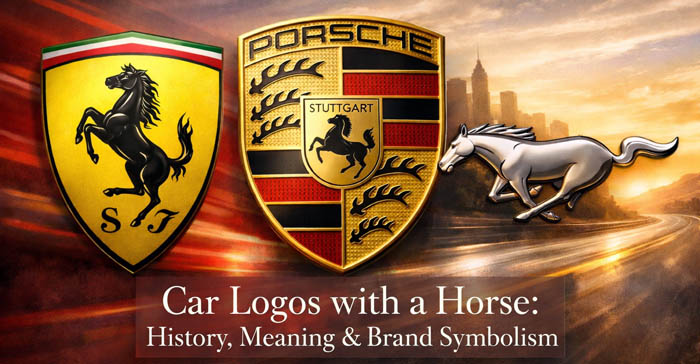
A handful of car brands put a horse on their badge, and the reasons range from a World War I fighter pilot’s personal emblem to a city’s coat of arms to a name that simply means “treasured horse.” Here is what each one actually represents, brand by brand.
Why do so many car logos use a horse?
The horse was a symbol of speed, strength, and endurance long before the automobile existed, and that association carried straight into car branding once engines replaced animals as the main form of transport. The word “horsepower” itself is a holdover from that era. A horse on a badge lets a brand suggest power without looking aggressive, which is why it shows up on everything from Italian supercars to Russian heavy trucks.
Porsche: why does a horse appear on the crest?
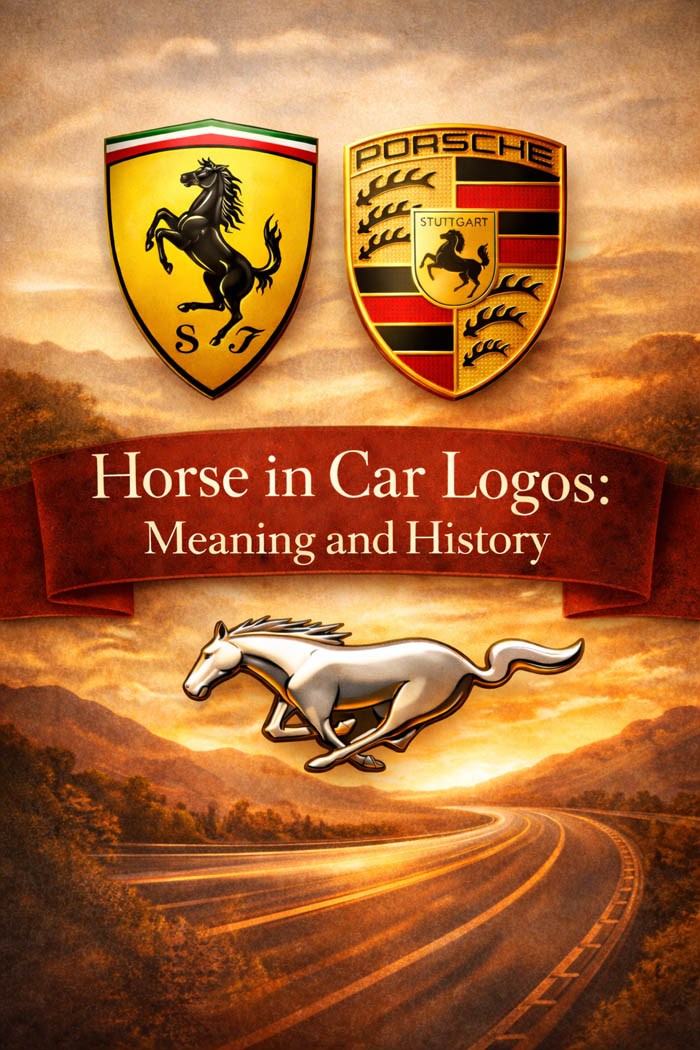
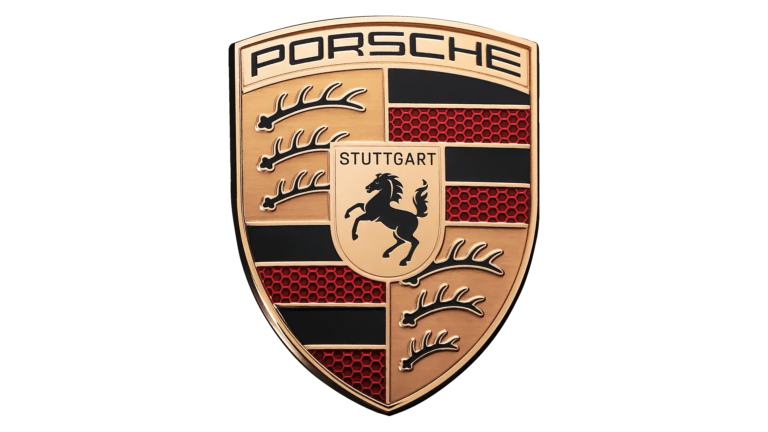
Porsche was founded in 1931 by Ferdinand Porsche, and the company based its logo on the coat of arms of Stuttgart, the city where it is headquartered. Stuttgart’s own emblem is a black horse on a gold shield, a reference to the city’s name, which comes from the Old German word for a stud farm or horse-breeding ground. Porsche combined that Stuttgart horse with the historic arms of Württemberg to create the crest it introduced in its current form in 1952, and the design has stayed close to that layout ever since.
Ferrari: what is the story behind the prancing horse?
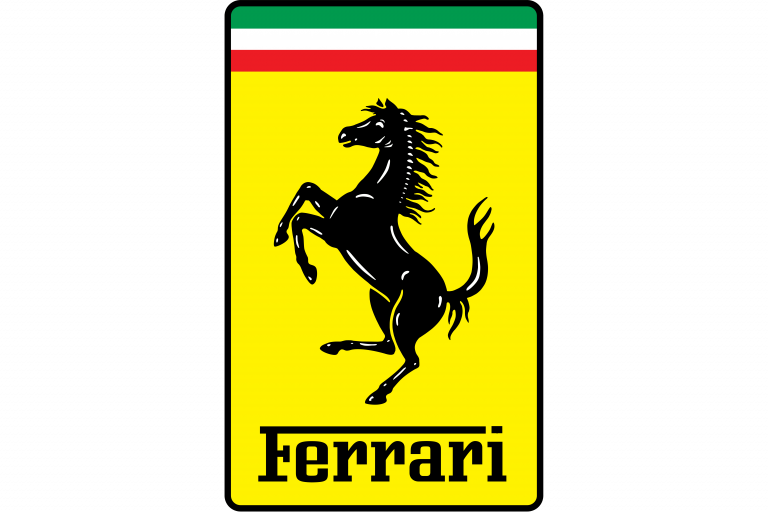
Ferrari’s black prancing horse, the Cavallino Rampante, has its roots in World War I. Italian flying ace Francesco Baracca painted a prancing horse on his aircraft, and after his death his parents suggested Enzo Ferrari adopt the symbol for good luck following a race win in 1923. Ferrari’s team began using the horse on its racing cars in 1932, and it became the badge on every production Ferrari starting with the 125 S in 1947. The horse sits on a canary-yellow background, the color of Modena, Enzo Ferrari’s hometown, usually with the Italian tricolor across the top.
Ford Mustang: which way does the horse run, and who designed it?
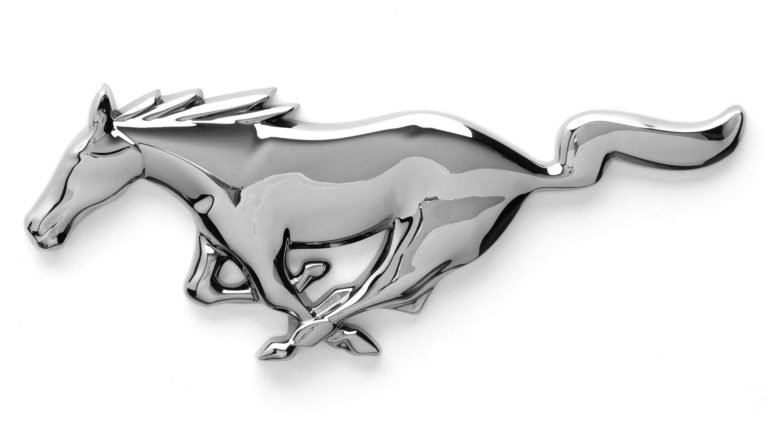
The Ford Mustang’s running-horse badge dates to the early 1960s and is credited to Ford designer Philip T. Clark, who also helped push for the Mustang name itself after seeing wild mustangs in Nevada. Unlike most heraldic horses, which traditionally face right, the Mustang’s horse gallops to the left, a detail that has stayed part of the badge through every generation of the car. The emblem is meant to read as distinctly American: open-road performance rather than aristocratic pedigree.
Baojun: what does the name and logo mean?
Baojun is a Chinese automaker whose name translates roughly to “treasured horse,” and its badge features a stylized horse head rendered in simple, angular lines. The logo leans on that literal meaning rather than racing or heraldic imagery, aiming for a visual shorthand for reliability and value in a crowded domestic market.
Hanteng Autos: how old is the brand behind this badge?
Hanteng Autos was a Chinese automaker founded in November 2013 in Shangrao, Jiangxi Province, and it launched its first model, the X7 SUV, in December 2015. Its badge is a three-dimensional silver horse set against a red background. The company expanded internationally later in the decade but filed for bankruptcy in April 2022 after roughly nine years in operation.
Iran Khodro: what does the horse on its badge represent?
Iran Khodro, one of Iran’s largest automakers, uses a horse head set inside a crest-style frame, rendered in profile in blue and white. The design favors a plain, institutional look over decoration, in keeping with a brand built around durability for a domestic market that covers a wide range of terrain and conditions.
Carlsson Automobile: how does its horse differ from the others?
Carlsson is a German tuning company, best known for modifying Mercedes-Benz cars, and its badge is a small, understated running horse set above italic lettering. The horse takes up far less space than the wordmark, which fits a brand built around refinement and engineering rather than a bold standalone emblem.
Asquith Motors: why is its horse so abstract?
Asquith Motors, a small British manufacturer of bespoke electric vehicles, uses a horse rendered in bold, simplified lines inside a circular badge crossed by a ribbon-like band. The abstraction favors a sense of craftsmanship over a literal depiction of the animal, fitting a company that builds vehicles in small numbers rather than at mass-market scale.
KAMAZ: why would a truck maker use a horse?
KAMAZ, the Russian manufacturer best known for heavy trucks, puts a steppe horse above its bold industrial lettering. The choice points away from luxury or speed and toward the kind of raw endurance associated with working animals, a fitting match for a company that builds vehicles meant to handle extreme conditions.
Corre La Licorne and Pegaso: what did their horse badges look like?
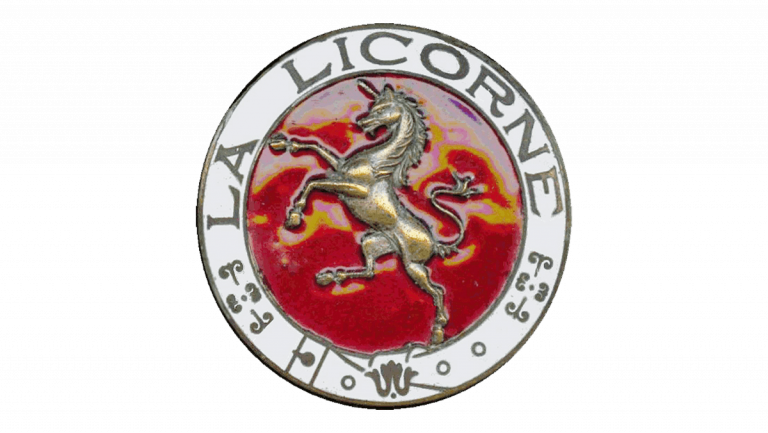
Corre La Licorne was a French automaker founded in 1901 that built its identity around a rearing horse set inside a medallion-style crest, a design in keeping with the luxury-object status cars held in that era. Pegaso, a Spanish manufacturer established in 1946, used a leaping horse rendered in a simpler, more modern style that fit the post-war period’s emphasis on speed and industrial progress. Both companies are now defunct, but their badges are examples of how closely horse imagery was tied to early European car branding.
Eicher Motors: what does its horse badge look like today?
Eicher Motors, an Indian manufacturer founded in 1948 and best known today as the parent of Royal Enfield, uses a minimalist horse built from sharp, angled lines on a red field. The design strips away ornamentation in favor of a graphic, scalable mark meant to read clearly across digital and commercial applications, reflecting the brand’s focus on commercial vehicles and manufacturing partnerships.
Quick facts
| Porsche crest introduced | 1952, based on the Stuttgart and Württemberg coats of arms |
| Ferrari prancing horse adopted | 1923, first used on a racing car in 1932 |
| Ford Mustang badge designer | Philip T. Clark, early 1960s |
| Hanteng Autos founded / closed | November 2013 / bankruptcy filed April 2022 |
| Corre La Licorne founded | 1901, France |
| Pegaso founded | 1946, Spain |
| Eicher Motors founded | 1948, India |
Related reading: Ferrari logo history, Porsche logo history, Iran Khodro logo history, KAMAZ logo history, and Eicher Motors logo history.
Further reading
FAQ: Car Logos with a Horse
Why do so many car logos feature a horse?
The horse has long stood for speed, strength, and endurance, qualities that map naturally onto how car brands want to be seen.
Which car brands have a horse in their logo?
Ferrari and Ford Mustang are the best known. Porsche’s crest includes a horse from Stuttgart’s coat of arms, and Baojun, Iran Khodro, KAMAZ, and Eicher Motors all use horse imagery as well.
Is Porsche’s logo a horse logo like Ferrari’s?
Not quite. Porsche’s horse is one element of a larger heraldic crest built from Stuttgart and Württemberg’s coats of arms, while Ferrari’s prancing horse stands on its own as the brand’s main symbol.
What does Ferrari’s prancing horse mean?
It traces back to World War I pilot Francesco Baracca, whose personal emblem Enzo Ferrari adopted in 1923 after a suggestion from Baracca’s parents.
Which way does the Ford Mustang’s horse face?
It runs to the left, the opposite of the right-facing convention common in traditional heraldry.