
KFC Logo Heritage
Few fast-food brands have achieved the cultural visibility and emotional connection of KFC. With more than 20,000 restaurants worldwide, the chain has grown from a small roadside venture in Kentucky to a global phenomenon—second only to McDonald’s in sales. Behind its success lies one of the most recognizable images in logo history: the smiling face of Colonel Harland Sanders, framed by KFC’s bold red, white, and black palette.
More than a simple emblem, the KFC logo embodies heritage, character, and the unmistakable charm of a brand built on family-style hospitality and flavorful fried chicken. This is the complete journey of the KFC logo—how it evolved, what it symbolizes, and why it remains such a powerful part of global branding.
From Roadside Kitchen to Restaurant Empire: Origins of the KFC Identity
Harland Sanders—better known as Colonel Sanders—started selling fried chicken in 1930 from a gas-station café in Corbin, Kentucky. By 1952, his distinctive look, white suit, and black bow tie had already become part of the brand’s personality. That same year, design agency Lippincott & Margulies created the very first official KFC logo—a black-and-white portrait of Sanders alongside the full name “Kentucky Fried Chicken.”
This early emblem established a principle that has guided KFC for decades: the founder’s image isn’t just a mascot—it’s a symbol of integrity, tradition, and the brand’s intimate roots.
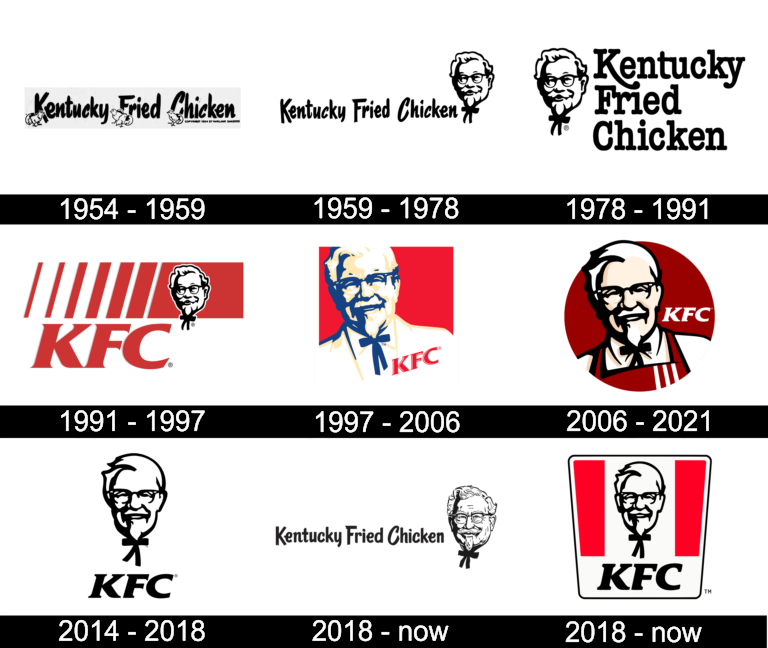
1954–1959: A Playful Start with Hand-Drawn Character

The brand’s earliest visual identity featured a handwritten, brush-stroke wordmark reading “Kentucky Fried Chicken.” Playful illustrations of baby chicks appeared next to each initial letter, adding charm and homemade personality.
This whimsical design reflected the family-style spirit of the brand and the artisanal quality that Sanders championed.
1959–1978: The Colonel Takes Center Stage

In 1959, a major redesign introduced the first official portrait of Colonel Sanders as part of the logo. The typeface remained hand-drawn, but the addition of the founder’s face established a sense of trust, history, and authenticity—values central to the brand’s identity.
By the 1970s, KFC’s reputation was expanding—and so was the importance of Sanders’ image as its signature symbol.
1978–1991: Modern Typography and a Brighter Identity

The 1978 update refined the portrait and positioned it to the left of a newly modernized wordmark. The typography became cleaner, with a distinctive extended tail on the “K” that gave the logo structure and sophistication.
This version marked KFC’s transition from regional chain to global brand.
1991–1997: A New Name, A New Look
In 1991, the company officially adopted the abbreviation “KFC,” accompanied by a bold new visual identity. Blue and bright red entered the color palette, giving the logo a fresh, energetic personality. The Colonel’s portrait was stylized with a friendlier look, while the wordmark in bold red signaled the brand’s ambition for international expansion.
This redesign was a turning point, aligning KFC with modern branding trends.
1997–2006: A Strong, Modern Brand Icon
In 1997, Landor Associates created a more cohesive and contemporary version of the KFC emblem. The portrait and wordmark were placed inside a dynamic square shape with angled stripes—bold, modern, and instantly recognizable.
This logo coincided with major updates to restaurant architecture and interiors, signaling a complete brand refresh.
2006–2018: The Colonel in an Apron

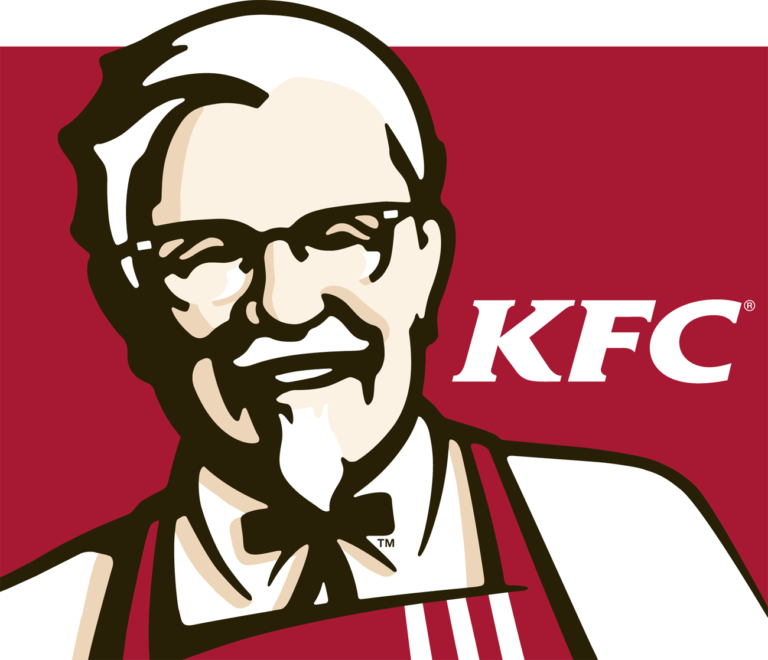
The 2006 redesign introduced a circular badge with a darker red palette and a reimagined Colonel wearing a red apron rather than his white suit. This subtle shift emphasized KFC’s culinary identity and the hands-on nature of Sanders’ legacy.
The white “KFC” lettering contrasted strongly against the red, reinforcing visibility and confidence.
2014–2018: A Minimalist Tribute to Tradition

In 2014, KFC introduced a monochrome version of the logo—simple, clean, and stripped of all framing. The black-and-white portrait placed above a bold serif “KFC” wordmark was a respectful nod to the brand’s early years. It gave KFC a timeless, heritage-driven look while still feeling modern.
2018–Today: A Dynamic Trapezoid and a Refined Colonel
The most recent redesign (2018) revived the iconic red-and-white stripes in a trapezoidal panel. The Colonel’s portrait, redrawn with smoother black lines, sits on the central white stripe, with a bold italic “KFC” beneath it.
This version is warm, friendly, and unmistakably KFC—an ideal blend of heritage and contemporary design.
The Design Behind the Bucket: What Makes the KFC Logo So Effective
1. The Fonts: Simple, Bold, and Evolving
The italicized “KFC” seen today has been in use since 1991. Over the years, typography has shifted from ornate scripts to clean, modern serif and sans-serif styles—all chosen for clarity and global legibility.
2. The Colors: Red, White, and Black Done Right
Red represents warmth, energy, and appetite—making it ideal for the fast-food industry. Black adds professionalism and contrast, while white symbolizes cleanliness and tradition. Together, they create a bold, welcoming visual identity.
3. The Portrait: A Symbol of Trust
Colonel Sanders isn’t a mascot—he’s the brand’s essence. His portrait signals hospitality, heritage, and the story behind the famous recipe of “11 herbs and spices.”
4. The Stripes & Shapes: A Modern Take on a Classic Bucket
The trapezoidal shape and vertical stripes echo KFC’s iconic packaging—instantly linking the logo to the product.
Why the KFC Logo Works
-
It stays rooted in the founder’s personal legacy.
-
It uses a color palette that evokes appetite and warmth.
-
It’s simple enough to be recognized worldwide—yet detailed enough to feel personal.
-
It has evolved consistently while honoring its logo heritage.
In short, the KFC logo blends nostalgia with modern branding better than almost any fast-food competitor.
Conclusion
The KFC logo is more than a portrait and a set of colors—it’s a symbol of hospitality, authenticity, and decades of culinary tradition. Through every redesign, the face of Colonel Sanders has remained at the heart of the brand, reminding customers of the roots that shaped KFC into a global favorite.
Its evolution stands as a shining example of how a brand can modernize without losing its soul—one of the strongest cases of logo heritage in the fast-food world.
FAQ
1. Why does the KFC logo feature Colonel Sanders?
Because the Colonel is the founder of KFC, and his image represents authenticity, quality, and the brand’s heritage.
2. What do the red and white stripes symbolize?
They echo KFC’s iconic chicken bucket design and evoke warmth, friendliness, and appetite.
3. When did KFC change its name from “Kentucky Fried Chicken”?
In 1991, to modernize the brand and shorten the identity for global appeal.
4. What inspired the 2018 trapezoid design?
It’s a modern reinterpretation of KFC’s striped packaging and classic branding elements.
5. Why is the KFC logo so recognizable worldwide?
Because it combines a timeless portrait, a bold color palette, and consistent visual elements that have been refined—not reinvented—over decades.