Fanta Logo History: Meaning, Symbolism & Brand Heritage

Bright, playful, and unmistakably energetic, Fanta has long represented the joyful side of the global soft drink market. As part of The Coca-Cola Company, Fanta occupies a unique position: a brand defined less by uniformity and more by reinvention. Few beverage logos have changed as often—or as boldly—while remaining instantly recognizable.
The evolution of the Fanta logo mirrors the brand’s personality. It is a visual chronicle of optimism, youth culture, and flavor-driven experimentation. Unlike heritage brands that rely on stability, Fanta’s logo history demonstrates how controlled change can itself become a form of logo heritage.
Meaning and History: The Origin of the Fanta Logo
Fanta’s origin dates back to 1940, when the beverage was first developed in Germany. The brand name itself comes from “Fantastik,” a reference to imagination and creativity—concepts that would later define both the drink and its visual identity.
From the beginning, Fanta positioned itself as a lighter, more expressive alternative within the soda category. This philosophy shaped its branding. While Coca-Cola emphasized timelessness and authority, Fanta embraced movement, fun, and visual experimentation. The logo became a canvas for expressing changing cultural moods, flavors, and audiences.
The meaning of the Fanta logo has therefore never been static. Instead, it has consistently reflected joy, freshness, and creative freedom—qualities reinforced by frequent redesigns rather than diluted by them.
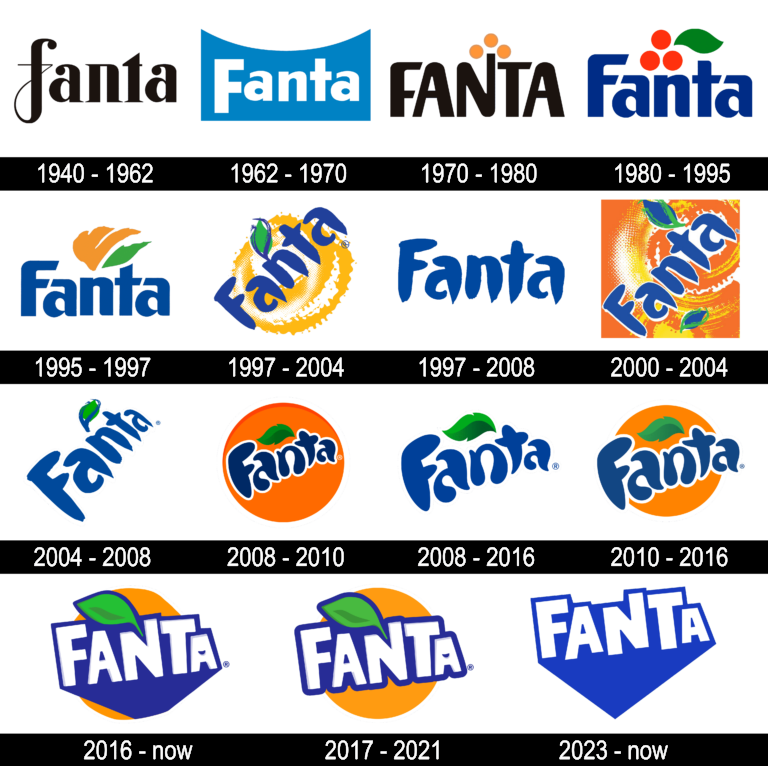
Fanta Logo History Timeline
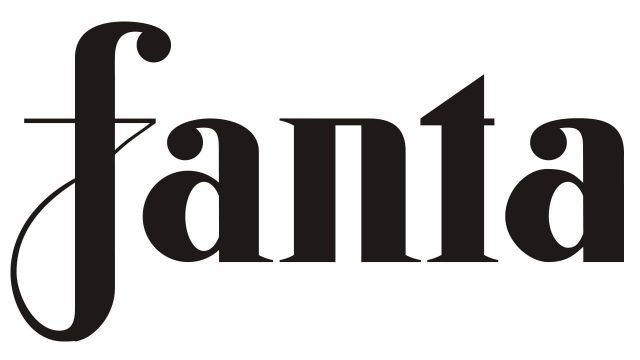
1940–1962: The Original Handwritten Wordmark
The first Fanta logo, introduced in 1940, featured a fully lowercase wordmark rendered in a playful, handwritten-style script. The most distinctive element was the exaggerated, elongated tail of the letter “F,” which curved elegantly beneath the word, creating a sense of movement and informality.
The logo was executed in solid black with no background shapes, symbols, or color accents. This simplicity reflected Fanta’s early positioning as a cheerful, imaginative alternative within the soda market. The lack of geometric structure gave the logo a spontaneous, almost improvised feel, aligning with the brand’s origin rooted in creativity and fantasy.
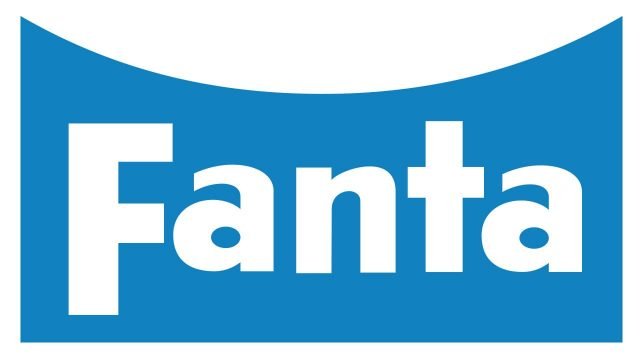
1962–1970: The Smiling Blue Badge
In 1962, Fanta introduced a completely new visual direction. The handwritten script was replaced with a clean sans-serif wordmark in title case, set in white against a light blue rectangular background. The top edge of the rectangle curved downward slightly, forming a subtle “smile” shape.
This was the brand’s first move toward a framed logo composition. The design emphasized friendliness and approachability, signaling a more deliberate branding strategy as Fanta expanded internationally. The blue-and-white palette suggested freshness while maintaining a youthful tone.
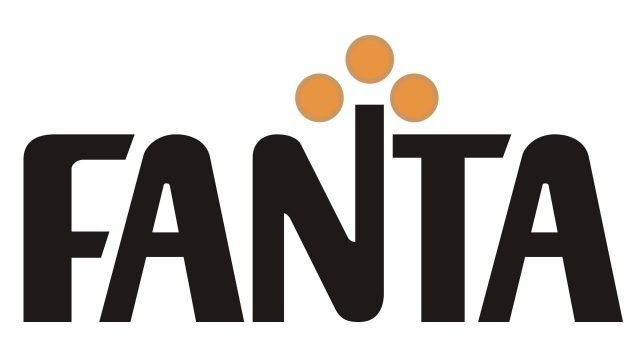
1970–1980: Oranges and Flavor Identity
The 1970 redesign marked the first explicit visual reference to flavor. The wordmark was redrawn in a thicker, smoother sans-serif typeface, this time in black. Above the letter “N,” three orange circles were introduced, arched gently to suggest fruit.
These circles symbolized oranges, firmly linking the logo to Fanta Orange, the brand’s flagship flavor. This period established a direct connection between logo design and product taste, reinforcing sensory association through visual cues.
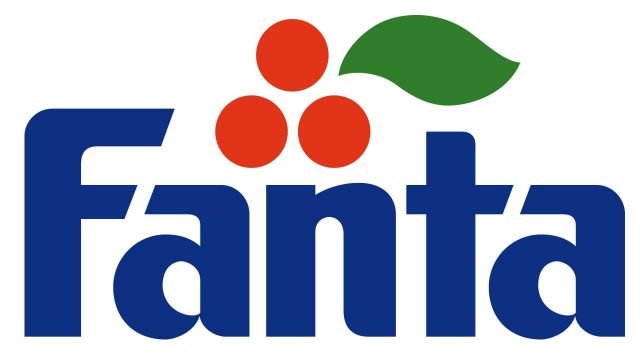
1980–1995: Color Intensification and the Leaf Motif
In 1980, the logo underwent another transformation. The wordmark changed from black to deep blue, while the orange circles turned red and were accompanied by a green leaf. The typography shifted from all-caps to title case, softening the overall tone.
The leaf element introduced a sense of natural freshness, while the intensified colors made the logo more vibrant and shelf-friendly. During this era, Fanta leaned heavily into fruit symbolism, aligning with broader trends toward flavor-driven branding.
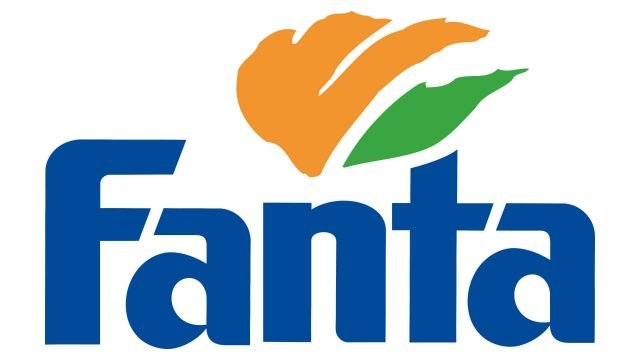
1995–1997: Abstract Minimalism
The 1995 update simplified the logo significantly. The three oranges were removed and replaced with a single abstract orange leaf. This change marked a shift away from literal fruit depiction toward more symbolic, modern branding.
The move suggested maturity and adaptability, indicating that Fanta was evolving beyond a single flavor identity into a broader product family.
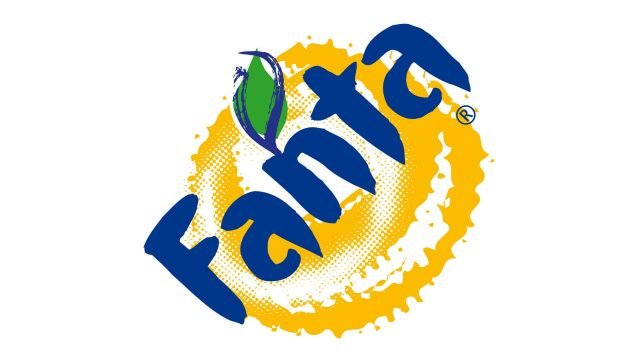
1997–2004: Diagonal Energy and Youth Appeal
Starting in 1997, Fanta embraced dynamic composition. The wordmark was placed diagonally across bright orange or yellow backgrounds, depending on flavor. A stylized green leaf, outlined in blue, emerged from the letter “N,” adding depth and motion.
The diagonal orientation conveyed energy, rebellion, and youth culture—key elements of Fanta’s global repositioning during the late 1990s.
1997–2008: Pure Wordmark Experiment
Alongside the diagonal versions, Fanta also introduced a stripped-down logo during this period. All additional symbols were removed, leaving only a redesigned blue wordmark with uneven, expressive letter thickness.
This version leaned into artistic imperfection, emphasizing creativity and individuality. It was used selectively across markets and applications.

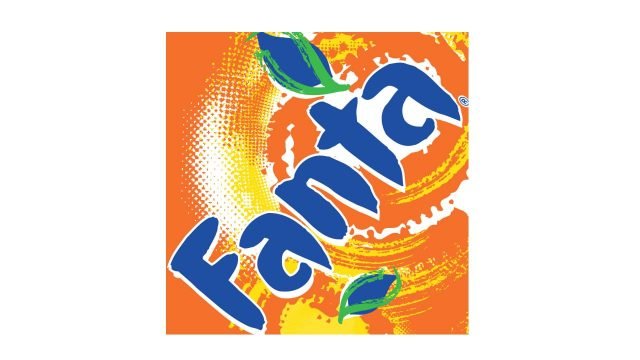
2000–2004: Outline and Gradient Play
Around 2000, an alternate version appeared featuring white outlines around the wordmark. These outlines enhanced contrast against gradient orange backgrounds, making the logo more vibrant and visually striking.
This iteration reflected early-2000s design trends, favoring depth, glow effects, and color saturation.
2004–2008: Clean Diagonal Revival
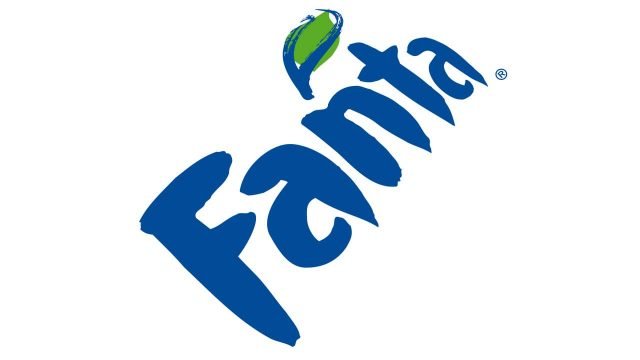
In 2004, the logo was cleaned up again. The blue wordmark returned on a white background, still angled diagonally. A single green leaf was placed above the lettering, while contours were refined and the blue hue intensified.
This version balanced clarity with energy and became widely recognizable across global markets.
2008–2010: Circular Composition
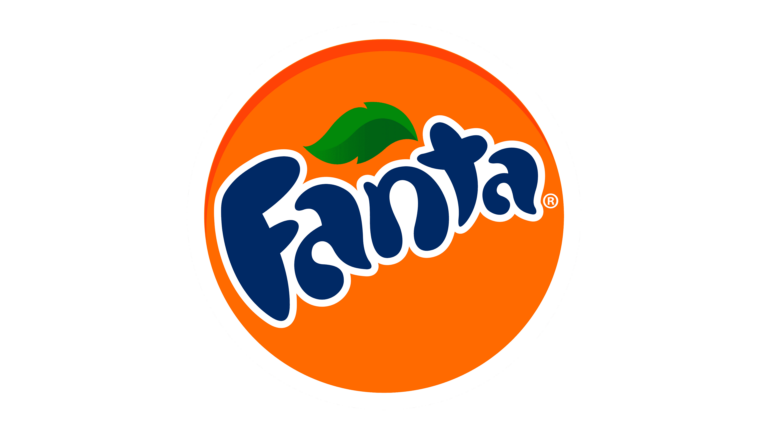
The 2008 redesign introduced a strong circular orange background, symbolizing both the sun and the fruit itself. The wordmark appeared in dark blue with a white outline, tilted diagonally. A gradient green leaf sat above the central letters.
This version unified previous themes—fruit, energy, and fun—into a cohesive emblem and marked one of Fanta’s most iconic visual eras.
2008–2016: Global Brand System
As Fanta expanded to more than 70 flavors worldwide, a flexible branding system was developed. The orange circle, green leaf, and playful wordmark formed a modular identity that could be adapted by flavor and market.
This period solidified Fanta’s position as a globally playful brand, capable of local customization without losing recognizability.
2010–2016: Enlarged Wordmark Focus
In 2010, the wordmark became larger and more dominant, while the orange circle was reduced in size. The composition emphasized the brand name itself, improving legibility across digital and physical platforms.
2016–2017: Geometric Reinvention
In 2016, Fanta adopted a bold new geometry. Rounded letters were replaced with squared, angular forms. The wordmark appeared in white with a thick blue outline, set against an orange circle. A redesigned green leaf emerged prominently from the letter “N.”
This version was confident, bold, and highly graphic, reflecting contemporary flat-design trends.
2017–2021: Shadow Removal and Simplification
In 2017, the heavy blue shadow from the 2016 logo was removed. While the core elements remained the same, the cleaner execution made the logo feel lighter and more modern.
2023–Present: Minimalist Power Mark
The 2023 redesign marked a dramatic simplification. The orange circle and green leaf were removed entirely. The logo now consists of a white uppercase wordmark outlined in blue, accompanied by a bold triangular shadow pointing downward.
This version is minimal yet intense, signaling confidence and maturity while preserving Fanta’s energetic character. Bright flavor colors were shifted away from the logo itself and reserved for packaging and product variants.
Logo Symbolism: Energy, Imagination, and Flavor
The symbolism of the Fanta logo has always been emotional rather than literal. Early designs suggested friendliness through curves and handwritten forms. Later iterations used fruit shapes and leaves to connect directly with flavor and freshness.
Diagonal layouts and uneven letterforms communicated movement and spontaneity, reinforcing the idea that Fanta is about fun rather than tradition. Even the most minimal recent versions retain intensity through bold outlines and dramatic shadows.
In this way, Fanta’s logo meaning centers on imagination—staying true to the brand’s name—while adapting its expression to each generation.
Typography and Color in the Fanta Logo
Typography has been one of Fanta’s most dynamic elements. From cursive-inspired forms to heavy geometric sans-serif letters, the wordmark has evolved continuously. The current uppercase lettering features exaggerated proportions and playful alignment, maintaining visual excitement despite reduced elements.
Color historically played a central role. Blue, orange, green, white, red, and yellow all appeared at different stages. With the 2023 redesign, the palette was intentionally reduced to blue and white, allowing flavor colors to take center stage on packaging rather than in the logo itself.
Fanta Logo Heritage Through Reinvention
Unlike brands that equate heritage with immobility, Fanta built its logo heritage through evolution. Each redesign reflects a specific cultural moment while preserving the brand’s core spirit. This willingness to adapt has kept Fanta relevant across decades and demographics.
By embracing change as a constant, Fanta turned reinvention into identity. The logo’s history itself became proof of vitality rather than instability.
Fanta Logo Meaning and Evolution: Conclusion on Brand Heritage
The Fanta logo history is a celebration of movement, creativity, and youth. Its meaning and symbolism evolved alongside consumer culture, proving that heritage does not always require permanence—sometimes it requires courage to change.
Through more than a dozen redesigns, Fanta maintained a consistent emotional promise: fun, refreshment, and imagination. That promise, rather than a fixed visual form, is the true foundation of Fanta’s logo heritage.
FAQ: Fanta Logo Meaning, Symbolism, and History
What does the Fanta logo represent?
The logo represents energy, imagination, and playful refreshment.
Why has the Fanta logo changed so often?
Fanta targets younger audiences and adapts its visual identity to cultural trends and flavors.
What is the origin of the name Fanta?
The name comes from the German word “Fantastik,” meaning imagination.
What colors are traditionally associated with the Fanta logo?
Historically blue, orange, green, and white; the current logo focuses on blue and white.
Is Fanta owned by Coca-Cola?
Yes, Fanta is part of The Coca-Cola Company portfolio.