Lipton Logo History: Does Unilever Still Even Own It?
Lipton hasn’t been a single company for several years now. In 2022, Unilever sold the majority of its global tea business, including Lipton, to CVC Capital Partners for €4.5 billion, creating a separate company called Lipton Teas and Infusions. Unilever kept the Lipton name only for specific uses: tea in a few Asian markets, ready-to-drink tea beverages worldwide, and soup mixes in North America.
How did Lipton actually start, and why does the tea reference “the garden”?
Thomas Lipton founded his business as a single grocery shop in Glasgow in 1871, using his own savings. The business grew fast, expanding to more than 200 stores by the 1880s. In 1890, rather than buying tea from middlemen, Lipton purchased his own tea gardens in Ceylon (now Sri Lanka) and began packaging and selling the tea directly to consumers, built around the slogan “direct from the tea garden to the teapot.” That vertically integrated approach, cutting out the brokers who typically stood between tea growers and retailers, undercut competitors on price and became especially successful in the US market.

1890: The first branded logo
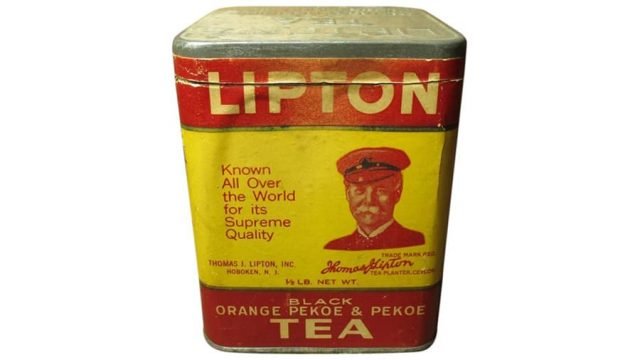
Lipton’s first logo, introduced alongside its branded tea in 1890, used a red rectangular banner with bold yellow uppercase lettering against a yellow background, often paired on packaging with a portrait of Thomas Lipton himself.
1972: The curved medallion, and Unilever’s full takeover
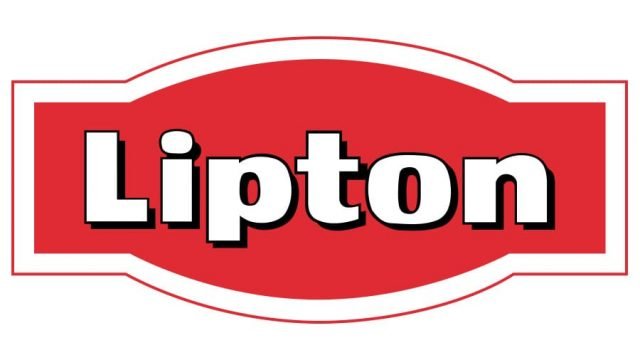
Unilever had been buying pieces of Lipton’s tea business since 1938, starting with the US and Canadian operations, and finally took full control of the brand in August 1972 for £18.5 million. That same year, the logo shifted from a rectangular banner to the horizontally stretched, arched red medallion with a white-and-red double border that would define the brand for decades.
1992: Softer typography
The 1992 refinement moved the yellow from the packaging background into an outline inside the badge itself, and softened the wordmark’s letterforms for a friendlier look.

2002: A glossier, three-dimensional look
In 2002, the badge gained a gradient-shaded, glossy red finish and a thinner outline, often paired on packaging with a gold curved underline beneath the wordmark.
2014: The sun motif arrives
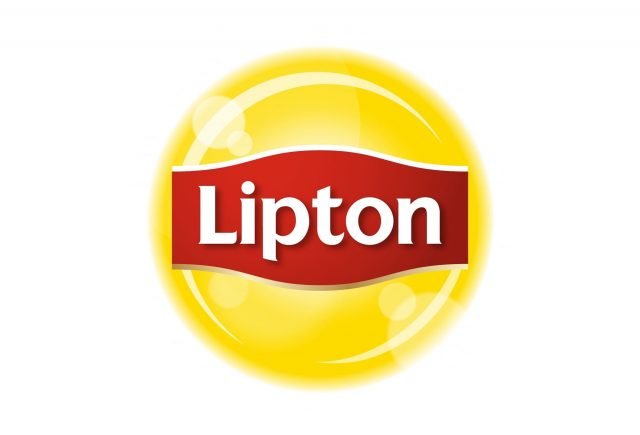
Lipton’s 2014 redesign placed the red badge in front of a radiant yellow circular sun motif, formalizing the sun imagery that has since become central to the brand’s visual identity.
2025: The first rebrand since 2014
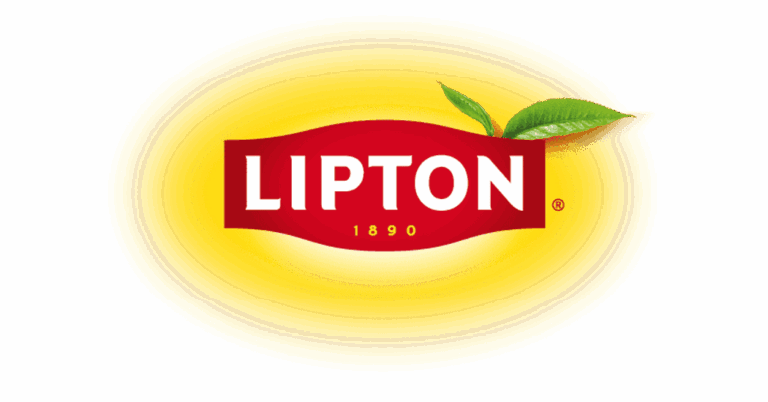
Lipton rolled out a new look across roughly 90 markets in 2025, its first packaging rebrand since 2014. The update restored an all-caps version of the Lipton logotype, added the brand’s founding year, 1890, directly onto the red cartouche, and introduced two green leaves alongside the mark plus “aura wave” graphics meant to suggest infusion, set against a soft yellow glow around the badge. The company said the change was meant to give the brand more distinctiveness after a generation of consumers had grown up without seeing it updated.
Quick facts
| Thomas Lipton’s first shop | 1871, Glasgow, Scotland |
| Expanded to | 200+ stores by the 1880s |
| Ceylon tea gardens purchased | 1890, built around “direct from the tea garden to the teapot” |
| Unilever’s first Lipton acquisition | 1938 (US/Canada operations) |
| Unilever took full control | August 1972, £18.5 million |
| Sun motif added to the logo | 2014 |
| Most recent rebrand | 2025, across ~90 markets; restored all-caps logotype and added “1890” to the cartouche |
| Sold by Unilever to CVC Capital Partners | Agreed November 2021, closed July 2022, €4.5 billion |
| Current structure | Lipton Teas and Infusions (CVC); Unilever retains the name for select Asian markets, ready-to-drink tea, and North American soup |
Related reading: Unilever logo history and Pepsi logo history.
Further reading
FAQ: Lipton Logo and History
Does Unilever still own Lipton?
Not entirely. Unilever sold most of its tea business, including Lipton, to CVC Capital Partners in 2022, creating Lipton Teas and Infusions. Unilever kept the Lipton name only for select Asian tea markets, ready-to-drink tea worldwide, and North American soup.
When did Unilever first get involved with Lipton?
In 1938, when it acquired Lipton’s US and Canadian tea operations; it didn’t take full control of the brand until August 1972.
Why did Thomas Lipton buy tea gardens in Ceylon?
To sell tea directly to consumers without middlemen, built around the slogan “direct from the tea garden to the teapot,” which let him undercut competitors on price.
When did the sun imagery appear in the Lipton logo?
It became a formal part of the design with the 2014 redesign.
When was the current curved-medallion logo style introduced?
In 1972, the same year Unilever took full ownership of the brand.