Unilever Logo History: The 1929 Lever Brothers and Margarine Unie Merger
Unilever is not one company’s logo story but two: it was formed in 1929 by a merger between a British soap maker and a Dutch margarine producer, each already decades old, brought together to secure the raw materials (oils and fats) both businesses depended on.
How did Unilever actually start?
Unilever traces back to two separate 19th-century businesses. William Hesketh Lever and his brother James Darcy Lever founded Lever Brothers in 1884 in Warrington, England, building the company around a soap made with glycerin and vegetable oils rather than tallow, first called Honey Soap and then renamed Sunlight Soap. Its success let the Levers build a new factory and model village on the Wirral Peninsula, Port Sunlight, developed between 1888 and 1914 to house the company’s workers.
On the Dutch side, margarine producers Jurgens and Van den Bergh merged in 1927 to form Margarine Unie. Facing the same competition for oils and fats as Lever Brothers, the two companies agreed to merge rather than compete, signing the agreement on 2 September 1929; Unilever officially began operating as a single company on 1 January 1930.
Unilever logo history timeline
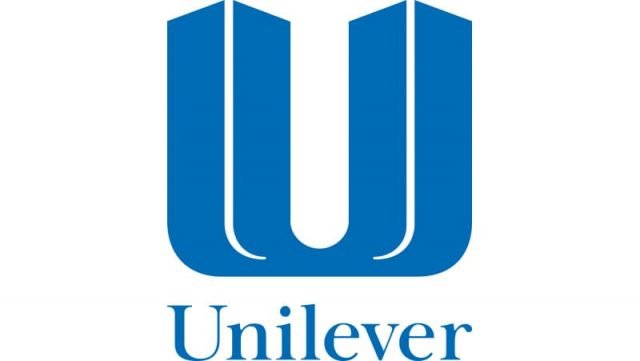
1967-2004: the architectural U
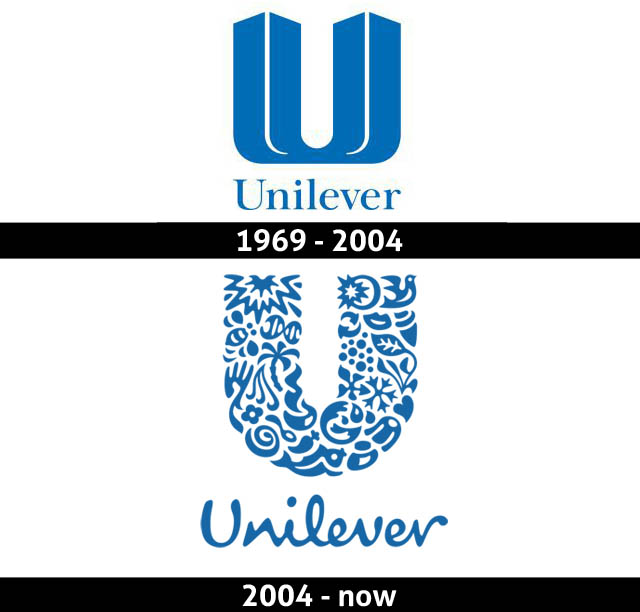
Despite forming in 1930, Unilever did not adopt a unified corporate logo until 1967, nearly four decades later, having operated mainly through its individual product brands until then. That first logo used a large, angular capital “U” with sharp, triangular strokes above a serif wordmark, in blue and white.
2004-today: the symbol mark
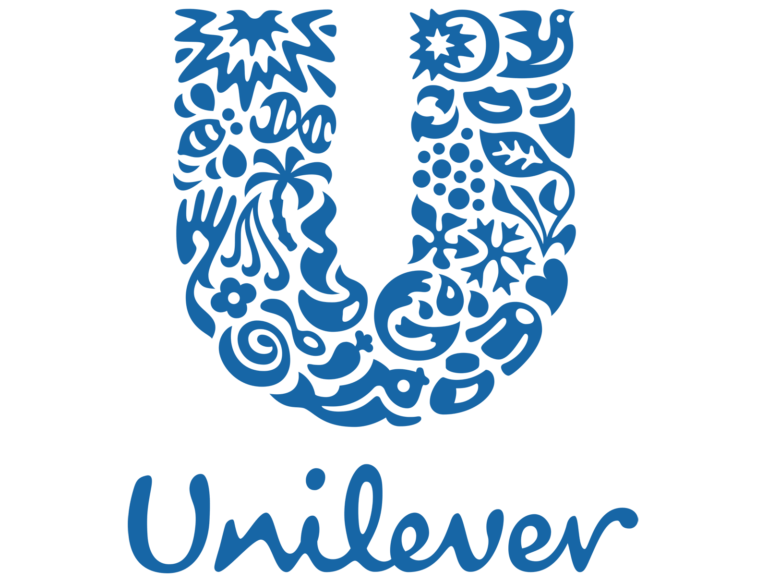
In 2004, branding agency Wolff Olins redesigned the logo into the version used today: a rounded blue “U” built from 25 small icons, each referencing part of Unilever’s business, such as a leaf, a bee, a spoon, and a strand of DNA, paired with a handwritten script wordmark.
Why did Unilever become a single UK company in 2020?
Unilever operated for decades as a dual-listed structure, with Unilever N.V. in Rotterdam and Unilever PLC in London sharing one board and one set of brands but remaining legally separate companies. In 2018, management proposed consolidating the headquarters in Rotterdam, but dropped the plan that October after UK shareholders raised concerns about losing FTSE 100 index membership. In September 2020, shareholders instead voted to unify under a single UK-based holding company, Unilever PLC, with the move completing that November and ending the dual-listed structure entirely.
Unilever today reports roughly €50.5 billion in revenue, employs about 96,000 people, and sells in more than 190 countries, with brands including Dove, Axe, Magnum, Domestos, Hellmann’s, and Vaseline alongside Lipton and Knorr.
Quick facts
| Lever Brothers founded | 1884, Warrington, England, by William Hesketh and James Darcy Lever |
| Margarine Unie formed | 1927, merger of Jurgens and Van den Bergh |
| Unilever merger agreement / start | 2 September 1929 agreement; operating as one company from 1 January 1930 |
| First corporate logo | 1967 |
| Current logo redesign | 2004, by Wolff Olins |
| Single UK company structure | Completed November 2020 |
Related reading
Further reading
FAQ
When was Unilever founded?
The merger agreement between Lever Brothers and Margarine Unie was signed on 2 September 1929, and Unilever began operating as a single company on 1 January 1930.
Why did Lever Brothers and Margarine Unie merge?
Both companies relied on the same raw materials, oils and fats, and merged to secure stable supplies rather than compete for them.
Who designed the current Unilever logo?
Branding agency Wolff Olins designed the 2004 redesign, building the “U” from 25 small icons representing the company’s businesses and values.
Is Unilever still a Dutch company?
No. Since November 2020, Unilever has operated as a single UK-based company, Unilever PLC, ending its earlier dual-listed Anglo-Dutch structure.