
Chrysler Logo History: Meaning, Symbolism & Brand Heritage

A Century of American Automotive Identity
Chrysler stands as one of the most storied names in American automotive history. Founded in 1925 by Walter P. Chrysler, the brand quickly positioned itself among the “Big Three” of Detroit, alongside Ford and General Motors. Over the decades, Chrysler has navigated periods of innovation, crisis, reinvention, and global consolidation, becoming part of Daimler-Benz in the late 1990s, regaining independence, and eventually joining Fiat in 2014.
While ownership structures shifted and model lines evolved, one element of Chrysler’s identity has remained in constant motion: its logo. Few automotive brands have explored visual identity as boldly as Chrysler. From wax seals and heraldic wings to radical modernist symbols and minimalist digital-era emblems, Chrysler’s logo history reflects not only changing design trends but also the company’s evolving philosophy, ambitions, and cultural position.
Meaning and History of the Chrysler Logo
The Chrysler logo has never been merely decorative. From its earliest days, it was designed to communicate quality, prestige, and forward motion. Walter Chrysler believed branding should convey engineering excellence, and that belief shaped one of the most dynamic logo histories in the automotive world.
Chrysler Logo History and Evolution Timeline
1924–1928: The Wax Seal of Quality
The earliest Chrysler badge resembled an official wax seal, finished in gold and accented by a diagonal ribbon bearing the brand name. Small blue ribbons emerging from behind the seal reinforced its ceremonial tone. This emblem was deliberately formal, evoking trust, craftsmanship, and mechanical reliability at a time when automobiles were still a luxury purchase.
1928–1930: Winged Speed and Roman Inspiration
Designed by Oliver Clark, the logo gained wings inspired by Roman symbolism. The winged seal represented speed, technological progress, and ambition. It positioned Chrysler not only as a manufacturer but as a modern force in motion.
1930–1936: Luxury Through Color
The wings were removed, leaving a refined seal rendered in burgundy and gold. This version emphasized exclusivity and craftsmanship, aligning Chrysler with luxury rather than mass production.
1936–1950: Structured Wings and Industrial Confidence
Wings returned in a more rigid, horizontal form, rendered in silver with black detailing. This marked Chrysler’s transition into a mature industrial powerhouse, balancing elegance with mechanical authority.
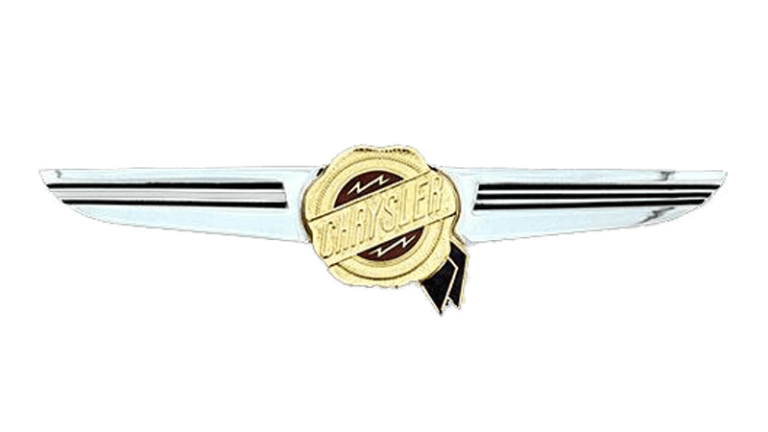
1950–1951: Heraldic Experiment
A dramatic departure followed with a black shield, golden lion, and red crest. The emblem leaned heavily into European heraldry but proved short-lived, lasting only one year.
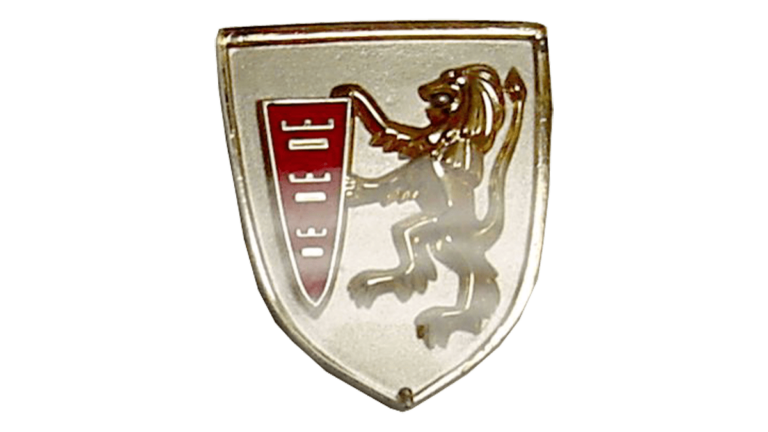
1951–1955: The Jet-Age Bird
A sculptural bird symbol replaced the shield, reflecting postwar optimism, aviation influence, and technological acceleration. Its three-dimensional form embodied speed and futuristic design.
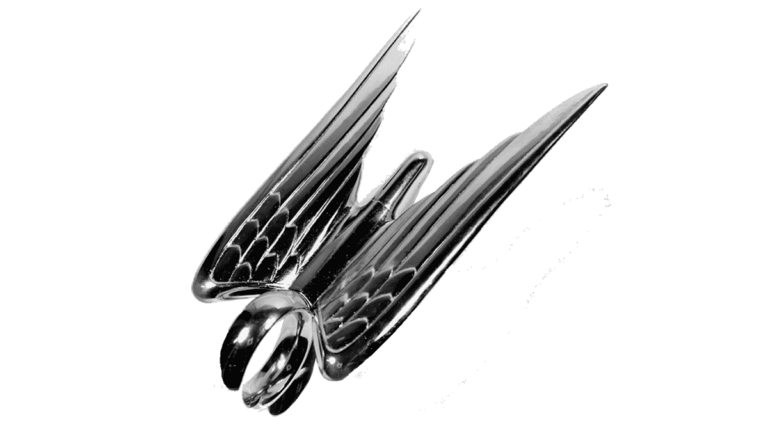
1955–1962: Radical Modernism
Chrysler embraced abstraction with a minimalist emblem formed by intersecting black and red shapes. This logo mirrored mid-century modernism and positioned the brand as forward-thinking and experimental.

1962–1980: The Pentastar Era
The iconic blue Pentastar debuted, composed of five geometric triangles forming a star. Clean, corporate, and highly adaptable, the Pentastar symbolized unity, reliability, and corporate strength during Chrysler’s expansion years.

1980–1990: Futuristic Typography
Chrysler temporarily abandoned symbols in favor of a bold wordmark. The open forms of the “R” characters introduced a futuristic tone, signaling innovation during a challenging corporate era.
1990–1993: Return of the Winged Seal
A refined winged emblem returned, now stretched horizontally and polished for a contemporary audience. It combined heritage with aerodynamic elegance.
1993–1998: Heritage Revival
The original wax seal was revived with modernized colors and refined detailing. This era reflected Chrysler’s renewed respect for its origins.
1998–2000: Wings and Authority
The seal was framed by elongated silver wings, reinforcing motion and prestige. The emblem appeared more sculptural and assertive.
2000–2009: Pentastar Reimagined
The Pentastar returned alongside a more traditional wordmark, reinforcing corporate clarity and global recognition.

2009–2023: Elegant Wings
Chrysler introduced a sleek, horizontal winged emblem with a blue central bar. The design conveyed refinement, balance, and confidence, aligning with the brand’s repositioning within Fiat Chrysler Automobiles.
2023–Today: Minimalist Evolution
The latest redesign stripped the emblem to its essence. Flat, black wings and a futuristic sans-serif wordmark signal digital readiness and modern restraint, marking Chrysler’s transition into an electric-focused future.
Chrysler Logo Meaning and Symbolism
Throughout its history, Chrysler’s logo has symbolized motion, aspiration, and craftsmanship. Wings have consistently represented speed and progress, while seals and shields communicated trust and authority. The Pentastar embodied unity and corporate stability, while modern minimalist interpretations reflect adaptability in an evolving automotive landscape.
Each redesign mirrored Chrysler’s internal direction, whether emphasizing luxury, innovation, resilience, or reinvention.
Typography and Color Palette
Chrysler’s typography evolved from serif-based, ceremonial lettering to sleek sans-serif wordmarks with futuristic cuts. Modern iterations favor clarity and precision, reinforcing technological sophistication.
The color palette shifted from gold and burgundy to blue and silver, symbolizing trust, professionalism, and longevity. The latest black-on-white approach reflects digital clarity, neutrality, and modern confidence.
Chrysler Logo Heritage in Motion
Chrysler’s visual identity is a living archive of American automotive history. Few brands have demonstrated such willingness to evolve while preserving symbolic continuity. From wax seals to winged minimalism, Chrysler’s logos chronicle ambition, resilience, and reinvention. In the context of logo heritage, Chrysler stands as a rare example of a brand unafraid to adapt its symbolism to reflect changing eras while maintaining its core identity.
FAQ: Chrysler Logo History and Meaning
Why has Chrysler changed its logo so often?
Chrysler has consistently used logo redesigns as a strategic tool to reflect technological change, corporate restructuring, and shifts in brand philosophy.
What do the wings in the Chrysler logo represent?
The wings symbolize speed, freedom, innovation, and forward motion, values deeply rooted in Chrysler’s automotive heritage.
What is the Pentastar logo?
The Pentastar was Chrysler’s corporate symbol from 1962, representing unity, stability, and global ambition.
When was the current Chrysler logo introduced?
The most recent logo was introduced in 2023, featuring a minimalist, flat design aligned with digital and electric vehicle branding.