Uber Logo History: Meaning, Symbolism & Brand Heritage

Uber, founded in 2009, reshaped urban mobility with unprecedented speed, transforming from a small startup into one of the most influential transportation platforms in the world. What began as a luxury car-hailing service in San Francisco quickly evolved into a global ecosystem that includes ridesharing, food delivery, freight logistics, and autonomous technology research.
Throughout this rapid expansion, Uber repeatedly refined its visual identity, producing a sequence of logos that reflect its shifting mission, personality, and global presence.
Despite being a relatively young company, Uber’s logo history is surprisingly rich and symbolic. Each redesign represents a pivotal chapter in the company’s evolution—from scrappy startup to bold disruptor to mature, streamlined global brand. Across all its versions, simplicity, minimalism, and modernity remain central, revealing a design heritage deeply aligned with innovation and technological progress.
Uber Meaning and Symbolism
The symbolism of Uber’s logos reflects the company’s desire to project clarity, reliability, and forward-thinking mobility. Early versions emphasized strength and presence through bold forms and deep shades of red and gray. As the company matured, its design philosophy shifted toward more universal, friendly, and approachable aesthetics.
Uber’s recurring use of minimalistic shapes and monochrome palettes symbolizes streamlined service and frictionless technology. The 2016 redesign attempted to convey deep symbolic meaning with its abstract representation of “atoms and bits”—the foundational elements of the digital world. This was meant to reflect Uber’s belief that it was building not just a transportation tool, but a digital infrastructure.
Ultimately, the 2018 logo returned to pure simplicity: a clean wordmark symbolizing transparency, safety, and maturity. The symbolism here is intentional. By stripping away decorative elements, Uber positions itself as a dependable, trustworthy global partner in mobility.
Uber Brand Heritage
Uber’s heritage is rooted in disruption. The company introduced an entirely new category of transportation and forever changed how people move through cities. From its early days under the name UberCab to its meteoric expansion, Uber built a brand identity centered on innovation and technological empowerment.
The evolution of its logo mirrors this cultural impact. Early emblems reflected its boutique roots, while later versions emphasized global accessibility. Even the bold experiments of 2016 demonstrate Uber’s drive to redefine not only transportation but its own identity.
Today, Uber’s heritage is one of transformation—of industries, of cities, and of global mobility. Its visual identity acts as a timeline of that journey, capturing the meaning and symbolism behind a company perpetually reinventing itself.
Uber Logo History & Evolution Timeline

2009 – 2010: The UberCab Beginnings
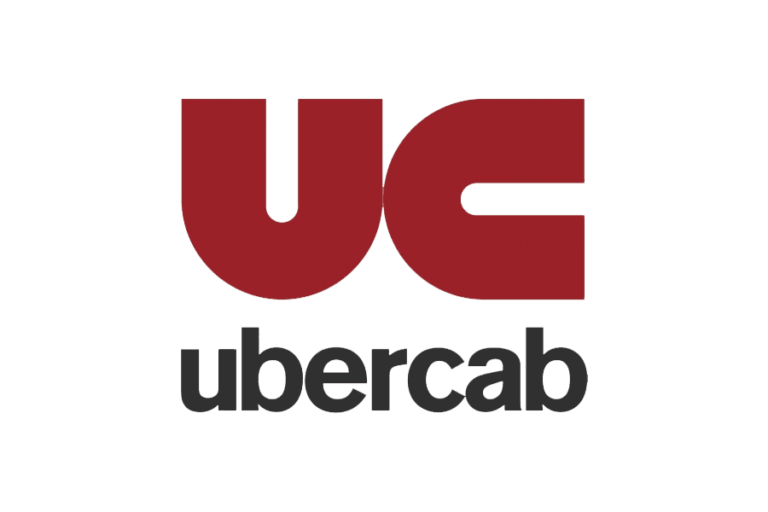
Uber’s first logo emerged during its earliest phase as “UberCab.” The emblem featured two oversized letters, “UC,” arranged uniquely with one letter vertical and the other horizontal. Below them, a lowercase wordmark appeared in dark gray. Deep red and charcoal tones projected confidence and exclusivity, fitting a premium car-hailing service. The logo was bold, experimental, and reflective of a company testing boundaries.
2009 – 2011: A Stronger, Sharper Identity
Another early version introduced a minimalist structure with a dark gray lowercase wordmark above a striking red “U.” The wide, unlatched form of the letter projected power and momentum. This design eliminated any decorative framing, choosing instead a clean contrast between red, gray, and white. It communicated assertiveness and a move toward brand maturity.

2011 – 2016: The Metallic “U” and Modern Wordmark
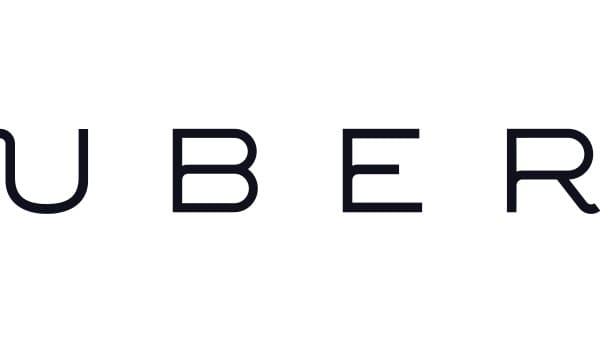
A major redesign arrived in 2011. The new wordmark was set in a slender, refined sans-serif typeface with a signature curve on the top of the “U,” softening the logo’s tone. Alongside it, Uber introduced a badge composed of a silver “U” inside a dark gray square with a double outline.
The bending tips of the “U” symbolized mobility and forward direction, giving the emblem strength and presence. This period aligned with Uber’s global expansion, and the logo conveyed technological sophistication and reliability.
2016 – 2018: The Abstract “Atoms and Bits” Era
In 2016, Uber’s in-house team executed one of the most ambitious rebrands in tech history. The wordmark became bolder, rounder, and more contemporary, while the letter “E” featured diagonal cuts that added motion and dynamism.
The more dramatic change came in the form of the mobile icon: a deep blue square with patterned textures and a white abstract form representing “atoms and bits.” Uber described these as the fundamental building blocks of both the physical and digital world.
This identity aimed to reflect Uber’s heritage of technological innovation, but the symbolism proved too abstract for many users.
2018 – Today: The Clean, Confident Wordmark
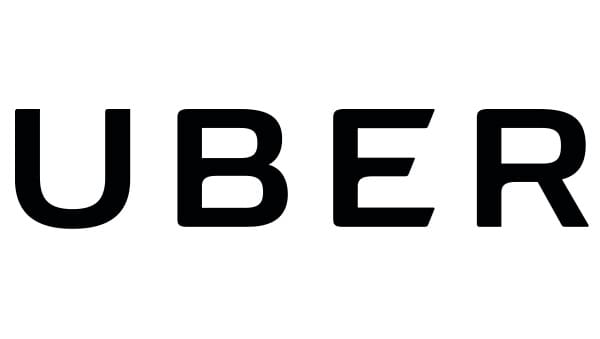
In 2018, Uber embraced radical simplicity. The new logo features a black title-case wordmark rendered in a custom typeface called Uber Move. With clean geometry, generous spacing, and soft curves, the logo is approachable yet authoritative.
This minimalist design reflects the brand’s mature global identity—universal, trustworthy, and timeless. By removing icons, textures, and decorative elements, Uber’s modern logo embodies clarity and reliability for its vast international audience.
Typography and Color
Uber’s typography has evolved alongside its identity. The current custom typeface, Uber Move, features rounded geometry and subtle inner curves on letters like B, E, and R. These design details give the wordmark a humanized feel without sacrificing structure.
Earlier versions showcased sharper angles and bolder strokes, reflecting the brand’s early assertiveness.
Color historically ranged from deep red to metallic silver to dark blues, but the modern identity relies on pure black and white. This monochrome palette symbolizes clarity, universality, and confidence. It also accommodates localized palettes—Uber developed more than 60 region-specific color systems to allow cultural flexibility while retaining global cohesion.
The Enduring Symbolism of the Uber Logo
The Uber logo embodies the story of a company that transformed global transportation. From bold experimental emblems to abstract digital symbolism and ultimately to a timeless minimalist wordmark, the visual heritage of Uber reveals a commitment to innovation, clarity, and global unity.
Its history reflects rapid growth, cultural impact, and a constant search for visual meaning. Today’s logo stands not just as a mark of a company, but as a symbol of the modern mobility era—simple, universal, and unmistakably Uber.
Uber Logo FAQ
What does the Uber logo symbolize?
The modern Uber logo symbolizes simplicity, trust, and global accessibility through its clean lines and minimalist typography.
Why did Uber change its logo so many times?
Each redesign marked a major shift in the company’s strategy—from niche luxury service to mass-market platform to global mobility ecosystem.
What was the meaning behind the 2016 Uber icon?
The 2016 icon represented “atoms and bits,” symbolizing the fundamental building blocks of physical and digital systems.
What font does Uber use?
Uber uses a custom font called Uber Move, designed to be highly readable and globally friendly.
Why is the current Uber logo black?
Black symbolizes clarity, professionalism, and neutrality, allowing the logo to remain adaptable across cultures and applications.