
SHEIN Logo History: Meaning, Symbolism & Brand Heritage

SHEIN, one of the world’s largest online clothing retailers, has transformed the global fashion landscape with its vast assortment of affordable styles and its ability to reach consumers across more than 220 countries and regions. From Europe and the Middle East to Australia and the Americas, the platform has become a dominant force in fast fashion. With warehouses in China, Europe, and the United States, and a highly optimized digital distribution model, SHEIN has redefined how modern retail operates.
As the company expanded from a niche online shop to a global e-commerce ecosystem, its visual identity evolved as well—moving from ornate, stylized wordmarks to the simplified, confident uppercase logo recognized today. The SHEIN logo reflects a story of digital-native branding, scalability, and the pursuit of global recognition.
SHEIN Meaning and Symbolism
The SHEIN logo is defined by clarity, modernity, and universal appeal. Its progression from decorative serif forms to clean, geometric uppercase letters mirrors the brand’s transformation from a small online boutique to a global retail platform. The final logo’s simplicity is intentional—it is designed to be instantly recognizable in any digital environment, whether on mobile apps, social media, shipping labels, or product packaging.
Symbolically, the stark black color speaks to reliability, sophistication, and neutrality, making it versatile across categories ranging from fashion to home goods. The sharp lines and wide spacing of the modern logotype embody precision and efficiency, reflecting SHEIN’s highly optimized supply chain and fast-paced production model. What began as a decorative script evolved into a powerful minimalist identity that aligns with contemporary digital retail trends.
SHEIN Brand Heritage
SHEIN’s brand heritage dates back to 2008, when the company operated under the name Zzkko.com, focusing primarily on women’s fashion for American buyers. Over time, the business experimented with naming and product focus, narrowing its assortment to wedding dresses before expanding again into broader apparel categories.
In 2014, the company began building its own supply chain infrastructure, transforming from a simple reseller model into a fully integrated global retailer. This shift set the foundation for one of the most influential digital-native fashion brands in the world. In 2015, the company streamlined its name to SHEIN—a short, international-friendly identity that would support its massive global ambitions.
Throughout this evolution, the logo also matured, gradually removing decorative elements and leaning into a sleek, contemporary presentation that mirrored the company’s operational sophistication and global reach.
SHEIN Logo History & Evolution Timeline
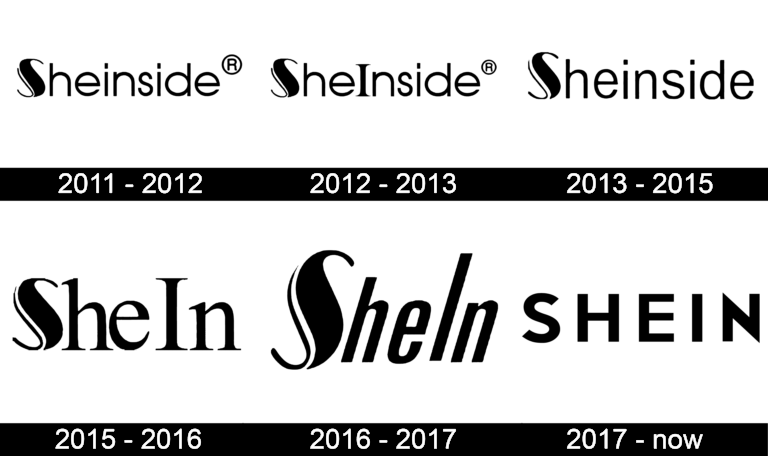
2011 – 2012: The Sheinside Era Begins
The earliest known logo displayed the name “Sheinside” in black sans-serif lettering. While the design was simple, the distinctive capital “S” added sophistication through a blend of thick strokes, thin lines, and subtle double-stroke detailing. This logo signaled a boutique-style online retailer with a feminine and decorative aesthetic. The registered trademark symbol reinforced the company’s formal step into brand building.

2012 – 2013: A Subtle but Meaningful Update
In 2012, the logo retained the original structure but introduced a bolder, serifed capital “I.” Though a small change, it gave the name a firmer presence and refined elegance. The combination of serif and sans-serif elements created a transitional identity as the brand positioned itself for broader growth.

2013 – 2015: A Stronger, More Confident Wordmark
In this period, the “I” returned to lowercase form. The surrounding letters grew wider and taller, with closer spacing that contributed to a more assertive look. These refinements communicated stability and confidence—qualities essential for a brand expanding into global markets.

2015 – 2016: The Hybrid “SheIn” Identity
As the name transitioned toward simplification, the logo adopted “SheIn” with a mix of upper- and lowercase letters. Thin, flaring serifs gave it a refined appearance, while the familiar stylized “S” preserved continuity with earlier versions. The capitalized “I” created a visual pause, separating “She” and “In” in a way that emphasized the brand name’s evolving structure.

2016 – 2017: A Modern Italic Direction
The 2016 redesign aimed to energize the brand’s identity. The wordmark was italicized, serifs were removed, and the font became noticeably bolder. This gave the logo a sense of motion and stylistic sophistication while maintaining the signature “S.” The black color ensured consistency during SHEIN’s rapid international expansion.

2017 – Today: The Minimalist Global Signature
The current SHEIN logo embraces minimalism and geometric precision. Composed entirely of uppercase letters spaced widely apart, the logotype achieves a clean, authoritative look. The diagonal cuts on the ends of the “S” and the sharp angles of the “N” introduce subtle distinctive touches. This modern design supports global scalability, working effectively across digital, print, and mobile interfaces.
While visually simple, the logo embodies the brand’s evolution—dynamic, confident, and tailored for a global online audience.
Typography and Color
The typography of the final SHEIN logo features a bold, modern sans-serif typeface with perfectly proportioned letters. Its wide spacing enhances readability and reinforces the brand’s digital-first approach. Crisp, clean strokes ensure versatility across various mediums.
Black is the logo’s sole color—an intentional decision that communicates universality, elegance, and adaptability. Black not only aligns with the aesthetics of fashion branding but also allows the logo to stand out against imagery, color variations, and trend-driven designs. This choice reflects SHEIN’s focus on streamlined global identity and strong brand recall.
The Enduring Legacy of the SHEIN Logo
The SHEIN logo represents more than a name—it reflects the brand’s journey from a niche online boutique to a global fashion powerhouse. Its evolution mirrors the company’s shift toward digital efficiency, international expansion, and modern branding principles. Through each redesign, the brand refined its visual voice, ultimately arriving at a minimalist, confident wordmark that aligns with its bold global strategy. Today, the SHEIN logo stands as a symbol of contemporary fast-fashion culture, digital innovation, and a streamlined identity crafted for a worldwide audience.
SHEIN Logo FAQ
What does the SHEIN logo symbolize?
The SHEIN logo symbolizes modernity, efficiency, and global accessibility through its clean, minimalist uppercase letters.
Why is the SHEIN logo black?
Black reflects sophistication, universality, and versatility, allowing the logo to function seamlessly across fashion categories and digital environments.
When did SHEIN adopt its current logo?
The current minimalist logo was introduced in 2017, marking a significant step in the brand’s global rebranding effort.
How has the SHEIN logo evolved over time?
The logo evolved from decorative serif wordmarks to a bold, simplified design, mirroring the brand’s growth from boutique origins to international prominence.
Why did SHEIN simplify its logo?
Simplification ensured clarity, global recognition, and strong performance across digital platforms, where minimalist logos are most effective.