Flipkart Logo History: Meaning, Symbolism & Brand Heritage

Flipkart, founded in 2007, has grown from a small online bookstore into one of India’s most influential e-commerce ecosystems. Now partially owned by Walmart, the company stands as a regional powerhouse, generating billions in annual revenue and serving millions of shoppers across multiple categories. As Flipkart expanded from basic retail to a full digital marketplace, its logo evolved into a recognizable symbol of fast, modern, and accessible online shopping. The visual heritage of Flipkart tells a story of youthful energy, rapid innovation, and an identity firmly rooted in India’s digital transformation.
Flipkart Meaning and Symbolism
The Flipkart logo communicates movement, convenience, and everyday affordability. The brand consistently uses bright blue and yellow, two colors deeply associated with trust, reliability, energy, and optimism. Blue anchors the identity in professionalism and security, essential attributes for an online shopping platform. Yellow adds vibrancy, capturing the spirit of excitement and discovery that accompanies retail experiences.
The emblem introduced in 2015—a stylized yellow shopping bag featuring a lowercase “f”—expresses the brand’s core mission: simple, fast, and enjoyable e-commerce. The elongated horizontal bar of the “f” creates a sense of motion, symbolizing quick service, efficient delivery, and a seamless customer journey. Together, the colors and shapes form a logo that feels both friendly and dynamic, reflecting the fast-paced environment of Indian online retail.
Flipkart Brand Heritage
Flipkart’s heritage is built on innovation within a rapidly developing digital market. When the company launched in 2007, India’s e-commerce infrastructure was still in its early stages. Flipkart distinguished itself by prioritizing customer service, quick delivery, and a user-friendly shopping experience. As the company’s reach expanded, its identity moved from playful startup imagery to a more confident retail presence.
Despite several redesigns, Flipkart’s visual heritage has consistently emphasized bright, approachable design and strong color contrasts. This continuity reflects the brand’s long-standing commitment to consumer trust and accessibility. Each evolution of the logo mirrors the company’s growing maturity, technical development, and increasing influence across India’s digital economy.
Flipkart Logo History & Evolution Timeline
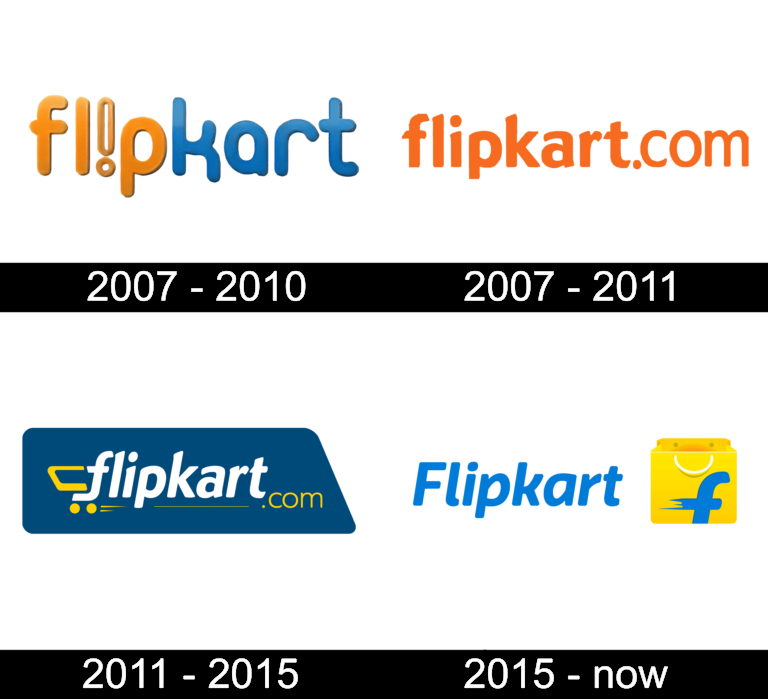
2007 – 2010: Playful Beginnings
Flipkart’s first logo featured lively orange and blue lettering with gradient effects and a modified “i” resembling an exclamation mark. The characters appeared to “jump,” expressing the energy of a young, emerging company. This early design captured the excitement surrounding India’s newly growing online marketplace and reflected a fresh, informal brand personality.

2007 – 2011: A More Professional Look
Another logo version from 2007 introduced a more structured, text-based design. The word “Flipkart” appeared in solid orange lowercase letters, with the “.com” in a lighter weight. The simple sans-serif typeface projected confidence and growing professionalism. Orange added warmth and enthusiasm, highlighting affordability and accessibility.

2011 – 2015: A Stronger Identity with the Blue Platform Badge
In 2011, Flipkart introduced a bold, modern logo featuring a blue rectangular badge with rounded corners and a diagonal cut on the right edge. The yellow shopping cart symbol on the left connected directly to e-commerce, while thin lines extending from the cart emphasized speed and efficiency. Inside the badge, “Flipkart” appeared in large white letters, with “.com” in light yellow. This design expressed a more cohesive brand identity as the company expanded its product offerings and delivery network.

2015 – Today: The Modern Shopping Bag Icon
The 2015 redesign transformed Flipkart into a contemporary, mobile-friendly brand. The dark blue background was removed, leaving a clean and energetic logo consisting of a blue wordmark and the new yellow shopping bag icon. The italicized titlecase lettering conveys motion and modernity, while the smooth edges and thick strokes communicate strength and reliability.
The yellow shopping bag, with its stylized lowercase “f,” became the centerpiece of Flipkart’s visual identity. The extended bar of the letter subtly suggests speed, reaffirming the brand’s commitment to fast service and smooth user experience. This design elevated Flipkart into a confident, recognizable symbol of India’s digital retail movement.
Typography and Color
Flipkart’s current typography uses a bold, slanted sans-serif typeface that blends stability with softness. The thick lettering and rounded contours give the logo a friendly presence while ensuring clarity across digital and print formats. Fonts comparable to Eigerdals Extended Black Italic or Chopsee Softee Bold Italic share similar expressive characteristics.
Color remains central to Flipkart’s identity. The blue and yellow palette has become inseparable from the brand. Blue conveys reliability, technology, and customer trust, while yellow adds energy, joy, and approachability. Together, these elements ensure that the Flipkart logo stands out across a crowded e-commerce landscape, helping the brand maintain a distinctive visual signature.
Conclusion: The Enduring Legacy of the Flipkart Logo
The evolution of the Flipkart logo reflects the company’s transformation from a small startup to one of India’s most important digital enterprises. Each redesign strengthened the brand’s clarity and modern appeal, while preserving the energetic personality that defines its heritage. From playful lettering to the sleek shopping bag icon used today, the Flipkart logo remains a symbol of convenience, speed, and innovation in the world of online retail. As the company continues to expand, its visual identity stands as a testament to its growth, purpose, and enduring connection with millions of shoppers.
Flipkart Logo FAQ
What does the Flipkart logo symbolize?
The logo symbolizes fast, reliable, and affordable online shopping, represented through the shopping bag icon and dynamic lettering.
Why does Flipkart use blue and yellow?
Blue conveys trust and technological reliability, while yellow represents energy, excitement, and accessibility, creating a strong retail identity.
When was the modern Flipkart logo introduced?
The current logo was introduced in 2015, featuring a blue wordmark paired with the yellow shopping bag emblem.
What is the meaning of the “f” on the shopping bag icon?
The lowercase “f” represents the brand name and features an elongated bar that symbolizes motion, speed, and efficient service.
How has the Flipkart logo changed over time?
The logo evolved from playful startup lettering to a structured blue badge, and finally to the modern shopping bag icon that reflects a mature, digital-first brand.