Zara Logo History: Meaning, Symbolism & Brand Heritage

Few fashion brands have achieved the level of global recognition and cultural influence that Zara enjoys today. Founded in Spain in the mid-1970s, Zara quickly evolved from a local retailer into a worldwide fashion powerhouse, redefining how clothing is designed, produced, and consumed. Beyond its fast-changing collections, Zara represents a new philosophy of fashion—one rooted in speed, accessibility, and understated sophistication.
The Zara logo has always mirrored this philosophy. Rather than chasing decorative trends or symbolic complexity, the brand chose restraint and clarity. Throughout its evolution, Zara’s visual identity remained intentionally minimal, allowing fabrics, silhouettes, and store experiences to take center stage. The Zara logo history is therefore not a story of radical change, but of refinement, confidence, and the power of typographic identity.
Meaning and History of the Zara Logo
Zara was founded in 1975 by Amancio Ortega in Galicia, Spain. From the beginning, Ortega rejected traditional fashion marketing models. Instead of relying on advertising campaigns, Zara invested in store expansion, supply chain efficiency, and rapid design cycles. This approach shaped not only the brand’s business model, but also its visual identity.
The Zara logo meaning is deeply connected to this philosophy. It does not attempt to explain or embellish. It simply states the name of the brand in a confident, elegant manner. Over time, this simplicity became a strength, transforming four letters into a globally recognized emblem of contemporary fashion. Zara’s logo heritage reflects its belief that fashion should speak for itself.
Zara Logo Evolution Timeline
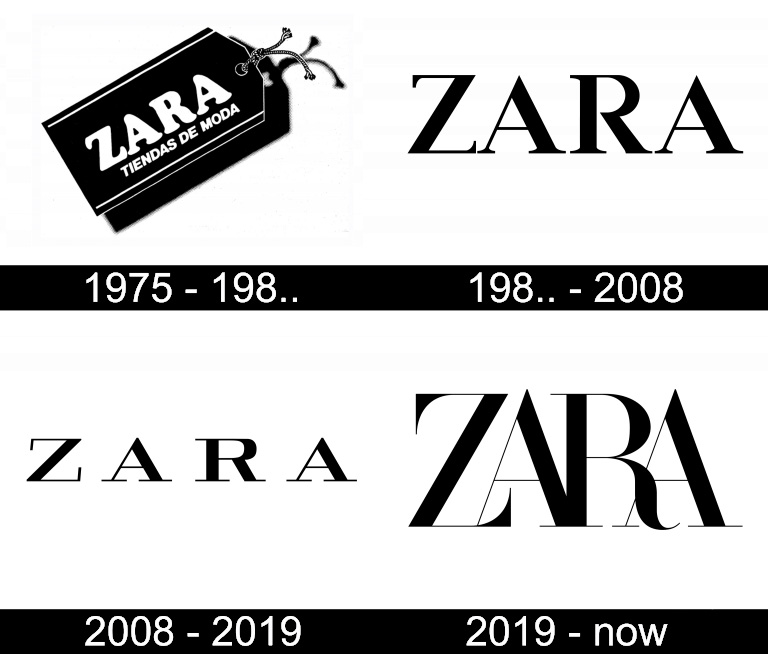
1975 – Late 1980s: Decorative Beginnings and Local Identity
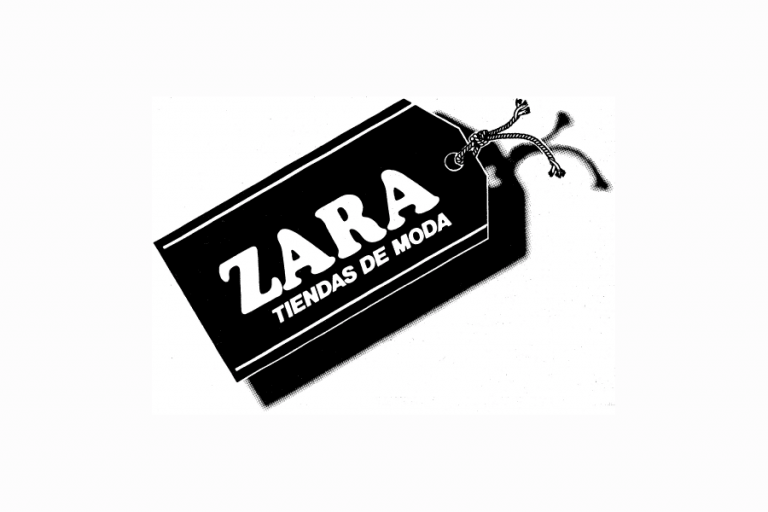
The very first Zara logo was introduced shortly after the brand’s founding in the mid-1970s. This early emblem was a diagonally oriented rectangular badge with two cut corners on the right side and a decorative knot element. Rendered in black with thin white stripes along the top and bottom, it featured a white serif wordmark and the tagline “Tiendas de Moda,” meaning “Fashion Stores.”
This logo reflected Zara’s early identity as a local fashion retailer. It was elegant but traditional, rooted in European retail aesthetics of the time. While visually distinctive, it lacked the universal minimalism that would later define Zara’s logo heritage.
Late 1980s – 2008: The Birth of the Iconic Serif Wordmark
As Zara expanded beyond Spain, the brand adopted a more refined and timeless identity. The decorative badge was abandoned in favor of a simple monochrome wordmark. The new logo featured the name “ZARA” in bold, uppercase serif letters.
The typeface was classic, balanced, and reminiscent of high-fashion editorial typography. Similar to fonts like TT Tsars Bold or Calmius Semi Bold, the lettering conveyed elegance and authority. This redesign marked a turning point in Zara logo history, establishing the visual language that would make the brand instantly recognizable worldwide.

2008 – 2019: Refinement and Increased Sophistication
In 2008, Zara subtly refined its logo without altering its core structure. The serif typeface remained, but letter spacing increased, and proportions were adjusted. The characters became squarer and more rigid, projecting confidence and maturity.
This version aligned perfectly with Zara’s evolution into a global fashion leader. The restrained typography emphasized timelessness, reinforcing the brand’s positioning between luxury aesthetics and mass accessibility. The changes were minimal, yet they significantly strengthened the logo’s presence.

2019 – Today: Contemporary Intertwining and Editorial Boldness
The most dramatic update in Zara logo history came in 2019. The brand introduced a custom serif typeface with tall, narrow letters that overlapped and intertwined at the bottom. The “R” gained a curved, elongated leg, creating a distinctive visual rhythm.
This redesign sparked discussion within the design community, but it unmistakably positioned Zara as editorial, fashion-forward, and bold. The monochrome palette remained unchanged, preserving continuity within Zara’s logo heritage while pushing its typographic expression into a more experimental space.
Zara Logo Symbolism
Unlike many fashion brands, Zara does not rely on symbols or icons. Its logo symbolism is entirely typographic. The four letters of the brand name carry all the visual weight, reinforcing Zara’s belief in simplicity and function.
This absence of a graphic symbol was a deliberate choice by Amancio Ortega. Rather than encoding meaning into an emblem, Zara allowed meaning to emerge through repetition, global presence, and consumer experience. Over time, the word “ZARA” itself became a symbol—of speed, trend awareness, and modern elegance.
Typography and Color
Typography is the cornerstone of Zara’s visual identity. Across decades, the brand consistently favored serif fonts associated with luxury fashion and editorial publishing. These typefaces communicate sophistication, authority, and timelessness, bridging the gap between high fashion and accessible retail.
The color palette is equally restrained. Zara relies almost exclusively on black and white. Black conveys elegance, power, and seriousness, while white ensures clarity and neutrality. This minimalist approach allows the logo to adapt seamlessly across storefronts, packaging, digital platforms, and international markets.
Zara and the Strength of Understated Logo Heritage
The Zara logo history demonstrates that strong branding does not require visual noise. Through disciplined restraint and typographic consistency, Zara built one of the most recognizable identities in global fashion.
Its logo heritage reflects the brand’s core values: efficiency, adaptability, and timeless style. In an industry driven by constant change, Zara’s visual identity stands as a reminder that simplicity, when executed with confidence, can become iconic.
Zara Logo FAQ
What does the Zara logo represent?
The Zara logo represents modern elegance and accessibility through a refined typographic wordmark.
Why doesn’t Zara use a symbol in its logo?
Zara deliberately chose a wordmark-only logo to keep the focus on fashion, fabrics, and silhouettes.
Has the Zara logo changed often?
No, the logo has evolved gradually, with major changes only in typography refinement.
Why is the Zara logo black and white?
The monochrome palette symbolizes elegance, neutrality, and timeless fashion.
Who designed the Zara logo?
The logo evolved internally under the brand’s creative direction, aligning with Zara’s minimalist philosophy.