
Tylenol Logo History: Meaning, Symbolism & Brand Heritage

Few pharmaceutical brands in the United States carry the same level of public trust and cultural recognition as Tylenol. Introduced in the mid-1950s, Tylenol gradually established itself as a household name not through aggressive branding, but through reliability, medical credibility, and an unwavering focus on consumer safety. Over decades, the brand has navigated medical innovation, public health crises, and changing consumer expectations, all while maintaining a remarkably consistent visual identity.
The Tylenol logo reflects this restrained and purposeful approach. Rather than relying on complex symbolism or frequent redesigns, the brand has built its logo heritage around clarity, visibility, and emotional reassurance. In this respect, Tylenol follows a branding philosophy similar to what can be observed in the Advil logo history and the long-standing consistency seen in the Bayer logo heritage, positioning itself firmly within the broader pharmaceutical brand logo history landscape.
Meaning and History: The Origin of the Tylenol Identity
Tylenol was introduced in 1955 by McNeil Laboratories, a family-owned pharmaceutical manufacturer based in the United States. The brand emerged during a period when aspirin dominated the pain relief market, yet concerns about aspirin’s side effects, particularly in children, created space for alternatives. Tylenol’s active ingredient, acetaminophen, offered effective pain and fever relief without many of the risks associated with aspirin, allowing the brand to carve out a distinct medical and commercial niche.
The origin of the Tylenol name itself is rooted in chemistry. Like the terms “paracetamol” and “acetaminophen,” Tylenol derives from the compound N-acetyl-para-aminophenol. This scientific foundation reinforced the brand’s early positioning as medically grounded and trustworthy. Ownership of the brand later passed to McNeil Consumer Healthcare, a subsidiary of Johnson & Johnson, further strengthening its association with institutional credibility and large-scale healthcare expertise.
One of the defining moments in Tylenol’s brand history occurred in 1982, when the company faced a major counterfeiting crisis. The brand’s response, which included introducing tamper-evident packaging and prioritizing consumer safety over short-term profit, became a landmark case study in crisis management. This event significantly reinforced the logo meaning of Tylenol as a symbol of responsibility, care, and ethical leadership within the pharmaceutical industry.
Tylenol Logo History Timeline
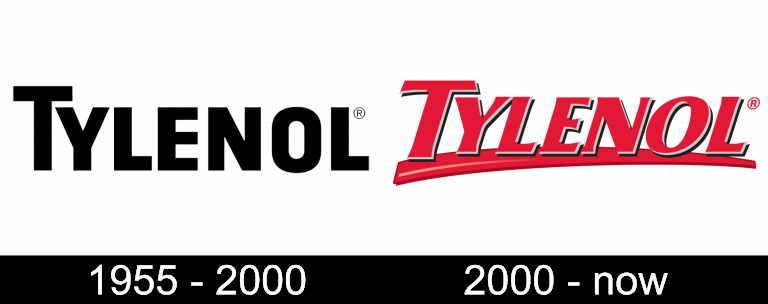
1955–2000: The Foundational Wordmark Era
The original Tylenol logo was a simple wordmark rendered in bold, sans-serif lettering. Typically displayed in black, the design communicated seriousness, medical authority, and restraint. During this period, the logo avoided decorative elements, aligning with the brand’s emphasis on efficacy and trust rather than emotional persuasion. This understated approach supported Tylenol’s early positioning as a clinically reliable medication rather than a lifestyle product.

2000–Today: The Red Wordmark and Modern Recognition
At the turn of the millennium, Tylenol introduced a refined version of its wordmark, adopting a vivid red color that has since become central to its visual identity. While the typography remained bold and straightforward, the color shift dramatically increased shelf visibility and instant recognition. This update did not alter the brand’s core structure but enhanced its emotional resonance, reinforcing the brand’s promise to combat pain and fever effectively.
Logo Symbolism: Strength, Urgency, and Care
The Tylenol logo symbolism is rooted in minimalism. As a pure wordmark, it relies on color and typography to communicate meaning rather than illustrative elements. The bold lettering conveys strength and dependability, while the red color introduces a sense of urgency aligned with the product’s purpose.
Red has long been associated with heat, pain, and intensity, making it a logical choice for a pain-relief medication. At the same time, its consistent use across decades has transformed it into a reassuring signal for consumers seeking fast and effective relief. The absence of additional symbols ensures that the logo remains timeless and adaptable across packaging, advertising, and medical contexts.
Typography and Color Palette
The Tylenol wordmark is set in a modern, heavy typeface with subtly flared terminals, giving the letters a distinctive yet professional appearance. This typographic choice balances approachability with authority, ensuring readability across small packaging and large-scale signage alike. Fonts similar to Columbia Serial Heavy Italic or Sigvar Serial Heavy Italic closely resemble the visual character of the logo.
The color palette centers on red, often paired with neutral gray tones. Red represents pain, fever, and urgency, directly reflecting the product’s function, while gray introduces balance, professionalism, and reliability. Together, these colors support a logo description that is both emotionally direct and medically grounded.
Tylenol Logo Heritage and Cultural Impact
Over time, the Tylenol logo has become deeply embedded in American healthcare culture. Its consistent appearance across generations has fostered long-term trust, making it one of the most recognizable pharmaceutical logos in the country. During public health challenges, including the COVID-19 pandemic, Tylenol reinforced its empathetic brand positioning through initiatives that supported healthcare workers and vulnerable communities.
Within the wider context of pain relief logo heritage and healthcare branding history, Tylenol stands as an example of how stability and ethical decision-making can strengthen brand equity. The logo’s endurance demonstrates that meaningful brand symbolism often emerges from consistent values rather than frequent visual reinvention.
Tylenol Logo Heritage: A Pharmaceutical Identity Built on Trust and Responsibility
The Tylenol logo history illustrates how a simple wordmark can evolve into a powerful symbol of care, safety, and reliability. From its origins in chemical nomenclature to its modern red identity, the logo has remained aligned with the brand’s core mission: effective pain relief delivered with integrity. Its enduring design and strong emotional associations secure Tylenol’s place as one of the most trusted names in pharmaceutical branding.
FAQ: Tylenol Logo Meaning and History
What does the Tylenol logo represent?
The Tylenol logo represents strength, reliability, and effective pain relief, communicated through bold typography and a distinctive red color.
Why is the Tylenol logo red?
Red symbolizes pain, heat, and urgency, aligning with the medication’s purpose to reduce fever and relieve discomfort.
Has the Tylenol logo changed over time?
Yes, but only modestly. The core wordmark has remained consistent since 1955, with the most notable change being the adoption of the red color in 2000.
Who owns the Tylenol brand?
Tylenol is owned by McNeil Consumer Healthcare, a subsidiary of Johnson & Johnson.