Shell Logo History: Meaning, Heritage & Symbol Explained

Few corporate symbols are as instantly recognizable—or as globally influential—as the bright red-and-yellow Shell emblem. It is a logo that transcends geography, language, and culture, signaling energy, innovation, and reliability across more than a century of history. But behind this simple scallop shell lies one of the richest logo histories in the modern corporate world.
This is the full story of the Shell logo—its origins, symbolism, transformations, and the powerful brand heritage that made it a benchmark in global design.
From Seashell Trading to an Energy Empire: How the Shell Name Began
Long before Shell became one of the world’s largest energy companies, it was rooted in a very different trade.
In the late 1800s, Marcus Samuel Sr., a London antiques dealer, imported decorative seashells from the Far East. These shells were in high demand in Victorian Europe, and Samuel built an impressive international trading business around them.
When his sons, Marcus Jr. and Samuel Samuel, ventured into exporting kerosene to Asia, they needed a name that reflected the company’s origins—but also felt distinctive, elegant, and global.
They chose Shell.
By 1897, the brothers founded The Shell Transport and Trading Company, and the name quickly transcended its humble origins. When the company merged with Royal Dutch Petroleum in 1907, the new entity became Royal Dutch Shell, though the world continued to call it simply “Shell.”
Few brands today have a name with such literal heritage embedded in its identity.
The Logo History of Shell: 120+ Years of Evolution
Shell’s logo has transformed from a simple black-and-white drawing to one of the most iconic silhouettes in modern branding. What remained constant is the company’s reliance on visual symbolism to express reliability, optimism, innovation, and global presence.
Below is a chronological dive into Shell’s logo heritage—from its earliest sketches to the Loewy masterpiece used today.

1900–1904: The First Shell Emblem
A Hand-Drawn Mussel Shell
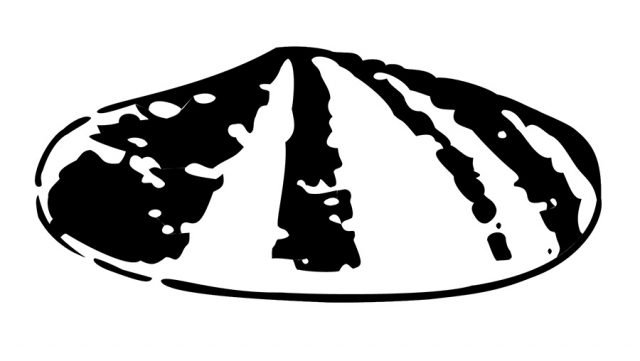
The very first logo, registered in 1900, depicted a horizontally-oriented mussel shell in monochrome. It was simplistic, slightly naïve, and lacked refinement—but it established the core symbol that would define the brand for generations.
This emblem was more literal than symbolic, reflecting the company’s trading roots rather than its future industrial power.
1904–1909: A More Detailed, Upright Shell
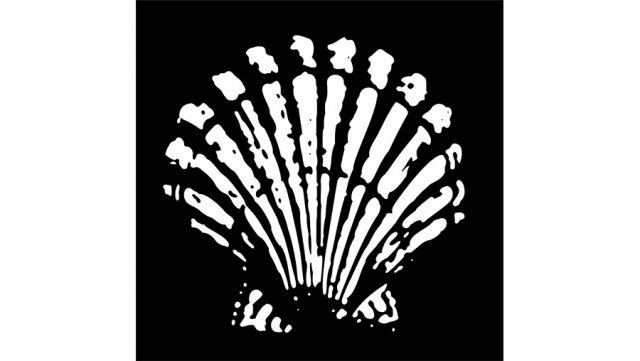
The 1904 redesign introduced an upright shell with richer line work, increased depth, and stronger visual presence. To add contrast, the logo was placed on a black background—an early attempt at consistency before corporate standards existed.
1909–1930: Cleaner Lines, Greater Confidence
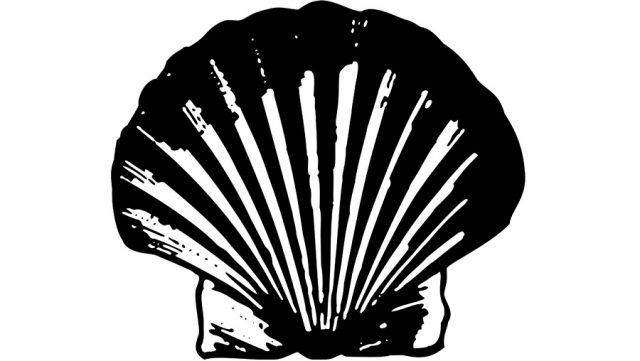
In 1909, Shell refined the emblem again, removing the dark background and simplifying the lines. The shell grew more structured and confident—reflecting Shell’s rapid expansion across continents as oil demand skyrocketed.
1930–1948: The First “Formal” Shell
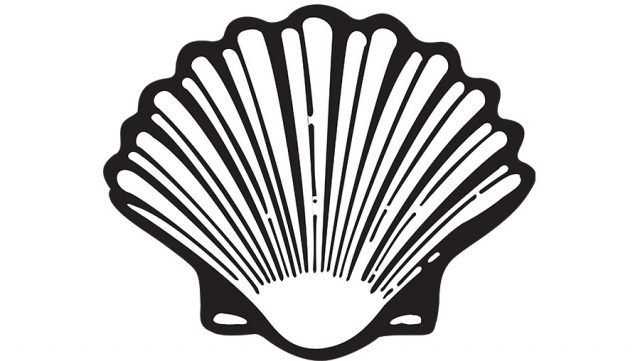
A major turn came in 1930, when Shell adopted a more geometric “pecten” (Latin for scallop) with stronger structure and symmetrical ribs. This was the first version that looks recognizably modern, and it appeared across packaging, stations, and fleet vehicles.
1948–1955: Enter the Red & Yellow Era + First Wordmark
In 1948, Shell introduced its now-legendary red-and-yellow color palette—a decision rooted in both strategy and cultural sensitivity.
Why these colors?
-
To stand out against Standard Oil, whose tanks were blue.
-
To respect California’s Spanish heritage, where Shell’s earliest service stations were built, adopting the colors of the Spanish flag.
-
To evoke optimism and warmth, aligning with Shell’s global ambitions.
This was also the first version to include the white “Shell” wordmark directly inside the emblem.

1955–1971: Simplification and Stronger Industrial Identity
Mid-century printing and signage technology required simpler graphics. Shell responded by:
– reducing the number of stripes,
– increasing geometric consistency,
– moving from white lettering to red lettering,
and introducing, in 1961, the red rectangular background that became a brand fixture for decades.
1971–Present: The Loewy Masterpiece
In 1971, world-renowned industrial designer Raymond Loewy—often called “the father of industrial design”—created what is still considered one of the greatest corporate logo redesigns in history.
Loewy crafted:
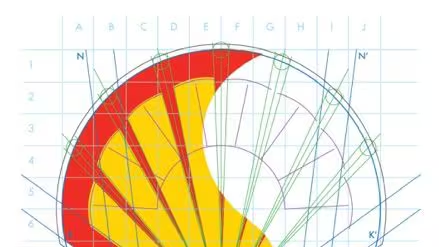
– a perfectly balanced, mathematically structured shell,
– with softer curves and precise geometric symmetry,
– the yellow shell framed by a bold red outline,
– and a separate wordmark placed underneath in a custom typeface.
This design has endured for more than 50 years with minimal changes—a testament to its timelessness.
In the early 1990s, Shell updated the yellows and reds to warmer tones, softening the visual impact and modernizing the aesthetic.
Few logos in global business retain this level of consistency.

Why the Shell Logo Looks the Way It Does
Beyond visual appeal, every detail of the Shell emblem carries historical meaning.
A Tribute to the Company’s Roots
The shell symbol directly references Marcus Samuel’s original seashell trading business. It’s a rare case where a brand’s earliest entrepreneurial chapter remains permanently encoded in its logo.
Colors With Cultural Heritage
Red and yellow came from:
– maritime signal flags,
– the Spanish heritage of early California,
– and a desire to stand apart from competitors like Standard Oil.
The palette is energetic, warm, and universal—perfect for a global consumer brand.
The Scallop Shape (Pecten)
The specific shell species chosen—the pecten—is symmetrical, graphic, and instantly recognizable, making it ideal for a bold corporate mark.
Shell’s Logo in the Digital & Experiential Era
As the world shifted toward digital interfaces and fast global communication, Shell’s logo proved remarkably future-proof.
Minimal, bold shape → works on screens and mobile apps
High-contrast palette → maintains recognition from afar
Mathematical symmetry → fits any format without distortion
Most importantly, Shell expanded its brand identity in innovative ways:
2015: The Sound of Shell
In 2015, Shell introduced a sonic logo—a rising orchestral signature designed to be as recognizable as the visual emblem. It’s used across advertising, digital content, and global events.
This represents a new frontier in multisensory brand identity, showing how a century-old brand evolves in a modern storytelling environment.
Logo Heritage Lessons from Shell
The Shell logo’s evolution is one of the most instructive branding stories in corporate history. It demonstrates that:
Consistency builds global recognition.
Shell changed its logo many times, but never abandoned the shell symbol.
Color can become brand equity.
Red and yellow are now inseparable from Shell’s identity.
Timeless design requires simplicity.
Loewy’s minimalist approach made the logo future-proof.
Brand heritage is a strategic asset.
Shell embraced its origins instead of discarding them—creating a narrative competitors couldn’t imitate.
A Century of Design, Distilled Into One Icon
The Shell logo is more than a corporate symbol—it’s a piece of living design history. From Victorian seashell trading to global energy leadership, the emblem carries the full heritage of a brand that shaped the modern world.
Its evolution illustrates how thoughtful design, cultural awareness, and strategic consistency can transform a simple drawing into one of the strongest visual identities ever created.
Shell’s scallop isn’t just a logo.
It’s a legacy.
FAQ — Shell Logo
Why is the Shell logo shaped like a scallop shell rather than another type of shell?
Because the scallop (pecten) offered strong symmetry and bold geometry, making it highly legible on fuel pumps, tankers, and signage—even from far distances.
Is the Shell logo the same worldwide?
Yes. While minor variations exist for digital contexts, the core Loewy emblem is standardized globally, ensuring instant recognition across continents.
Does Shell still use the wordmark with its logo?
Not officially. The standalone shell has become so recognizable that the brand name is often unnecessary—an elite status shared only by logos like Apple and Nike.
How accurate is the modern Shell logo to Loewy’s 1971 design?
Nearly identical. Only color temperature adjustments and minor refinements were made in the 1990s.
What inspired the modern Shell colors?
Warm yellow and strong red were chosen to honor early California–Spain cultural ties and to differentiate the brand from competitors using blue palettes.