Samsung Logo History: Heritage, Meaning & Evolution
Few technology brands have experienced a transformation as dramatic and enduring as Samsung. From its early days as a small Korean trading company founded in 1938 by Lee Byung-chul, to its rise as one of the most powerful global tech giants, Samsung has repeatedly reinvented itself.
Throughout this evolution, the Samsung logo has quietly mirrored the company’s journey — shifting from tradition to modernism, from national symbolism to global minimalism.
Today, Samsung’s wordmark is instantly recognizable, a symbol of trust, innovation, and technological ambition. But behind this simple blue identity lies one of the richest logo heritages in the technology sector, shaped by cultural symbolism, strategic branding, and decades of reinvention.
Meaning and History
Samsung began not as an electronics company but as a trading business dealing in groceries, rice, and noodles. The name “Samsung,” meaning “Three Stars”, reflected Lee Byung-chul’s aspirations for longevity, brilliance, and greatness.
These aspirations were expressed literally in the brand’s earliest logos, which incorporated three stars surrounded by agricultural symbols, capturing both Korea’s culture and Samsung’s humble origins.
By the 1960s, Samsung shifted into electronics, marking the beginning of a new era. As the company expanded into TVs, telecom, appliances, and semiconductors, its identity evolved dramatically. Over the decades, Samsung’s logo changed from a traditional Korean emblem to a functional wordmark, then to a corporate symbol, and finally into the modern blue identity recognized worldwide.
Samsung’s logo history is not merely about design changes — it reflects the company’s shifting philosophy, technological ambition, and global expansion.
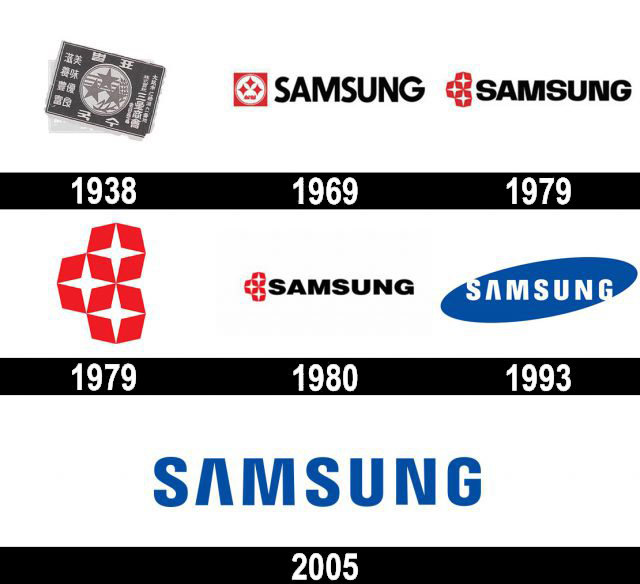
Samsung Logo History: Evolution Through the Years
1938: The Traditional Emblem
Samsung’s first logo resembled a formal Korean seal. Circular, intricate, and symbolic, it contained Hangul characters, rice stalks, stripes, and the famous three stars.
Each star represented greatness and abundance. This emblem communicated heritage, prosperity, and the founder’s vision of a company built to last.

1950s–1970s: Simplicity for a Growing Industry
As Samsung expanded into textiles, food processing, and manufacturing, the logo became more functional. The dense traditional emblem was replaced with a clean sans-serif wordmark.
It wasn’t elegant, but it was practical — a reflection of an industrial company preparing for growth.
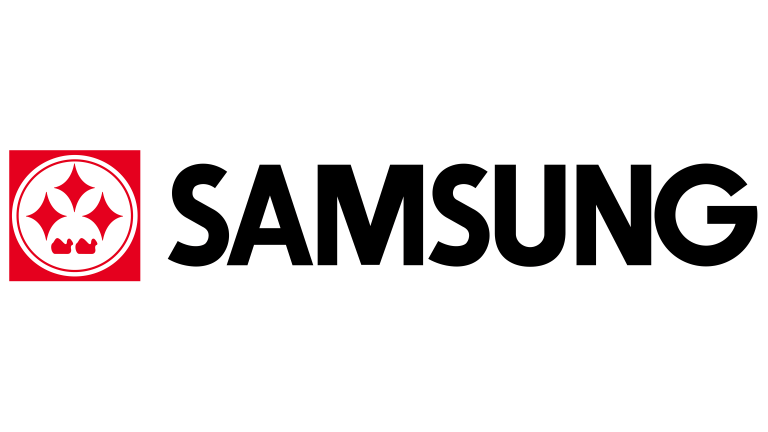
1969: The Electronics Era
With Samsung Electronics established, the brand embraced a sturdier, more mechanical typeface. This version felt industrial and technical, appropriate for the launch of Samsung’s first black-and-white televisions and early electronic components.
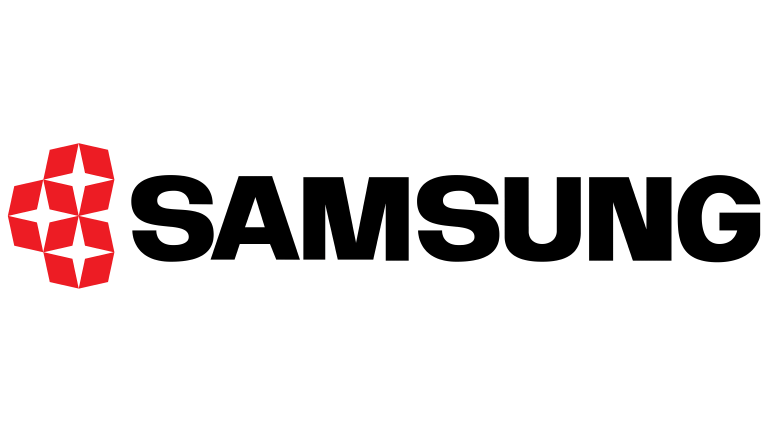
1979–1980: Sharpened Modernity
During the late 1970s and into 1980, Samsung refined the three-star emblem, removing the circular frame and introducing sharper, more contemporary shapes. The stars became the primary symbol, accompanied by a bolder wordmark.

1980s–Early 1990s: The Blue Box Identity
Entering global markets and expanding into telecom and appliances, Samsung adopted a boxy blue logo. Solid, corporate, and confident, this version communicated stability and ambition.
Blue became a defining part of Samsung’s brand identity — symbolizing trust, intelligence, and technological precision.
1993: The Global Ellipse
The turning point came in 1993, when Samsung introduced a smooth blue ellipse carrying bold white lettering.
Two letters, the “S” and the “G,” extended beyond the oval — a deliberate design choice symbolizing innovation beyond boundaries.
This emblem was part of an ambitious global rebranding that aligned Samsung with international quality standards and positioned the company as a forward-thinking leader.
The ellipse subtly evoked a globe, reinforcing Samsung’s global ambitions. This was the logo that carried Samsung into the era of mobile phones, flat-screen TVs, and semiconductor dominance.
2005–Today: Modern Minimalism
By 2005, Samsung began phasing out the ellipse in many contexts, opting for a sleek, standalone wordmark in Samsung Blue.
This version is minimalist, scalable, and adaptable to screens of all sizes — perfect for the digital age. Today, Samsung uses both the ellipse (as a heritage symbol) and the clean wordmark, depending on the product and branding context.
Samsung Brand Symbolism
The meaning of the Samsung logo is rooted in the company’s name:
-
Sam = “three” (symbolizing greatness, strength, multiplicity)
-
Sung = “stars” (symbolizing success, brilliance, eternity)
The original three-star imagery reflected this directly.
Even though the stars no longer appear in the modern logo, the symbolism remains part of Samsung’s brand heritage — a reminder of its early ambitions and its enduring presence in global technology.
Samsung’s emphasis on blue reinforces values such as trust, intelligence, and innovation. White lettering creates balance and calm, aligning the visual identity with Samsung’s product philosophy: intuitive, clean, and reliable.
Typography and Design
Samsung’s modern typography blends elements of Helvetica Black and DDT Condensed, customized for clarity and performance.
Its most recognizable feature is the stylized “A” without a horizontal bar, a visual signature introduced in the 1993 rebranding.
This “A” symbolizes openness, movement, and continuous innovation — core values of Samsung’s brand.
Spacing between letters is carefully balanced to enhance readability across any surface, from smartphones to stadium signage.
Color and Visual Identity
Samsung’s signature blue — often called Samsung Blue — has been central to the brand since the 1960s.
The color communicates reliability and technical precision, while maintaining visual harmony across everything from packaging to UI elements.
In some contexts, Samsung uses monochrome or white variations, but the essence always remains unmistakably Samsung.
Samsung Galaxy Logo
The Samsung Galaxy product line debuted in 2009, and its logo reflects a blend of Samsung’s classic wordmark and a distinct typeface for the word “Galaxy.”
The design is modern, streamlined, and in sync with Samsung’s emphasis on sleek hardware design and software innovation.

Audio Branding: The Samsung Sound Logo
Samsung is one of the few technology companies with a proprietary audio logo, composed by Austrian artist Walter Werzowa.
The four-note sound sequence — E♭, A♭, D♭, E♭ — is simple yet memorable, acting as an auditory counterpart to the visual brand.
FAQ
What does the Samsung logo symbolize?
It symbolizes trust, innovation, and global ambition. The name “Samsung” means “three stars,” representing greatness and longevity.
Who designed the current Samsung logo?
The major rebranding of 1993 was led by Landor Associates, with further refinements made by Samsung’s internal design teams.
Why is the Samsung logo blue?
Blue conveys trust, intelligence, and dependability — ideal qualities for a global tech brand.
What was Samsung’s first logo?
A circular emblem with Korean characters, rice stalks, and three stars, reflecting Korea’s culture and Samsung’s agricultural origins.
Has the Samsung logo changed recently?
The last major update occurred in 2005, when Samsung began using the wordmark without the ellipse.
5 Facts About Samsung You Probably Didn’t Know
1. Samsung started out selling groceries, dried fish, and rice liquor before ever touching electronics.
2. The company name “Samsung” was inspired by the founder’s three sons — another interpretation of “Three Stars.”
3. Samsung built one of the world’s first black-and-white TVs in the late 1960s, long before entering the mobile market.
4. The Samsung Galaxy series became one of the world’s most successful smartphone lines, reshaping the Android ecosystem.
5. Samsung owns one of the most recognizable audio logos in tech — a rare asset for consumer electronics brands.