N64 Logo: The Four-N Cube and the Ultra 64 That Wasn’t
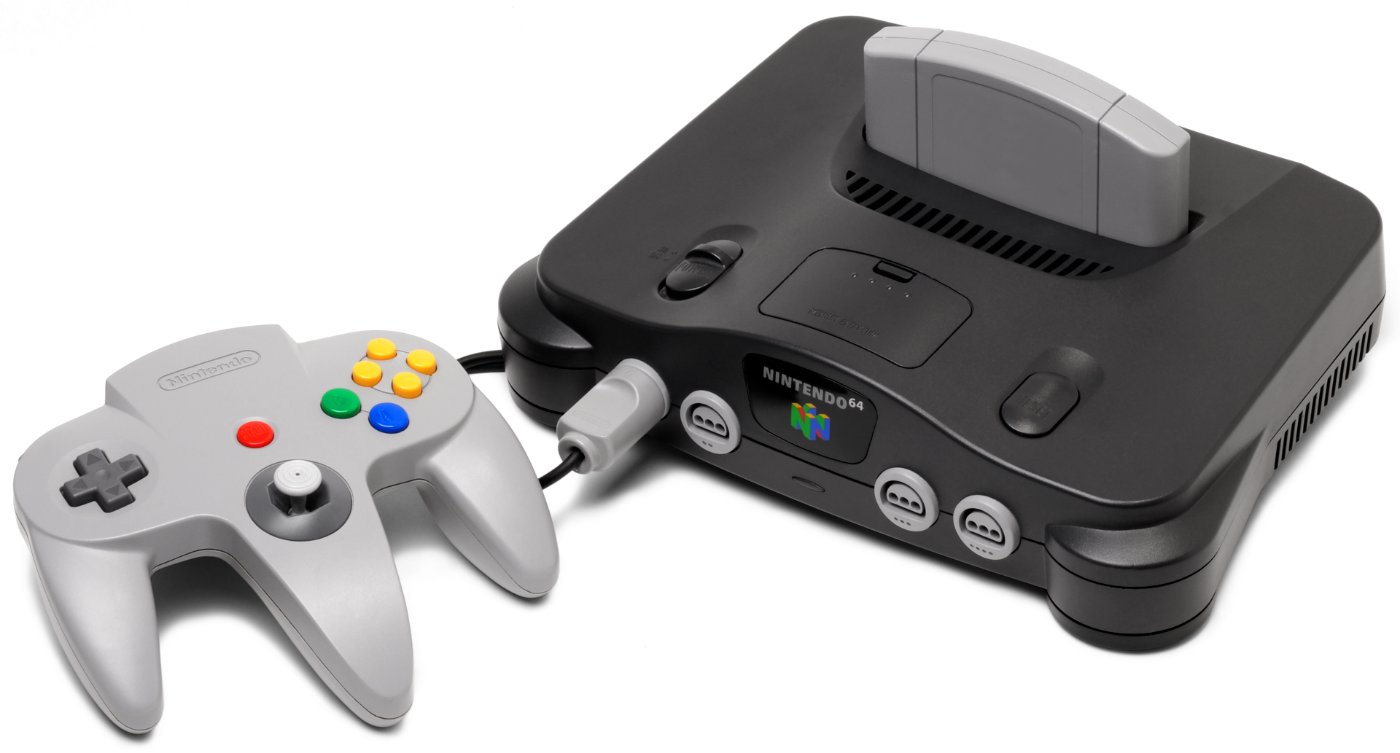
The Nintendo 64 logo is a puzzle you can hold in your head: four capital N’s, each a different color, folded together into a single cube. It appeared on the console’s lid, on every cartridge label and at the start of hundreds of games after the system launched in Japan on June 23, 1996, and in North America that September at $199.99.
It nearly looked very different. Before launch, the console was called Ultra 64, and Nintendo of America had hired an outside agency to brand it under that name. The cube that shipped instead had its own quirk: plenty of game intros colored it wrong.
Why is the N64 logo a cube?
The N64 was Nintendo’s first home console built around 3D graphics, developed with Silicon Graphics under the codename Project Reality. A flat logo would have undersold that, so the emblem is a 3D object: four N-shaped blocks in red, green, blue and yellow, interlocked so that together they form a cube. Seen from the standard angle, the shape reads as an “N” whichever face you look at.
The cube also gave the system its own symbol apart from the red Nintendo wordmark covered in our Nintendo logo history. The Super Nintendo had used a long wordmark; the N64 had a mark that could spin in 3D on a title screen, which developers loved to do.
What was the Ultra 64 logo?
At the June 1994 Consumer Electronics Show, Nintendo announced the console as the Ultra 64. Nintendo of America commissioned a visual identity for that name from Tim Girvin and his Seattle agency, Girvin. In a 2026 interview with Creative Review for the console’s 30th anniversary, Girvin said Nintendo picked another direction: “We lost,” he said, while still arguing that his team’s design system was better.
The Ultra name was dropped before release. Rumors blamed a clash with Konami’s Ultra Games label, which Nintendo denied, saying it wanted a single worldwide brand. The final name, Nintendo 64, was suggested by Shigesato Itoi, the writer behind EarthBound. The old name lives on in the hardware model prefix “NUS,” widely believed to stand for “Nintendo Ultra Sixty-four.” Nintendo has not publicly credited the designer of the final cube.

What is the mistake in the N64 logo?
Because the cube is a solid 3D object, one of the four N’s has a face that you never see in the official artwork. When developers built animated logos for their game intros, they had to guess what color that hidden face should be, and many guessed wrong. Creative Bloq has pointed out mismatched color schemes in spinning N64 logos in games as different as Earthworm Jim 3D and Rare’s Banjo-Kazooie. The official flat artwork is consistent; the problems appear once the cube starts rotating.
Which games are most linked to the N64 logo?
Super Mario 64 was the launch game and the system’s best seller at about 11.9 million copies. Mario Kart 64, GoldenEye 007, The Legend of Zelda: Ocarina of Time, Donkey Kong 64 and the first Super Smash Bros. all opened with the cube. Many of these games put a “64” in their own titles, so the number became part of the era’s look as much as the cube itself.
How did the N64 sell?
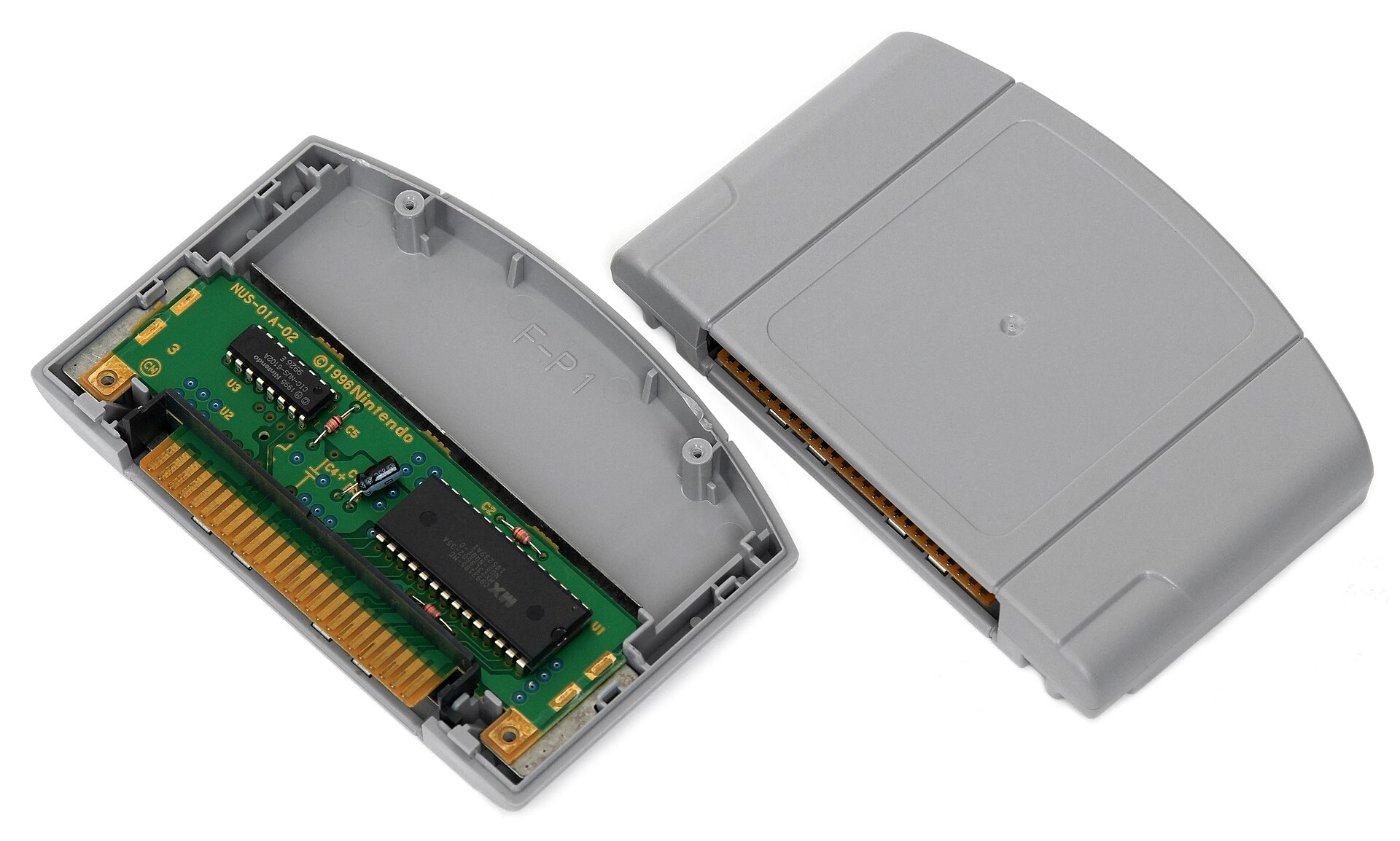
The Nintendo 64 sold 32.93 million units worldwide, about 20.63 million of them in the Americas. It finished well behind Sony’s PlayStation, partly because Nintendo kept cartridges instead of moving to CDs. Cartridges loaded quickly and were harder to pirate, but they were expensive to make and held far less data, and several third-party publishers moved to PlayStation as a result. N64 games have since returned through the Nintendo Switch Online Expansion Pack, introducing the system to a new generation of players.
Quick facts
| Console | Nintendo 64 (N64) |
| Codenames | Project Reality, then Ultra 64 |
| Name suggested by | Shigesato Itoi |
| Launch | June 23, 1996 (Japan); September 1996 (North America); March 1, 1997 (Europe) |
| Logo | Cube of four interlocking N’s in red, green, blue and yellow |
| Rejected identity | Ultra 64 branding by Girvin, Seattle |
| Units sold | 32.93 million |
| Best-selling game | Super Mario 64 (about 11.9 million) |