
Milka Logo History: Meaning, Symbolism & Brand Heritage

Few chocolate brands possess a visual identity as instantly recognizable as Milka. Born in Switzerland in 1901 and wrapped in its iconic lilac packaging, Milka has grown from a regional confection to one of the world’s most cherished chocolate labels. Today part of Mondelēz International, the brand continues to embody a uniquely European blend of tradition, craftsmanship, and emotional warmth. Its logo—soft, flowing, and unmistakably tender—captures the meaning and symbolism of a chocolate that has long marketed itself on creaminess, Alpine purity, and gentle indulgence.
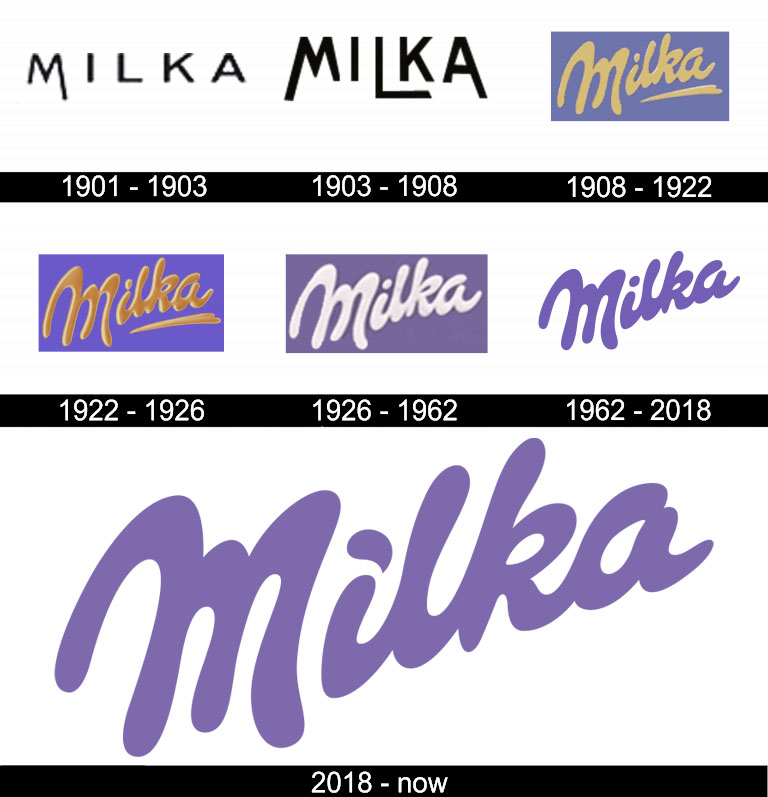
Milka’s visual heritage tells the story of a brand that understood early on the power of color and typography in shaping consumer memory. From the first minimalist wordmarks of the early 1900s to the now-iconic lilac script introduced mid-century, each iteration reflects shifts in branding philosophy, printing technology, and cultural tastes. The Milka logo’s history is ultimately a tale of refinement: the gradual embrace of softness, emotion, and narrative, culminating in one of the most distinctive identities in confectionery.
Milka Meaning and Symbolism
The Milka logo is deeply symbolic of softness, purity, and sweetness. Its defining feature—the flowing script—evokes smooth, melted chocolate and rich Alpine milk. The gentle curves of the letters mirror the creamy texture that Milka is celebrated for, while the lilac color serves as a visual signature unlike any other in the industry.
Lilac, a shade rarely used in food branding, conveys sophistication, delicacy, and emotional calm. It suggests a product that is comforting rather than loud, refined rather than aggressive. In combination with Alpine imagery and the brand’s famous lilac cow, the logo symbolizes freshness, natural origins, and a connection to the mountains of Europe.
Milka Brand Heritage
Milka’s heritage is rooted in the Swiss tradition of chocolate-making excellence. When the first Milka bar debuted in 1901 in lilac wrapping, it represented an innovative step in packaging and identity design. Over time, Milka became synonymous with Alpine-quality milk, emotional marketing, and gentle visual storytelling. The brand name itself is an early example of portmanteau branding—derived from “Milch” (milk) and “Kakao” (cacao)—a subtle linguistic nod to product purity.
Throughout the 20th century, Milka grew across Europe while retaining its unmistakable identity. The introduction of Lila, the lilac cow, in 1973, further anchored the brand’s personality, blending charm with authenticity. Even as production expanded internationally under Mondelēz International, Milka preserved the core elements of its visual heritage: lilac, script, Alps, and softness.
Milka Logo History & Evolution Timeline
1901 – 1903: A Minimalist Beginning
The first Milka logo was surprisingly modern for its era. A stark, uppercase sans-serif wordmark in black established a clean, confident identity. The right leg of the “M” extended longer than the others, giving the otherwise simple design a subtle distinction. This early emblem spoke to Swiss precision and emerging industrial branding trends.
1903 – 1908: Refined Proportions, Less Uniqueness
The redesign of 1903 introduced taller, narrower characters with bolder lines. The elongated strokes shifted from the “M” to other letters such as the “A” and “L,” creating a mirrored start-and-end effect. While more polished, the wordmark lost some of the unique asymmetry that made the original visually memorable.
1908 – 1922: The Birth of the Signature Script
In 1908, Milka made a significant shift toward the identity that would define the brand for generations. The new logo featured a flowing golden handwritten wordmark placed across a lilac panel. This soft script—warm, elegant, and expressive—captured the emotional and sensory qualities of Milka chocolate.
1922 – 1926: Depth, Gloss, and Refined Lilac
The 1922 update deepened both the gold tones of the lettering and the lilac background. A glossy, dimensional effect was added, giving the script greater visual richness. The lilac shade became more saturated, helping Milka stand out unmistakably on store shelves.
1926 – 1962: Clean White Script and New Professionalism
In 1926, the logo transitioned to a simple white script, replacing the earlier gold tones. The contours were softened and refined for clarity. This version balanced elegance with modernity, setting the stage for Milka’s rise as a major European chocolate brand.
1962 – 2018: The Iconic Script Takes Center Stage
The 1962 redesign is one of the most important in Milka’s history. The script wordmark—now smoother, more fluid, and evocative of milk—became the dominant visual element. The packaging continued to feature lilac backgrounds, and the brand reinforced its Alpine symbolism through mountains and pastoral imagery.
During this period, consumers frequently saw “Suchard’s” in gold script above the Milka name, referencing Philippe Suchard, the chocolatier whose legacy shaped the brand. Eventually, Milka embraced a cleaner look, eliminating this reference but preserving the soft script identity.

2018 – Today: Subtle Regional Refinements
In 2018, Milka introduced slight variations in Germany and Austria. The overall script remained intact, but key details changed upon close inspection. The dot above the “i” became a drop, emphasizing the milk connection, while the “a” acquired a wider internal gap. These nuanced refinements sharpen the logo without sacrificing its heritage.
Cow and Mountains: Milka’s Enduring Symbols
Milka’s visual identity extends beyond typography. The lilac cow—introduced in 1973 and known as Lila—has become one of Europe’s most recognizable mascots. Representing the Simmental breed, Lila symbolizes purity, Alpine farming, and superior milk quality.
The stylized white mountains in Milka’s imagery reinforce this Alpine origin story. They communicate authenticity, natural ingredients, and a connection to Switzerland’s chocolate-making tradition. Together, the cow and mountains serve as living symbols of Milka’s meaning and heritage.
Typography and Color
Milka’s script is a custom, hand-drawn typeface with no exact commercial equivalent. The closest relatives include Notera 2 Black or Genty Regular, but the official lettering features much softer contours and unique flourishes. Its curves and flowing lines reflect the creamy, gentle texture of the chocolate itself.
The lilac color palette is equally significant. Lilac is rare in food branding, making Milka immediately identifiable. The shade conveys tenderness, elegance, and emotional calm—perfectly aligned with the brand’s promise of soft, smooth chocolate. White lettering reinforces this softness while adding clarity and balance.
The Enduring Symbolism of the Milka Logo
The Milka logo is a masterclass in visual storytelling. Its evolution from stark typography to warm, flowing script mirrors the brand’s journey from early industrial chocolate-making to global emotional branding. Lilac packaging, Alpine imagery, and the beloved Lila cow combine to create a heritage-rich identity recognized and trusted around the world.
More than a wordmark, the Milka logo communicates origin, craft, and tenderness. It stands as one of the most distinctive and enduring brand identities in the history of confectionery.
Milka Logo FAQ
What does the Milka logo symbolize?
It symbolizes softness, Alpine purity, and creamy chocolate through its flowing script and lilac color.
Why is Milka purple?
Lilac was adopted to create a distinct identity and evoke elegance, tenderness, and emotional comfort.
What does the name “Milka” mean?
It is a combination of “Milch” (milk) and “Kakao” (cacao), highlighting the core ingredients.
Who owns Milka today?
Milka is part of Mondelēz International, which produces the brand for global markets.
When was the Milka cow first introduced?
The famous purple cow, Lila, debuted in 1973 and has appeared in hundreds of advertisements since.