Lane Bryant Logo and the Spelling Mistake Behind the Name

Lane Bryant’s name is a mistake. In 1904 a young widow called Lena Bryant went to a New York bank to open an account, and the clerk wrote “Lane” instead of “Lena.” She kept it. More than 120 years later that misspelled name is on the front of the largest plus-size women’s clothing chain in the United States, and the logo has been redrawn several times as the company moved from maternity dresses to a mall brand built around body confidence.
What does the Lane Bryant logo look like today?
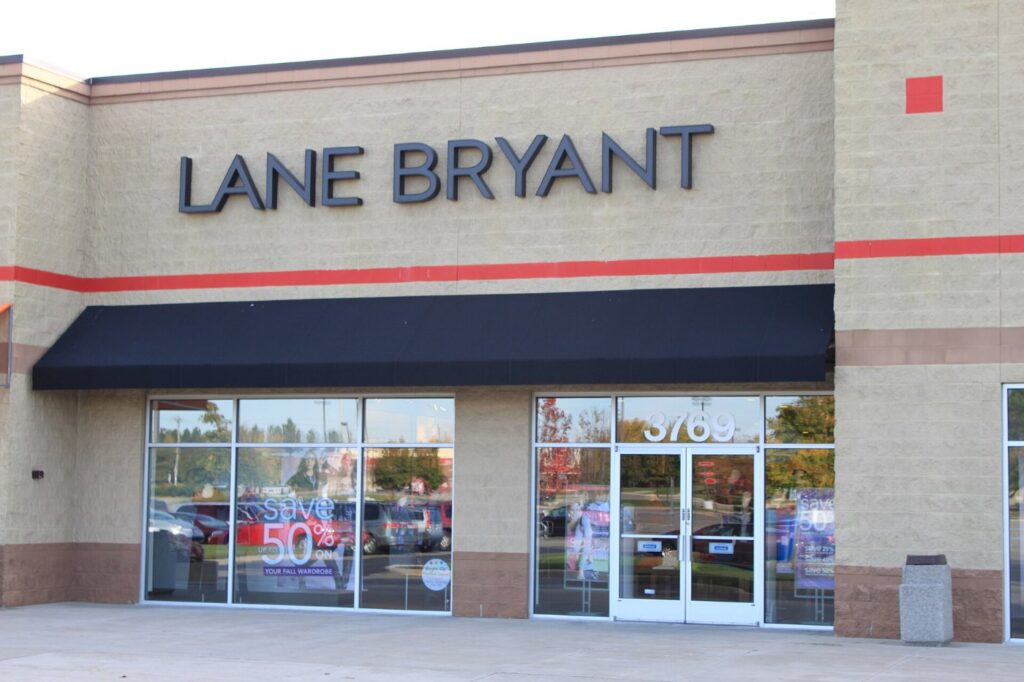
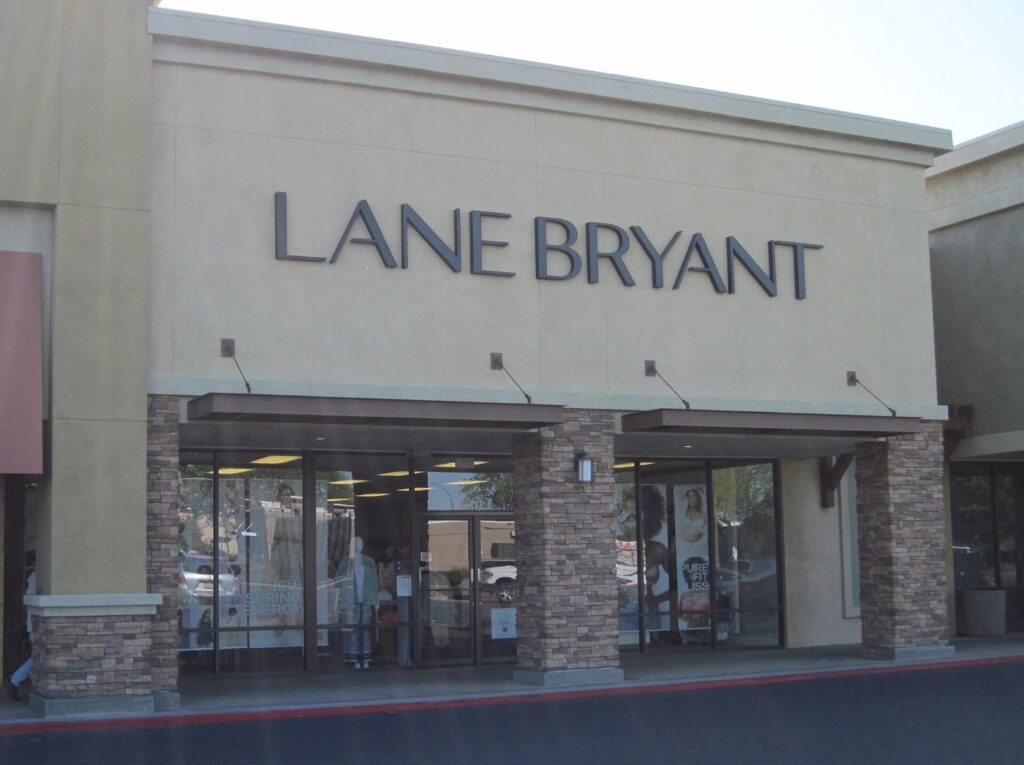
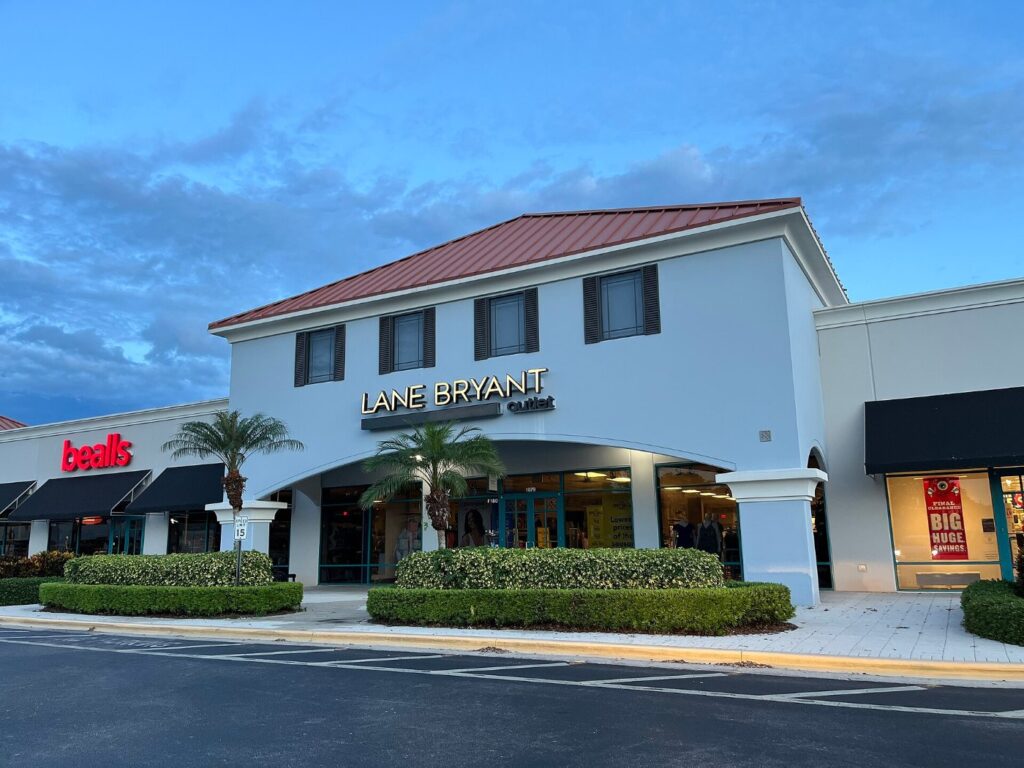
Since 2014 Lane Bryant has used an all-capitals wordmark, LANE BRYANT, in a custom sans-serif. The letters are wide and mostly straight, with sharp points at the tops of the two N’s and a shortened bar on the A’s. It is almost always black on white, or white on a black panel above the shop door. For small spaces such as the website tab and app icon, the company uses an LB monogram.
The black-and-white look was a deliberate move. Earlier logos had used colour and script lettering that felt softer and more traditional. The new wordmark was soon followed by the #ImNoAngel advertising campaign of 2015, which openly took on the lingerie brand Victoria’s Secret, and the plain, confident lettering matched that tone: a fashion label rather than a speciality store hiding at the end of the mall.
How has the Lane Bryant logo changed over time?
For most of the twentieth century, the company used a simple serif wordmark of the full name. Logo archives describe a heavier version, with a long tail on the R, used into the 1970s and a lighter, cleaner version that lasted until 2009. Then came a run of quick changes:
- 2009 to 2011: a lower-case wordmark with the two words joined, one light and one bold, so the name read as a single word.
- 2011 to 2014: “Lane” in a flowing script next to “Bryant” in the older serif style, printed in colour.
- 2014 to today: the all-capitals black sans-serif described above.
Three logos in about five years is a lot for a retailer of this size, and it tracks the ownership changes of the time, from Charming Shoppes to Ascena Retail Group in 2012.
Who was Lena Bryant?
Lena Himmelstein was born in Lithuania and arrived in the United States as a teenager. Widowed young, she supported herself and her son as a dressmaker. In 1904 she rented a small shop on Fifth Avenue in Manhattan, with her living space in the back, for $12.50 a month.
One of her customers was pregnant and wanted something “presentable but comfortable” to wear in public. Bryant made her a dress with an elastic waistband and a pleated skirt, which is regarded as the first commercially made maternity dress. It became the best seller in the shop. Newspapers at the time would not run advertisements that mentioned pregnancy, so the business grew through word of mouth until 1911, when her second husband, Albert Malsin, persuaded the New York Herald to carry an ad. The shop’s stock sold out the next day.
How did Lane Bryant become a plus-size brand?
Around the time of the First World War, Bryant noticed that no one was mass-producing clothes for larger women. The company measured thousands of its own customers and used data on about 200,000 women to work out standard fits for fuller figures. Clothing in “stout” sizes soon outsold the maternity line, and by 1923 sales had reached about $5 million.
Lane Bryant also built one of the early mail-order catalogues, which suited customers who preferred privacy. The first branch store opened in Chicago in 1915, and the company became known for unusually generous staff benefits, including profit sharing and pensions, long before they were common. Lena Bryant Malsin died in 1951, and her sons took over.
Who owns Lane Bryant now?
The company passed through several owners. Leslie Wexner’s The Limited bought the stores in 1982. Charming Shoppes, owner of Fashion Bug and Catherines, bought Lane Bryant in 1999 for $335 million, and Ascena Retail Group, the parent of Dressbarn, acquired Charming Shoppes in 2012 for about $900 million. Ascena filed for bankruptcy in July 2020, and in December 2020 Lane Bryant, Ann Taylor and Loft were sold for $540 million to an affiliate of the private equity firm Sycamore Partners. Today Lane Bryant belongs to KnitWell Group, Sycamore’s women’s clothing company, which also runs Ann Taylor, Loft and Talbots.
The separate Lane Bryant catalogue business was spun off in 1993 as Brylane. The chain had around 450 stores in 46 states in 2022 and celebrated its 120th anniversary in 2024. Its Cacique label covers lingerie and swimwear.
How does Lane Bryant’s logo compare with other American mall brands?
Lane Bryant’s switch to stark black capitals followed a wider trend in American mall fashion. Abercrombie & Fitch and Hollister both cleaned up their wordmarks in the 2010s, and Gap learned in 2010 how strongly shoppers can react when a familiar logo is replaced. Lane Bryant’s own lingerie rival, Victoria’s Secret, kept its classic serif capitals, which is partly why the #ImNoAngel campaign put the two brands side by side so directly. Value chains like Old Navy have also widened their size ranges. Department stores such as Macy’s and Nordstrom now stock more extended sizes, so a clear, modern name over the door matters more for Lane Bryant than it did when it was the only option.
Quick facts
| Founded | 1904, Fifth Avenue, New York City |
| Founder | Lena Himmelstein Bryant Malsin |
| Name origin | A bank clerk misspelled “Lena” as “Lane” |
| First product | Ready-made maternity dress |
| Logo | All-capitals black LANE BRYANT wordmark (since 2014), LB monogram |
| Earlier logos | Serif wordmarks; lower-case joined name (2009); script “Lane” (2011) |
| Owner | KnitWell Group (Sycamore Partners) |
| Sister brand | Cacique (lingerie and swim) |