Kappa Logo: The Omini Back-to-Back Figures
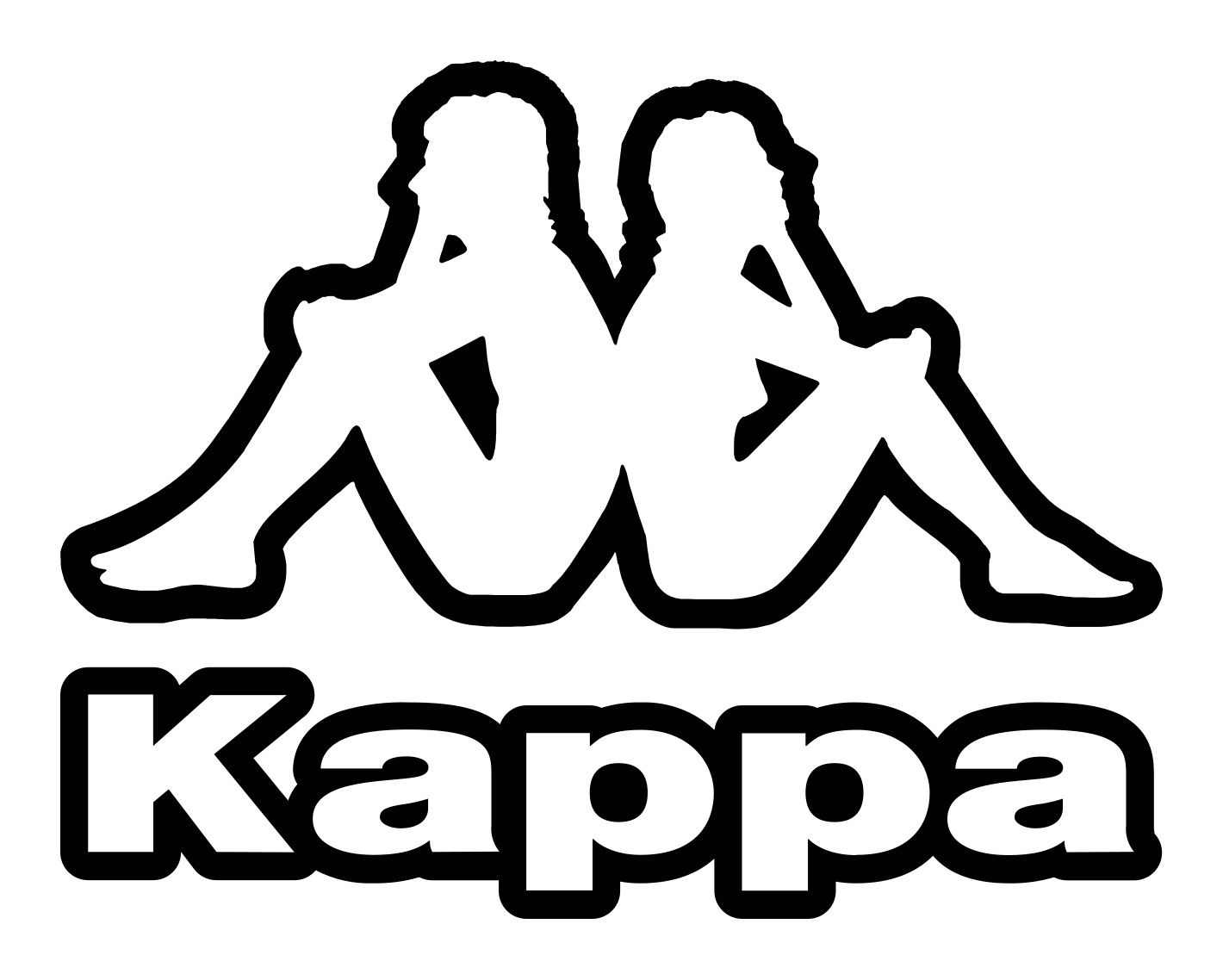
Kappa’s logo is one of the few sportswear marks that shows people rather than shapes: a man and a woman sitting back to back, their silhouettes forming a mirror image. Known in Italy as the “Omini”, the little people, the emblem has appeared on football shirts, tracksuits and popper trousers since the late 1960s, and it began, according to the brand’s own story, with a lucky accident during a photo shoot.
What does the Kappa logo mean?
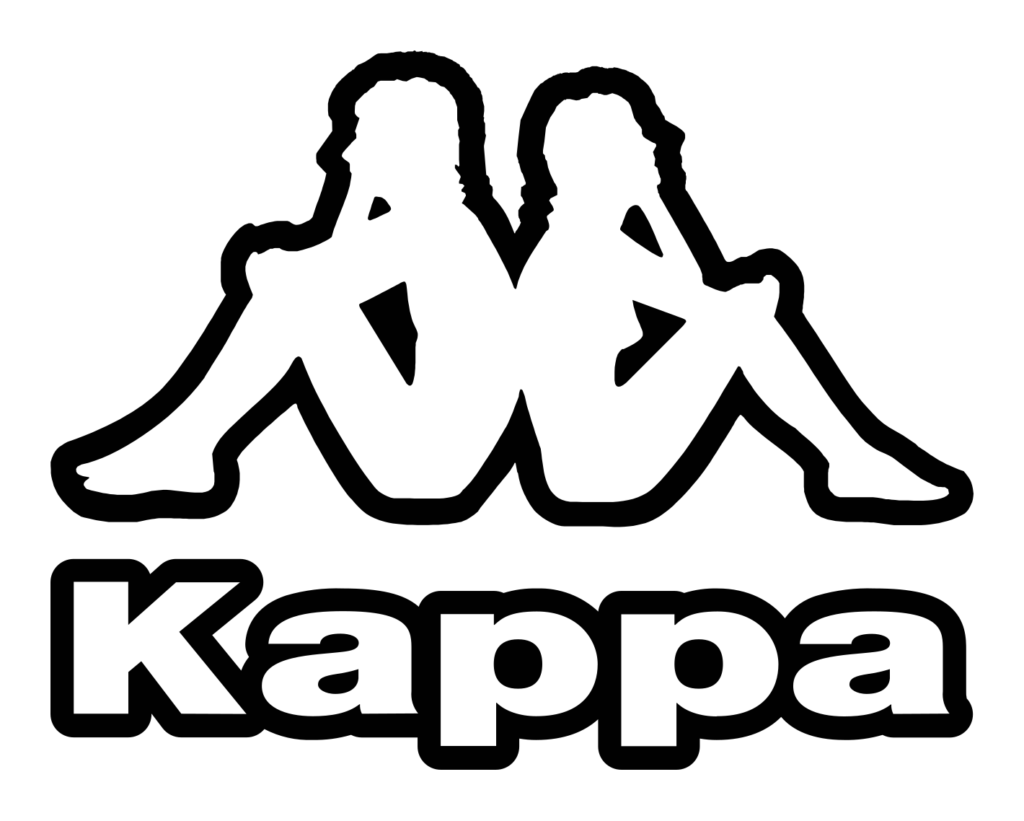
The emblem shows two seated figures, one male and one female, leaning against each other’s backs with their knees drawn up. Neither figure is in front, and each is propping the other up, which suits a brand that dresses men and women alike. Beneath or beside them, the name KAPPA is written in bold capitals, and the logo is printed in solid colours or as an outline depending on the garment.
The story usually told is that the image came from a photograph taken during a swimwear catalogue shoot in 1969, when two models sitting back to back were photographed against the light, leaving only their outline. The silhouette was turned into the logo and has been used, in slightly different forms, ever since.
Has the Kappa logo changed over time?
Yes, especially in its early decades. According to logo archives such as 1000 Logos, the parent company first used an eagle holding an MCT monogram, then from 1956 a K in a shield. A serif Kappa wordmark under a K followed, and in 1967 the brand was formally registered with a simple red wordmark. The Omini arrived in 1969, at first without any lettering. “Kappa Sport” was added beside it in 1978 and shortened to Kappa a few years later; the letters became bolder in 1984, and in 1994 the brand settled on the white figures and wordmark with a coloured outline that inspired the versions used today.
Who founded Kappa?
Kappa grew out of Maglificio Calzificio Torinese (MCT), a Turin company making socks and underwear founded in 1916. In 1956, after a production problem with its Aquila brand, goods made after the fix were stamped with a K for “Kontrolle”. That K line was officially named Kappa, after the Greek letter, in 1967. The sportswear label as known today was developed from 1978 by Marco Boglione as the sports branch of Robe di Kappa.
Kappa became famous in football from the late 1970s, supplying shirts to clubs such as Juventus, AC Milan, Barcelona and AEK Athens, and its slim tracksuits and side-popper trousers became a street fashion staple in the 1990s.
Who owns Kappa today?
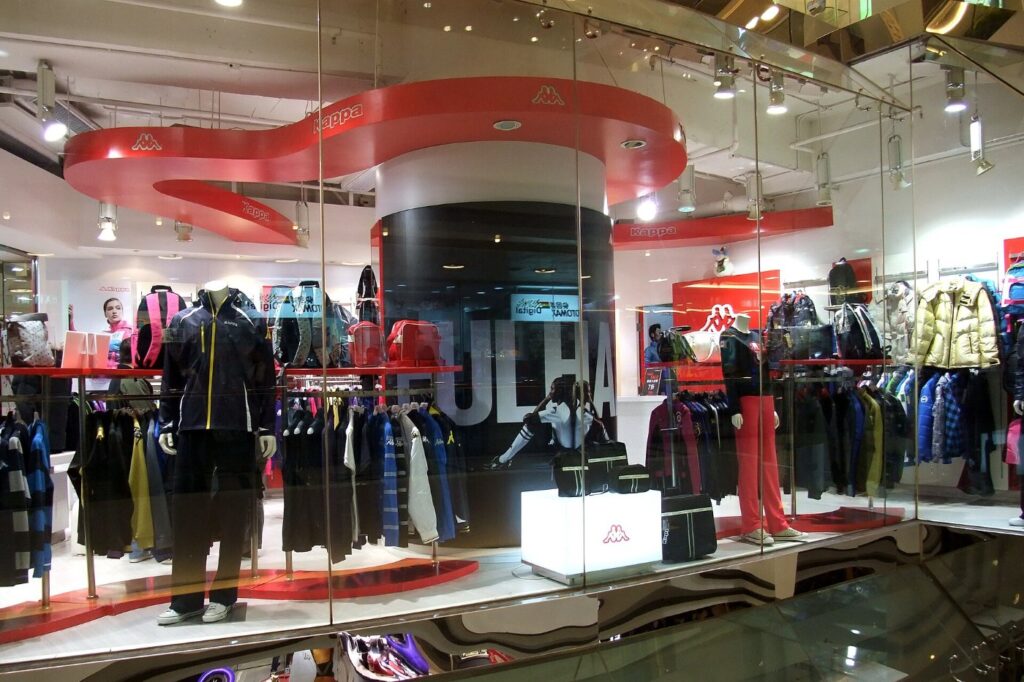
Kappa belongs to BasicNet, the Turin group led by Marco Boglione, which took over the brands of the former MCT business in the 1990s and also owns Robe di Kappa and other labels. BasicNet works through a network of licensees around the world. Kappa’s football partners in recent seasons have included OGC Nice, Fiorentina, Genoa and Kaizer Chiefs, and it has also made kits for the Tunisian national team.
On the pitch Kappa competes with much bigger sportswear companies such as Adidas and Under Armour, while its retro trainers compete with brands such as New Balance.
Quick facts
| Roots | Maglificio Calzificio Torinese, Turin, 1916 |
| Kappa name | Registered 1967 (from a K for “Kontrolle”) |
| Sportswear label | From 1978, led by Marco Boglione |
| Owner | BasicNet, Turin |
| Logo | The “Omini”: a man and a woman sitting back to back (since 1969) |
| Known for | Football kits, popper tracksuits |
| Website | kappa.com |