Gabor Shoes Logo: History of the German Footwear Brand
Pius Gabor opened a shoe and leather goods shop in Groß Strehlitz, Silesia, in 1919, and after the Second World War his sons Bernhard and Joachim started again from nothing, making their first slippers from old car tyres and trading their father’s gold pocket watch for a sewing machine. In 1949 they founded a women’s shoe factory in Barmstedt near Hamburg, and the company they built, Gabor Shoes, has been based in Rosenheim, Bavaria, since 1966. In 2025 it left family hands, and for spring 2026 it replaced its long-serving rounded logo with a new, uppercase “GABOR.”
What does the Gabor logo look like?
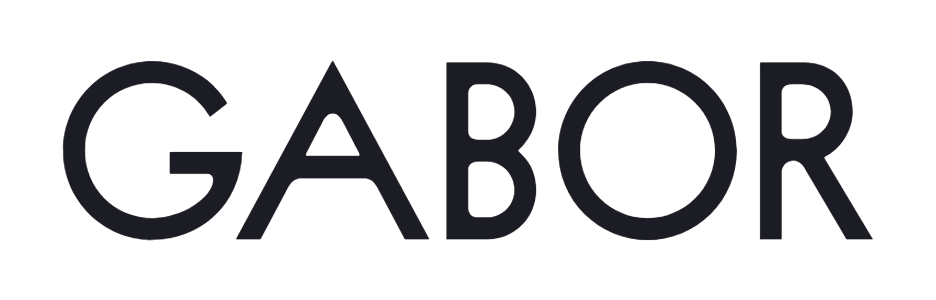
The current logo, introduced with the spring/summer 2026 collections, spells “GABOR” in dark capitals drawn with even, geometric strokes. The letters are not all the same width: the round “G” and “O” open out wide, while the “A,” “B” and “R” stay narrower, a variation the company says is meant to reflect its core skills. The new identity also brought a separate signet, a dedicated display typeface, a fresh colour palette and a new photographic style across shoes, boxes, shops and the website.
The older wordmark, used for years before the relaunch, wrote “Gabor” with a capital G and lowercase letters in a soft, rounded sans-serif, black on white. It looked friendly and approachable, well suited to a brand known above all for comfortable women’s shoes. The capitals of the new version aim for a more confident, fashion-led look that can reach younger and more international customers.
Has the Gabor logo changed over time?
Yes. The rounded, mixed-case “Gabor” served the brand for many years before the relaunch. In July 2025 the company presented the brand relaunch, and the uppercase “GABOR” rolled out on products, packaging, digital channels and retail from spring/summer 2026. The core message stayed the same: quality materials, craftsmanship, fit and comfort.
Who founded Gabor, and who owns it today?
Bernhard and Joachim Gabor opened their first factory in Barmstedt in 1952, when their Gabor-Californias sandals became a best seller, and added production in Spittal an der Drau, Austria, in 1960. In 1966 the company moved its headquarters to Rosenheim, and about 60 families moved with it. Sales passed 100 million Deutsche Mark in 1971, the year Gabor launched AnaNina, the forerunner of its comfort range. Production later moved mainly to the company’s own factories in Slovakia and Portugal.
Joachim Gabor handed the management to his son Achim in 2005, and the company celebrated its centenary in 2019, when it sold just under 9 million pairs and turned over 377 million euros. Revenue was 282 million euros in 2023, with about 2,630 employees, most of them in the Slovak and Portuguese plants. In 2025 Gabor Shoes AG became Gabor Shoes GmbH, and in December 2025 the Swiss investment company Arklyz, which also owns the German shoe brand Lloyd, completed its takeover of the business. Arklyz said the Gabor brand would continue and the existing management, led by chief executive Stefan Blöchinger, would stay on.
Gabor’s focus on comfort and fit puts it alongside footwear brands such as Skechers and New Balance, while its leather women’s shoes compete with Italian makers like Alberto Guardiani and Albano.
Quick facts
| Roots | 1919, Pius Gabor’s shop in Groß Strehlitz, Silesia |
| Founded | 1949, Barmstedt, by Bernhard and Joachim Gabor |
| Headquarters | Rosenheim, Bavaria, Germany (since 1966) |
| Industry | Women’s and men’s shoes, bags |
| Factories | Slovakia and Portugal |
| Owner | Arklyz AG, Switzerland (since 2025) |
| CEO | Stefan Blöchinger |
| Current logo | Uppercase “GABOR,” from spring/summer 2026 |