Clarks Logo History
Clarks began with sheepskin rugs, not shoes. Cyrus Clark was making rugs in Street, Somerset, in the 1820s when his younger brother James, then an apprentice, started sewing the leftover scraps into slippers. Those slippers sold, and the brothers’ firm, C. & J. Clark, grew into the best-known shoe company in Britain. Two centuries on it is owned from Hong Kong, makes its shoes in Asia, and still has its head office in the same Somerset village.
What does the Clarks logo look like?
For most of its history Clarks used a round badge rather than a script. The old roundel showed a building on a hill (usually read as an abbey or church tower, which fits the Somerset setting near Glastonbury) with “C & J Clark Ltd” around the top and “shoemakers since 1825” along the bottom. It was printed in black or dark green on boxes and inside shoes.
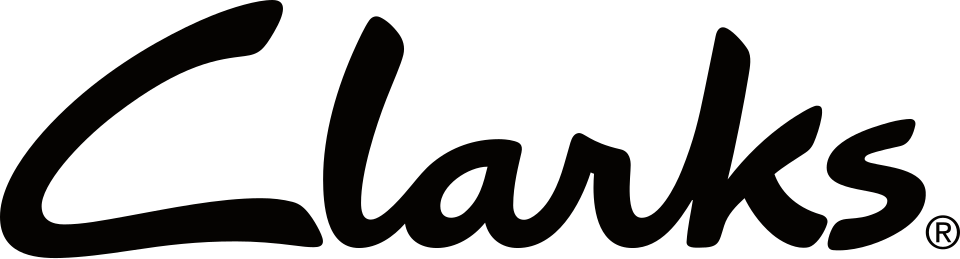
In 1996, according to logo archives, the company dropped the badge for the word “Clarks” written as a joined-up script. The C opens with a long stroke that runs under the whole word like an underline. It looks like a quick signature, which is the point: a family name signed off by hand. The dark green from the old packaging carried over, so the change felt less abrupt in the shops.
Who founded Clarks, and who owns it today?
Cyrus Clark went into tanning and wool dealing with a Quaker cousin in Street in 1821, and from 1825 he was making sheepskin rugs on his own account. The company treats 1825 as its founding year. His brother James joined as an apprentice in 1828, started making the slippers (sold as “Brown Petersburgs”), and became an equal partner in 1833. The business nearly failed in 1863, and local Quakers helped rescue it on condition that James’s son William took charge.
Clarks stayed in family hands for almost two hundred years. It moved most production to Asia from 2005, and in November 2020, after heavy losses, the Hong Kong private equity firm LionRock Capital put in £100 million and took control. It was the first time the family had lost its majority. In February 2023 LionRock sold its remaining stake to Viva China Holdings, the Hong Kong-listed group controlled by the Chinese former Olympic gymnast Li Ning.
What is Clarks’ most famous shoe?
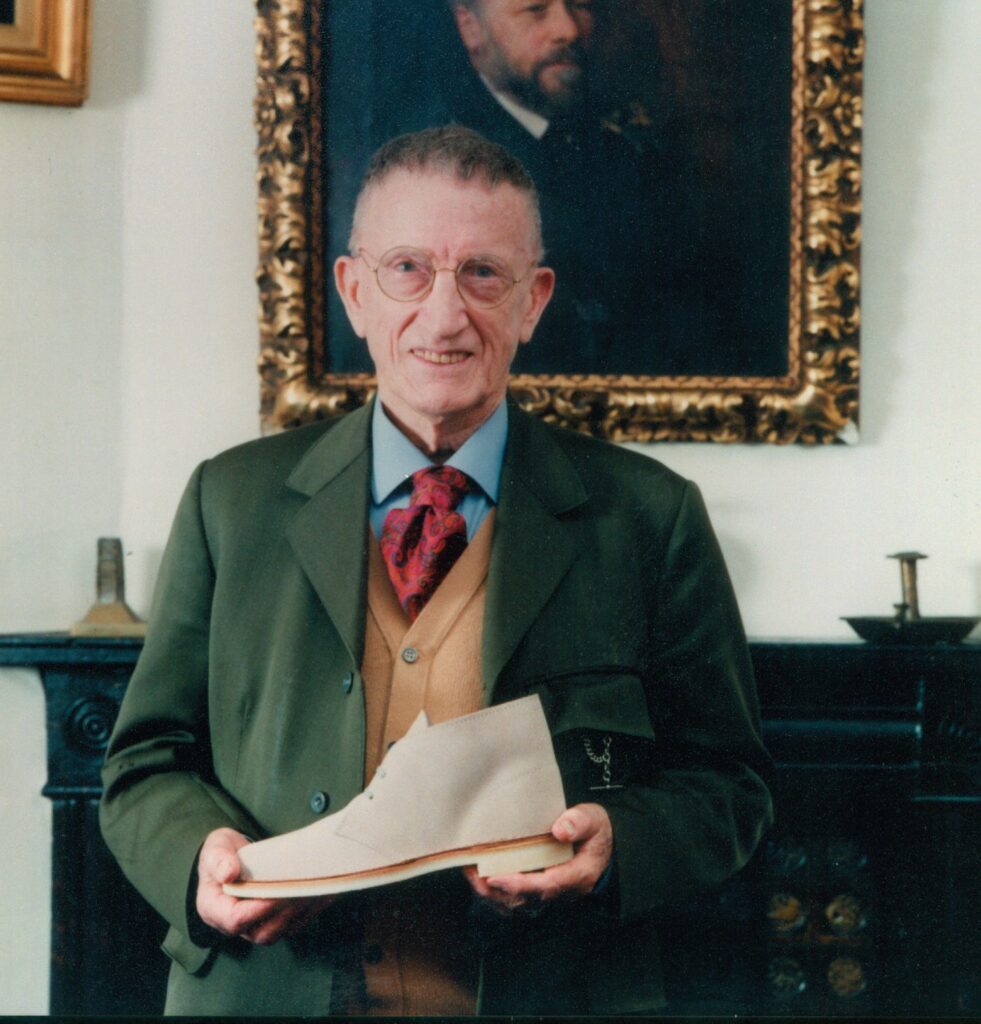
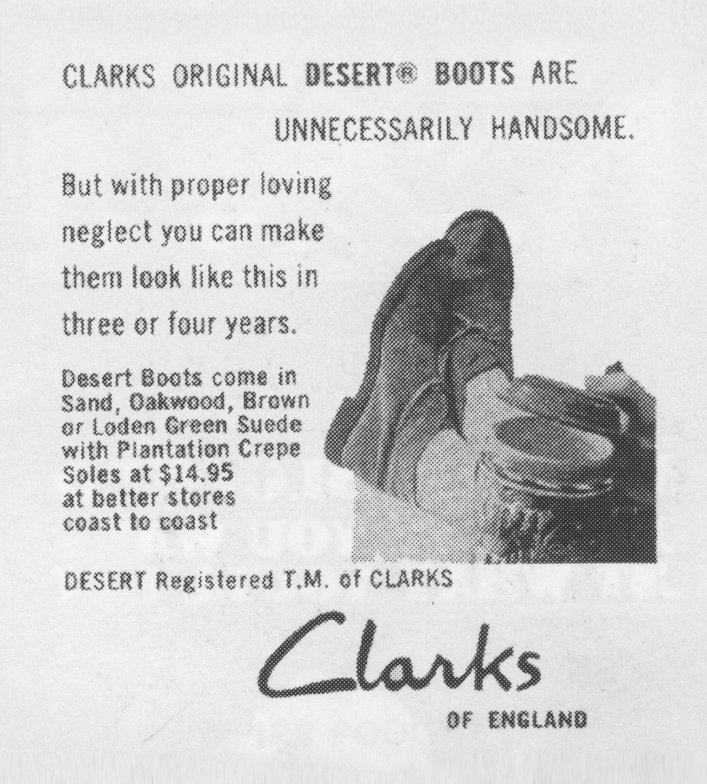
That would be the Desert Boot. Nathan Clark, a great-grandson of James, served in the army in Asia during the Second World War and noticed officers wearing simple crepe-soled suede ankle boots that had been made in the bazaars of Cairo. He sent sketches home, and the company’s committee turned the idea down, reportedly saying it would never sell. Nathan showed it at a Chicago shoe fair in 1949 instead, Esquire magazine wrote about it, and it went on sale in 1950, first in the United States.
The boot was picked up by beatniks and then by the Mods in 1960s Britain. Its cousin, the Wallabee, became a favorite in Jamaica and later in New York hip-hop, where Wu-Tang Clan members made it part of their look in the 1990s.
Has Clarks returned to profit after its recent struggles?
The years after the takeover were rough. Cost cuts led to disputes with staff, including a 2021 strike at the Street warehouse over “fire and rehire” contracts. Clarks lost money in 2023 and 2024, and in July 2025 it announced more than 1,200 job cuts as sales fell. Victor Herrero, who had been chief executive in 2021 and 2022, came back as interim CEO in June 2025. For the year to December 2025 the company reported a pre-tax profit of £44.8 million on sales of about £872 million, its first profit after two years of losses.
Quick facts
| Founded | 1825 (as C. & J. Clark, 1833) |
| Founders | Cyrus Clark and James Clark |
| Headquarters | Street, Somerset, England |
| Industry | Footwear |
| Owner | Viva China Holdings, since February 2023 |
| Logo | Handwritten-style script wordmark, often in dark green |
| Known for | The Desert Boot and the Wallabee |
Other long-established shoe brands covered here include Converse, Vans, Skechers, New Balance and ASICS.