Car Logos with a Horse: History and Meaning
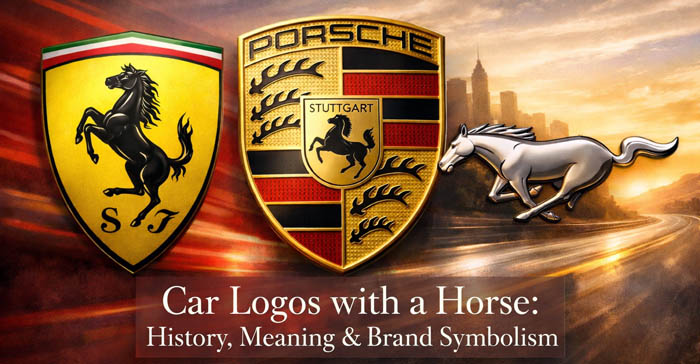
The logo is often the first point of contact between a brand and its audience. Before performance figures, before engineering specifications, and long before a driver ever turns the key, a symbol speaks. In the automotive world, where identity is inseparable from emotion, logos carry an exceptional weight. They must communicate trust, power, heritage, and aspiration in a single visual gesture. Among the many symbols adopted by car manufacturers over the past century, few have endured with the same authority and resonance as the horse.
The association between automobiles and horses predates the modern car itself. Long before engines replaced animal power, horses symbolized speed, endurance, loyalty, and controlled strength. Even today, automotive language is filled with equestrian metaphors. Engines are measured in horsepower. Cars are still described as “iron horses.” This cultural continuity explains why so many manufacturers, across continents and eras, have chosen the horse as the embodiment of their brand identity within automotive branding history.
The Horse as an Automotive Symbol
In visual culture, the horse occupies a unique position. It is powerful yet elegant, disciplined yet untamed. Unlike predators, which communicate aggression, the horse represents controlled force. This balance makes it especially attractive to automotive brands seeking to express performance without brutality.
In heraldry, the horse has long been associated with nobility and conquest. In industrial design, it bridges the gap between tradition and modernity. When placed on a car badge, the horse does not merely suggest speed. It implies mastery of speed, a concept deeply explored across car logo symbolism and meaning.
Porsche: The Stallion of Stuttgart
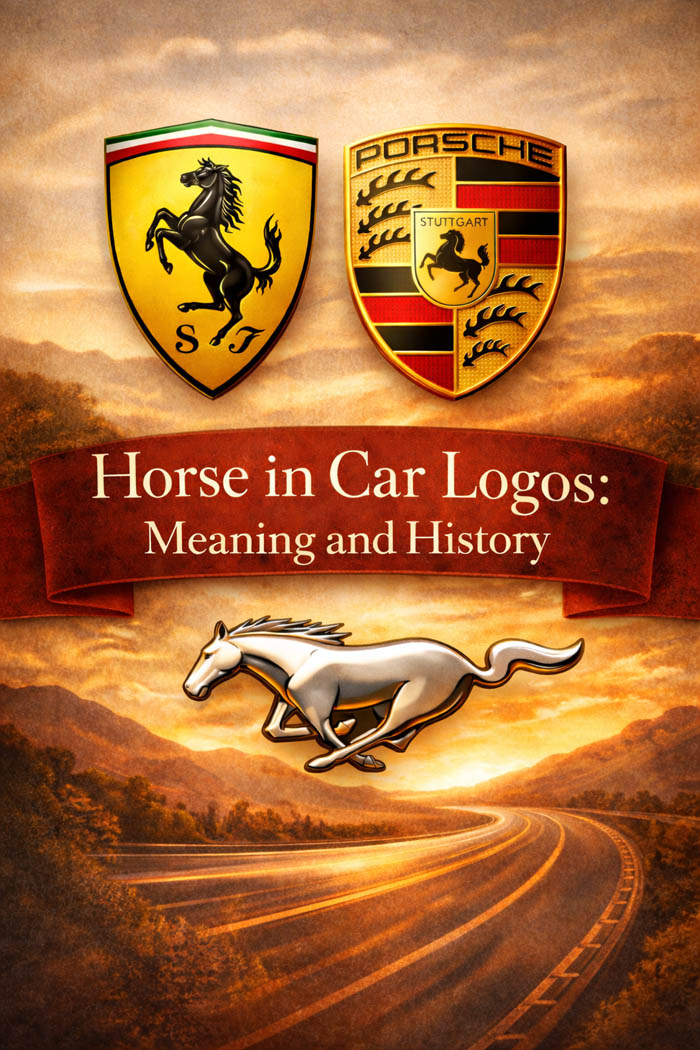
Few automotive emblems are as layered in meaning as the Porsche crest. Founded in 1931 by Ferdinand Porsche, the company established its identity in Stuttgart, a city whose coat of arms features a black stallion on a golden shield. This regional symbol became the heart of the Porsche logo and is explored in depth in Porsche logo history and meaning.
Introduced in its modern form in 1952, the Porsche emblem combines elements of Württemberg heraldry with the Stuttgart horse, creating a badge that is both geographic and aspirational. The stallion represents controlled power and mechanical precision, a theme shared with other luxury car logos with animal symbols.
Ferrari: The Prancing Horse as Racing Legend
No horse in automotive history is more globally recognized than Ferrari’s Cavallino Rampante. The origins of the prancing horse trace back to World War I fighter pilot Francesco Baracca, whose aircraft bore the symbol as a personal emblem. This story forms the foundation of Ferrari logo history and symbolism.
Set against a yellow background representing Modena, Ferrari’s birthplace, the black horse became synonymous with racing excellence and Italian craftsmanship. Unlike heraldic restraint, Ferrari’s horse embodies speed, emotion, and dominance—qualities often compared with Formula One branding and racing heritage.
Ford Mustang: Freedom and Motion
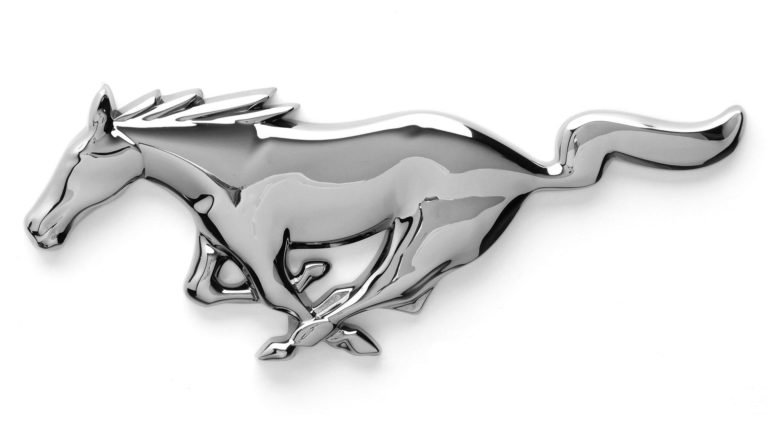
Introduced in the 1960s, the Ford Mustang logo brought a distinctly American interpretation of the horse symbol. Designed to represent freedom, independence, and open-road performance, the running stallion faces left, breaking from European heraldic traditions.
The Mustang emblem is a cornerstone of American car logo history, symbolizing accessibility and raw performance rather than exclusivity.
Baojun: A Name Made Symbol
Baojun represents one of the clearest examples of linguistic meaning translated directly into visual identity. The name Baojun comes from the Chinese term for “treasured horse,” a phrase historically associated with loyalty, reliability, and long-term value rather than raw speed. This semantic foundation allowed the brand to build a logo that feels immediately coherent, even to audiences unfamiliar with the language.
The Baojun emblem features a stylized horse head rendered with sharp, confident lines, emphasizing clarity over ornamentation. Unlike European heraldic horses, which often draw from medieval symbolism, Baojun’s horse reflects modern Chinese design sensibilities—precise, restrained, and purposeful. The logo communicates trust and dependability, qualities essential for a domestic automaker operating in one of the world’s most competitive automotive markets.
Within the broader context of Chinese automotive logo design, Baojun’s identity illustrates a growing trend toward symbolism rooted in language and cultural meaning rather than imitation of Western luxury cues. The horse here is not aspirational excess; it is a promise of value and endurance.
Hanteng Autos: Emerging Identity
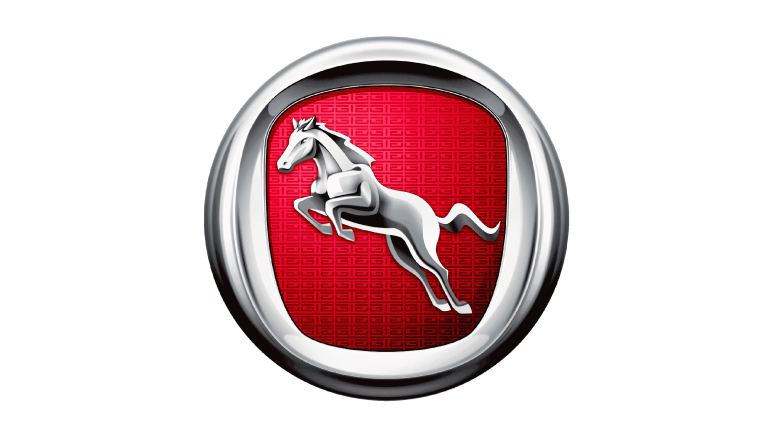
Founded in 2013, Hanteng Autos belongs to a new generation of Chinese manufacturers seeking to establish credibility through visual sophistication rather than sheer volume. Its logo reflects this ambition clearly. The badge centers on a three-dimensional silver horse set against a deep red background, a color combination that balances modernity with cultural resonance.
The horse in Hanteng’s logo is dynamic and forward-leaning, suggesting momentum and growth. Its metallic execution aligns with contemporary automotive aesthetics, where dimensionality and surface treatment play a critical role in perceived quality. The surrounding geometry frames the horse tightly, reinforcing a sense of control and engineered precision.
Hanteng’s emblem demonstrates how modern car logo evolution in emerging markets often blends traditional symbolism with globally recognizable design language. The horse acts as a bridge between heritage and aspiration, signaling that the brand is young, but intentional.
Iran Khodro: Heritage and Endurance
Iran Khodro’s logo places the horse within a crest-like frame, a deliberate choice that emphasizes stability and institutional presence. As one of Iran’s most established automotive manufacturers, the brand relies on visual continuity to reinforce trust in a market shaped by long-term utility rather than rapid stylistic change.
The stylized horse head, rendered in profile, avoids excessive detail. Instead, it communicates endurance and reliability—qualities essential for vehicles designed to operate across varied terrain and demanding conditions. The blue and white color palette reinforces this message, projecting clarity, calm, and national identity.
In the context of automotive logos and national identity, Iran Khodro’s emblem demonstrates how symbolism can serve as a unifying force. The horse becomes less about speed and more about resilience, reflecting the brand’s role within its domestic market and its emphasis on longevity.
Carlsson Automobile: Performance Elegance
Carlsson Automobile, a German tuning specialist, approaches horse symbolism with restraint and refinement. Its logo features a minimalist running horse positioned above italicized typography, creating a visual hierarchy that balances motion with technical authority.
The horse itself is understated, occupying relatively little space compared to the logotype. This proportional choice is intentional. Rather than dominating the identity, the horse acts as a visual accent, introducing elegance and speed without overwhelming the brand’s engineering-focused message.
In performance car branding, this approach reflects a nuanced understanding of symbolism. Carlsson does not rely on aggressive imagery; instead, the running horse suggests controlled performance and precision—qualities valued by enthusiasts who seek refinement as much as power.

Asquith Motors: Abstract Symbolism
Asquith Motors adopted one of the most abstract interpretations of the horse in automotive branding. Rather than detailed anatomy or dynamic motion, the horse is rendered through bold, simplified lines, emerging from a circular form intersected by a ribbon-like element.
This abstraction aligns with British automotive design heritage, where craftsmanship and individuality often outweigh visual spectacle. The logo prioritizes character over realism, allowing the horse to function as a symbolic gesture rather than a literal depiction.
For a manufacturer focused on bespoke and niche vehicles, this restrained symbolism communicates exclusivity and thoughtful design. The horse becomes a quiet marker of identity, reinforcing the brand’s commitment to craftsmanship rather than mass appeal.
KAMAZ: Strength and Endurance
KAMAZ employs the horse in a fundamentally different context from luxury or performance brands. As a manufacturer of heavy-duty trucks, KAMAZ uses a steppe horse to symbolize raw strength, resilience, and endurance under extreme conditions.
The horse appears above bold, industrial typography, reinforcing its role as a supporting symbol rather than the primary focus. Its form conveys motion,
Corre La Licorne and Pegaso: Historical Elegance
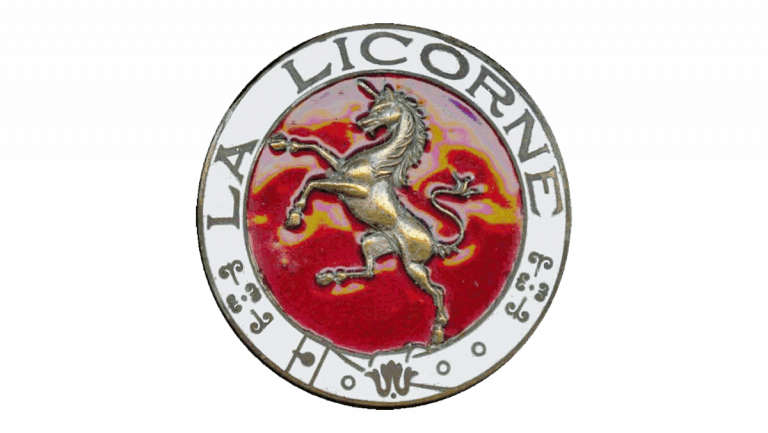
Early European automotive branding was deeply influenced by heraldry, craftsmanship, and the cultural prestige associated with mechanical innovation. Discontinued marques such as Corre La Licorne in France and Pegaso in Spain illustrate how horse symbolism became a natural extension of early automotive ambition, long before branding was formalized as a discipline.
Founded in 1901, Corre La Licorne positioned itself as a producer of elegant, refined vehicles. Its emblem featured a rearing horse rendered in a classical, almost mythological style, often framed within a medallion or crest. The horse was not depicted in aggressive motion but rather in a poised, noble stance, reflecting the brand’s emphasis on sophistication and artisanal quality. In an era when automobiles were still luxury objects, the horse served as a visual bridge between aristocratic tradition and emerging mechanical power.
Pegaso, established in Spain in 1946, adopted a more modern and assertive interpretation. Its leaping horse, executed in a monochrome palette, reflected post-war optimism and industrial confidence. Unlike the ornate European crests of earlier decades, Pegaso’s logo embraced clarity and movement, signaling speed and technological advancement. The horse here symbolized aspiration—a desire to compete on the international stage through engineering excellence and bold design.
Together, Corre La Licorne and Pegaso reveal how horse imagery shaped early automotive logo history. Their emblems demonstrate a transitional period in which elegance, craftsmanship, and mechanical ambition coexisted, laying the groundwork for the more performance-driven symbolism that would dominate later decades.

Eicher Motors: Modern Motion
Eicher Motors offers a contemporary interpretation of the horse that reflects the realities of modern industrial branding. Established in 1948 and best known for its commercial vehicles and strategic partnerships, Eicher uses the horse not as a decorative element, but as a graphic expression of motion and efficiency.
The Eicher logo features a minimalist horse rendered through sharp, angular lines that slice across a bold red field. The abstraction of the animal removes any reference to heraldry or ornamentation, replacing it with speed lines and directional energy. This visual language aligns closely with modern industrial aesthetics, where clarity, scalability, and digital adaptability are essential.
In the context of commercial vehicle branding, Eicher’s horse represents reliability and forward momentum rather than luxury or exclusivity. It communicates the brand’s focus on productivity, endurance, and operational performance. The logo’s disciplined geometry reinforces the idea that motion, when controlled and purposeful, becomes a form of strength.
Eicher’s emblem demonstrates how traditional symbols can be reinterpreted to meet contemporary demands. By stripping the horse down to its essential form, the brand preserves symbolic continuity while projecting a future-oriented identity suited to modern transportation needs.
Why the Horse Endures
The horse is used in car logos because it symbolizes speed, controlled power, endurance, and heritage. Long associated with transportation and performance, the horse connects automotive brands to human history and emotional identity, making it one of the most enduring and universally recognized symbols in automotive branding.
Across continents and generations, the horse has remained one of the most enduring and meaningful symbols in automotive branding. Its persistence is not accidental, nor is it purely aesthetic. Long before the automobile transformed mobility, the horse represented humanity’s earliest relationship with speed, endurance, and controlled power. When car manufacturers began shaping their visual identities, the horse offered a ready-made symbolic language—one deeply rooted in cultural memory and technological progress.
In automotive design, the horse occupies a rare balance. It conveys strength without aggression, elegance without fragility, and motion without chaos. This explains why the horse appears across vastly different segments of the industry, from luxury sports cars to commercial vehicles. Brands as distinct as Ferrari logo history and symbolism, Porsche logo history and meaning, and Ford Mustang logo meaning rely on the horse to communicate performance, heritage, and emotional connection without requiring explanation.
Unlike abstract shapes or purely typographic marks, animal symbols create immediate recognition. The horse, in particular, carries layers of meaning that transcend geography. In Europe, it draws from heraldic traditions of nobility and authority, a visual language shared with emblems such as the Mercedes-Benz logo meaning, where prestige is communicated through symbolism rather than literal motion. In the United States, the horse evokes freedom and frontier spirit, while in Asia it often represents reliability, endurance, and progress—qualities deeply embedded in automotive branding history.
Equally important is the horse’s resistance to visual fatigue. While design trends fluctuate—flat aesthetics replacing dimensional forms, digital interfaces reshaping brand systems—the horse remains timeless. Its form can be abstracted, stylized, or rendered realistically without losing meaning. This durability mirrors broader patterns explored in animal symbols in car logos, where iconic imagery survives even as visual languages evolve.
The endurance of the horse also reflects a deeper truth about automotive branding itself. Cars are not merely machines; they are emotional artifacts tied to identity, aspiration, and legacy. By anchoring their logos in a symbol that predates modern technology, automotive brands bridge the gap between innovation and tradition. The horse becomes a reminder that even in an era of electrification and autonomous driving—alongside shifts documented throughout car logo history—brand identity remains rooted in storytelling and human connection.
Ultimately, the horse endures because it speaks a universal visual language. It represents motion mastered, power refined, and heritage carried forward. Within automotive branding, few symbols have achieved such lasting resonance. As the industry continues to evolve, the horse remains not a relic of the past, but a living emblem—capable of adapting to the future while honoring the legacy that made these brands iconic.
FAQ — Car Logos with a Horse
Why do so many car logos feature a horse?
Because the horse is a universal symbol of speed, controlled power, endurance, and prestige—qualities that align naturally with automotive branding and performance heritage.
Which car brands have a horse in their logo?
Some of the best-known examples include Ferrari and Ford Mustang, while Porsche features a horse from Stuttgart’s coat of arms at the center of its crest. Other brands with horse imagery include Baojun, Iran Khodro, KAMAZ, and Eicher.
Is Porsche’s logo a horse logo like Ferrari’s?
Porsche’s emblem includes a horse, but it functions as a regional symbol (Stuttgart’s coat of arms) within a broader heraldic crest. Ferrari’s prancing horse is the primary, standalone symbol of the brand.
What does Ferrari’s prancing horse mean?
Ferrari’s horse represents racing spirit, speed, and prestige. It is also tied to the legacy of Francesco Baracca, whose emblem inspired Enzo Ferrari to adopt the symbol.
What does the Mustang horse symbolize?
The Mustang horse represents freedom, motion, and American performance culture, reflecting the model’s identity as an accessible icon of speed and independence.